https://www.militaryaerospace.com/computers/article/14293820/space-electronics-radiation-hardened
Seeing as my phone won't copy text without having a Spas Attack, which nearly caused it to sail through the window out into the street, you will all have to scroll down to the heading "influential space programs".
Now after all the tantrums and dummy spits I just need someone to say old news mate but good try.

SC
“Influential space programs
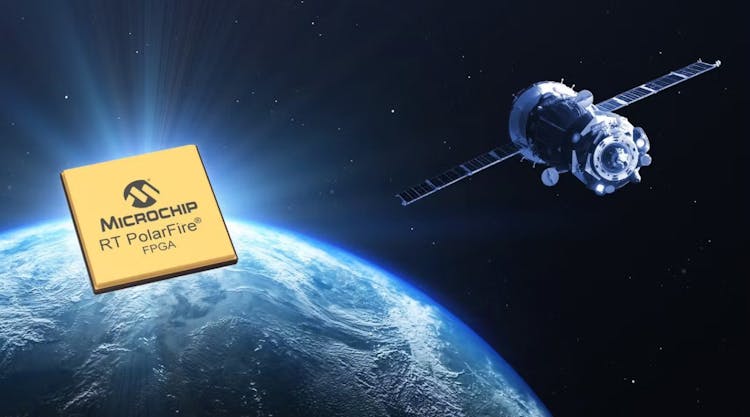
Microchip is involved in the High-Performance Spaceflight Computing (HPSC) processor project of the U.S. National Aeronautics and Space Administration (NASA) Jet Propulsion Laboratory in La Cañada Flintridge, Calif. Microchip is developing a space processor that will provide at least 100 times the computational capacity of current spaceflight computers.
Microchip will build the HPSC processor over three years, with the goal of employing the processor on future lunar and planetary exploration missions. Microchip's processor architecture will improve the overall computing efficiency for these missions by enabling computing power to be scalable, based on mission needs. The work is under a $50 million contract, with Microchip contributing significant research and development costs to complete the project.
"We are making a joint investment with NASA on a new trusted and transformative compute platform that will deliver comprehensive Ethernet networking, advanced artificial intelligence and machine learning processing, and connectivity support while offering unprecedented performance gain, fault-tolerance, and security architecture at low power consumption," says Babak Samimi, corporate vice president for Microchip's Communications business unit.
"We will foster an industrywide ecosystem of single-board computer partners anchored on the HPSC processor and Microchip's complementary space-qualified
Microchip is developing the NASA High-Performance Spaceflight Computing (HPSC) processor that will provide at least 100 times the computational capacity of current spaceflight computers.
total system solutions to benefit a new generation of mission-critical edge compute designs optimized for size, weight, and power," he says.
Current space-qualified computing technology is designed to address the most computationally intensive part of a mission, which leads to overdesigning and inefficient use of computing power. Microchip's new processor will enable the device's processing power to ebb and flow depending on current operational requirements. Certain processing functions can also be turned off when not in use to reduce power consumption.
"Our current spaceflight computers were developed almost 30 years ago," says Wesley Powell, NASA's principal technologist for advanced avionics. "While they have served past missions well, future NASA missions demand significantly increased onboard computing capabilities and reliability. The new computing processor will provide the advances required in performance, fault tolerance, and flexibility to meet these future mission needs."
The U.S. Space Force has kicked-off a program to design next-generation radiation-hardened non-volatile memory chips for future military applications in space in the Advanced Next Generation Strategic Radiation hardened Memory (ANGSTRM) project. The U.S. Air Force Research Laboratory's Space Vehicles Directorate at Kirtland Air Force Base, N.M., issued an ANGSTRM solicitation on behalf of the Space Force last January to develop a strategic rad-hard non-volatile memory device with near-commercial state-of-the-art performance by using advanced packaging and radiation-hardening techniques with state-of-the-art commercial technology.”


 worldwide.espacenet.com
 worldwide.espacenet.com






 ️
️
 under any circumstances look here