A Summary of The Corruption Since Tshisekedi Became President Of The DRC

Dave Evans

Regular
The following information is sourced from NGO’s and Civil Society organisations (including Justicia Asbl, LICOCO, RND Asbl, POM, MDR, GANVE, CDH, ESPOIR ONG, RCEN, CERN / CENCO, TPRDC, MAX IMPACT)

Reuters.com, Media Congo, the Africa Report, africanews.com, Politico.cd, thegreatlakeseye.com, kongopress.com, scooprdc.net, lecongoquonaime.com, africaintelligence.com, mines.cd, the IGF, ICC, ICSID, Frazer Institute, French mining group ERAMET, Congo Study Group (GEC) and Ebuteli survey, with the Bureau d’études, de recherche et de consulting international and DRC's National Business Climate Barometer (BNCA)


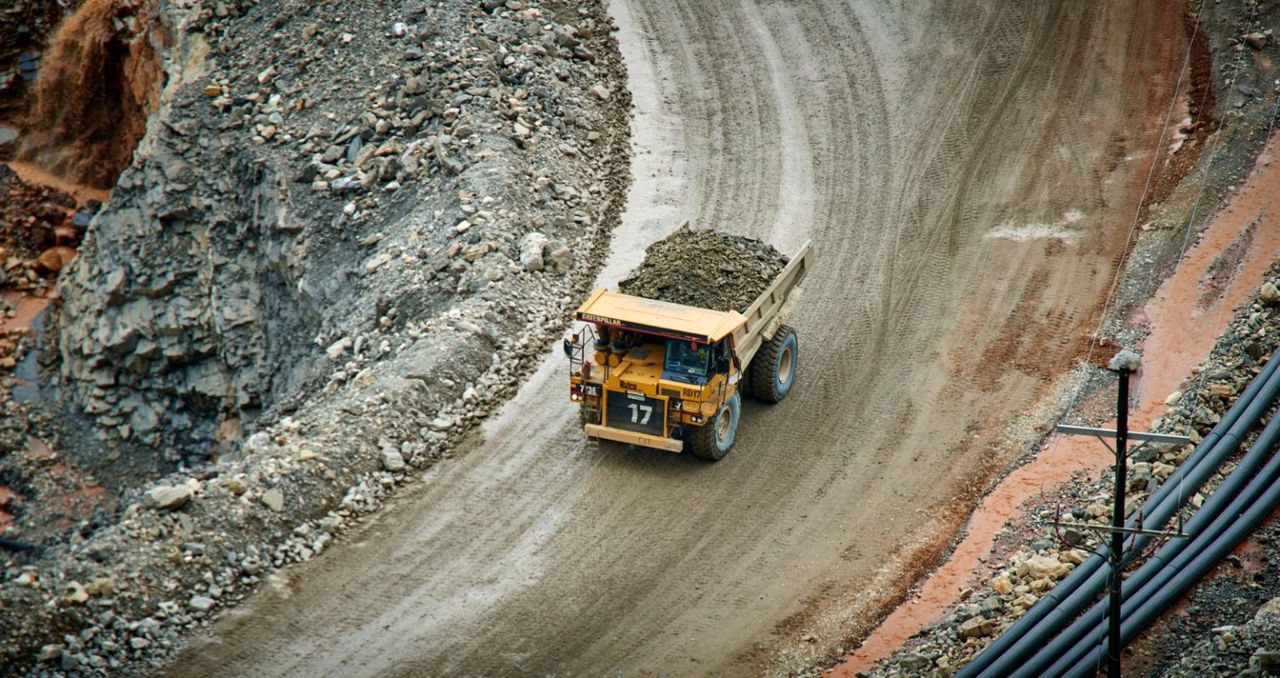
The DRC government and mining sectors are rife with bribes, corruption and extortion. Since Felix Tshisekedi became President of the DRC, dozens of articles have been written on the corruption in the Congo by sources including NGOs, Civil Societies and mining and investment sites. These articles sound the alarm on the corruption in the DRC and its mining sector, including China's influence, mining fraud, money laundering, and extortion.

In April 2023 Media Congo released an article showing the Congo Study Group (GEC) and Ebuteli survey, with the Bureau d’études, de recherche et de consulting international found that the level of corruption has not changed. They found, in some cases the situation had got worse and that more than 77% of the public think that the country is affected by corruption.

In May 2023 the Frazer Institute ranked the DRC 82nd out of 83 countries for attractiveness to investors in the mining sector.

Also in May 2023 four of the DRC's main opposition politicians wrote to the IMF, World Bank and African Development Bank, asking them to conduct an audit of their funds in the Congo because they suspected misuse.

In June 2023 the DRC's own National Business Climate Barometer (BNCA) involving 403 companies gave it a 37% success rating.

Also in June 2023 the DRC was excluded from the list of investments of the French mining group ERAMET, sighting corruption in the DRC.

In July 2023 non-compliance and flagrant violations of the DRC Mining Code were reported and Congolese civil society organizations and platforms specializing in mining issues (Justicia Asbl, LICOCO, RND Asbl, POM, MDR, GANVE, CDH, ESPOIR ONG, RCEN, CERN / CENCO, TPRDC, MAX IMPACT) have all shown concern.

Also in July 2023 an article in the Africa Report on 4 July shows that a bill for sanctions against corruption in minerals trafficking in the DRC has been introduced in the US. With the appalling working conditions present in the DRC mining sector, and extremely opaque business climate that exists throughout the country, the bill aims to counter these abuses and calls for sanctions, including asset blocks on persons found to have facilitated child and forced labour in the DRC mining sector "including any official of the government of the DRC".

But the corruption is not just in the government and mining sectors, it's in other sectors such as the legal system, administration, police and infrastructure just to name a few. The DRC's own Inspector General of Finance recently stated over 145 thousand cases of civil servants and agents of the state had committed forgery and massive fraud.

Financial patrol: The IGF flushes out in industrial quantities duplicates, forgers and cheaters among civil servants and agents of the State! - Scoop DRC (scooprdc.net)

778 million $US per year embezzled from the salaries of agents and civil servants of the State according to the IGF - Kongo Presse
 
Last edited:
  • Like
Reactions: 7 users

Dave Evans

Regular
Corruption in the DRC remains

International miners & investors are more aware of the corruption in the DRC business & mining sectors. Under China’s influence, the DRC invites companies to invest in mining projects & once developed, removes their rights and sells them to Chinese companies.

DRC state mining companies have continued to operate under the influence of China, and under the protection of the DRC government, which ignores and changes its own laws both legislative (mining code), and contract law (JV), and allows state companies like Cominiere to continue to commit illegal fraud and steal a foreign company's projects and licences from them.

The DRC lacks the expertise and finance to build projects yet wants a greater percentage in projects earnings on top of collecting tax and other revenue from them.

International Investors
1) Pay for exploration permits
2) Spend millions developing the projects
3) Create jobs for local workers
4) Build accomodation for local workers
5) Pay to build the mine and infrastructure
6) Negotiate off-take agreements
7) Arrange financing for construction
8) Incur the costs related to the above

Felix Tshisekedi has given state actors like Cominiere more power. He says he wants more wealth going to the DRC and talks about so called win-win contracts and the DRC controlling the entire production chain of minerals from the investment, production and processing, to the sale of the final product.

http://kongopress.com/2023/09/27/rd...-lithium-et-integrer-la-chaine-des-batteries/

Now he is asking other countries to invest $30 billion in the DRC's battery metals industry, suggesting it could be worth $7 trillion by 2040, and the DRC wants to capture between 30% - 40% of that value.

DRC Requires a Minimum of $30 Billion for Electric Battery Industry Development - Copperbelt Katanga Mining

Corruption in the mining sector hasn’t improved and was demonstrated by an outburst from Celestin Kibeya Kabemba (Managing Director of DRC Mining Company, Cominiere) at the 2023 DRC - AFRICA Battery Metals Forum.

Following the the 2023 DRC - AFRICA Battery Metals Forum, the most alarming feature to come out of the event was how much corruption there is in the DRC mining and investment sectors, a fact which has been highlighted in many reports following the forum.

The DRC is again asking other countries to trust investing $30 billion in its projects even when there are ongoing arbitration disputes involving the ICC and ICSID due to Cominiere’s illegal disillusion of its joint venture contract with AVZ Minerals, seizing of the Manono lithium project and illegal sale to China’s Zijin Mining

Financial patrol: The IGF flushes out in industrial quantities duplicates, forgers and cheaters among civil servants and agents of the State! - Scoop DRC (scooprdc.net)

778 million $US per year embezzled from the salaries of agents and civil servants of the State according to the IGF - Kongo Presse

DRC: 7 institutions including the Presidency, the Prime Minister and the National Assembly show budget overruns of more than 100% | Politico.cd

https://static1.squarespace.com/sta...f+DRC+Mining+Assets+by+COMINIERE+SA+-+ENG.pdf

IMG_5957.jpeg

IMG_5956.jpeg

IMG_5955.png

IMG_6136.jpeg
 
  • Like
Reactions: 7 users

Dave Evans

Regular
Patrouille financière : L’IGF débusque en quantité industrielle des doublons, des faussaires et tricheurs parmi les fonctionnaires et agents de l’Etat ! - Scoop RDC

Actualité - C’est un manque à gagner pour le Trésor public de l’ordre de 148.999.749.440,95FC mensuellement, soit 64.782.499 USD au taux de 2300FC que l’Inspection générale des finances a déniché dans la paie des fonctionnaires et agents de l’Etat. Les conclusions du rapport de sa mission...
scooprdc.net

scooprdc.net

778 millions $US par an détournés sur les paies des agents et fonctionnaires de l’État selon l'IGF - Kongo Presse

Par Kiki Kienge C’est le rapport publié par l’Inspection Générale des Finances en conclusion de l’enquête l’audit du fichier de la paie des agents et Fonctionnaires de l’État, s’est concentré…
kongopress.com

Corruption in the DRC remains

The DRC continues to invite companies to invest in projects & once developed, removes their rights and sells them to Chinese companies.

Cominiere continues to operate under the protection of the DRC government, which has ignored and changed its own laws both legislative (mining code), and contract law (JV), and allowed state companies like Cominiere to continue to commit illegal fraud and seize foreign company's projects and licences from them.

Felix Tshisekedi talks about win-win contracts and is asking countries to invest $30 billion in the DRC's battery metals industry, suggesting it could be worth $7 trillion by 2040. He insists the DRC will control the entire chain of investment in minerals including the finance, production and processing and sale of the final product, but the corruption in the mining sector is clearly demonstrated by bribes and fraud in the case of Cominiere’s Celestin Kibeya Kabemba taking the bribes from Zijin and seizing AVZ Minerals’ Dathcom lithium project at Manono. Read the AVZ Minerals story👇

thestockexchange.com.au

THE AVZ MINERALS STORY

From 2017 to 2022 in the DRC, AVZ Minerals spent over $140 million on Acquiring Equipment for Infrastructure, Soil Sampling, Field Mapping, Consulting, Drilling, Metallurgical Testing, Completing a FEED Study, Environmental Study and Impact Assessment Reports including Groundwater Management, a 160...

thestockexchange.com.au
The most alarming feature to come out of the 2023 Battery Metals Forum was how much corruption there is in the DRC mining and investment sectors. Now the DRC is again asking other countries to invest $30 billion in its projects even when there are ongoing arbitration disputes involving the ICC and ICSID due to Cominiere’s illegal termination of the joint venture contract with AVZ Minerals, seizing of the Manono lithium project and illegal sale to China’s Zijin Mining

DRC Requires a Minimum of $30 Billion for Electric Battery Industry Development - Copperbelt Katanga Mining

Financial patrol: The IGF flushes out in industrial quantities duplicates, forgers and cheaters among civil servants and agents of the State! - Scoop DRC (scooprdc.net)

778 million $US per year embezzled from the salaries of agents and civil servants of the State according to the IGF - Kongo Presse

DRC: 7 institutions including the Presidency, the Prime Minister and the National Assembly show budget overruns of more than 100% | Politico.cd

https://static1.squarespace.com/sta...f+DRC+Mining+Assets+by+COMINIERE+SA+-+ENG.pdf

Reports on the corruption and bribes involving DRC mining company Cominiere and Chinese company Zijin Mining

Investors, mining companies, battery maker’s and EV manufacturer’s around the world know the story of AVZ Minerals and how Cominiere seized the Manono lithium project from Dathcom and sold it to Chinese Zijin Mining

AVZ spent $140 million developing the Manono project before Cominiere took a bribe from Zijin and went about seizing the project, all under the watchful eyes of the President, Minister of Mines and the Mining Cadastre.

Cominiere continues to violate the ICC and ICSID interim orders. Follow the links below to see the evidence and read the facts 👇

1. The AVZ Minerals Story
2. Cominiere being bribed by Zijin Mining
3. The IGF Report detailing the corruption
4. First ICC Rulings against Cominiere
5. Second ICC Rulings against Cominiere
6. The ICSID Interim Orders against Cominiere
7. The ICC Ruling against Jin Cheng
8. The money Cominiere owes in penalty’s
9. ICC orders Cominiere to pay €39 million in penalties to AVZ
10. Cominiere’s attempt to obstruct ICC

https://static1.squarespace.com/sta...f+DRC+Mining+Assets+by+COMINIERE+SA+-+ENG.pdf

https://announcements.asx.com.au/asxpdf/20230508/pdf/05pgtwvs1482j9.pdf

https://announcements.asx.com.au/asxpdf/20231117/pdf/05xgd2s91x97y0.pdf

https://static1.squarespace.com/sta...+AVZ+Successful+in+ICSID+Interim+Measures.pdf

drc-icc-penalty-counter-2.netlify.app

DRC ICC Penalty Calculator 2.0

Calculates the amount of penalties the DRC has incurred since the first & 2nd violation of the ICC court ruling
drc-icc-penalty-counter-2.netlify.app

https://static1.squarespace.com/sta...s+Against+Jin+Cheng+ICC+Proceedings+-+Eng.pdf

Reports of Cominiere’s other Board of Directors Lisette Tshibwabwa Kabanga and David E’ngazi (who are protected by the President and Minister of Mines) also involved in bribes from Zijin, shown in the links 👇

thestockexchange.com.au

Lisette Tshibwabwa Kabanga

31/07/2023 Lithium: the COMINIERE and the Congolese State paid US$1.6 million for the lobbying of Lisette Tshibwabwa Kabanga "Lisette Kabanga Tshibwabwa justified in particular the legality of lobbying in Congo" NEWSECONOMY Lithium: the COMINIERE and the Congolese State paid US$1.6 million...

thestockexchange.com.au

David E’ngazi $70 Million Fraud

19/04/2024 Lithium: the intriguing transformation of $ 70 million from Zijin Mining to an NGO As part of its partnership with La Comminière, a subsidiary of the Chinese mining Zijin paid an important contribution to a mysterious Congolese NGO, whose president is himself a public company...

thestockexchange.com.au
The DRC Inspector General of Finance Report showing Cominiere and Zijin’s illegal and fraudulent actions and other examples of corruption in the DRC

https://static1.squarespace.com/sta...f+DRC+Mining+Assets+by+COMINIERE+SA+-+ENG.pdf
https://congominespdfstorage.blob.core.windows.net/congominespdfstorage/Rapport-IGF-sur-COMINIERE-S-A-6387826ba915e (1).pdf
https://www.theafricareport.com/165...ug-of-war-on-defining-financial-mismangement/

www.africanews.com

DRC: nearly $800 million a year escapes the public treasury | Africanews

According to the findings of an audit of the government's payroll, the IGF noted numerous irregularities, with tens of thousands of fictitious employees.
www.africanews.com

The violations of Cominiere and Zijin’s Manono Lithium against the International Chamber of Commerce (ICC) and International Centre for Settlements of Investment Disputes (ICSID) orders

thestockexchange.com.au

Manono Lithium Continues To Violate ICC and ICSID Orders In The DRC

17/11/2023 https://announcements.asx.com.au/asxpdf/20231117/pdf/05xgd2s91x97y0.pdf

10/01/2024
Manono: The suspension of Manono Lithium's activities is being debated The Governor of the Province of Tanganyika suspends the career activities of the mining company ManonoLithium for an...

thestockexchange.com.au

The violations of the DRC Cadastre Miniere (CAMI) against the International Chamber of Commerce (ICC) and International Centre for Settlements of Investment Disputes (ICSID) orders

In violation of the orders of the ICC and ICSID, the DRC Cadastre Miniere (CAMI) granted the Mining License application to Manono Lithium and then granted Manono Lithium the full Mining License without even having produced Feasability, Sustainability or Environmental Reports

The false communique of the DRC Ministry of Mining and it’s protection of Cominiere and Zijin

Budget overruns since Felix Tshisekedi became president resulting in public debt crossing the USD $10 Billion mark in 2024


Budget Overruns In 2022: What Consequences For The DRC Economy? - Fatshimetrie

Budget overruns in 2022 in the Democratic Republic of Congo reached more than 28%. The impacts of these excesses on the country's economy are worrying, ranging from the imbalance of public finances to the questioning of transparency in the management of public affairs. These overruns could...
eng.fatshimetrie.org

DRC: 7 institutions including the Presidency, the Primature and the National Assembly accuse budget overruns of more than 100%

According to the Minister of Finance, Nicolas Kazadi, the budget overruns concern operating expenses including 7 institutions and 22 ministries charging execution rates above 100%. These are the Presidency 190%, the Primature 132%, the National Assembly145%, the Senate 184%, the General Secretariat of the Government 257%, the CENI 145%, the Court of Auditors 126%, Foreign Affairs 401%, Interior and Security 183%, Defence and Veterans Affairs 249%, National Economy 100, 83%, Finance 182%, Budget 334%, Justice 202%, Relations with Parliament 132%, Health 124%, EPST 107%, ESU 113%, Agriculture 141%, Industry 334%, Foreign Trade 138%, Communication and Media 130%; Land affairs 216%; Environment 371%, Sports and Leisure 288%, Regional integration 155%, Humanitarian actions 627%, Customary Affairs 102%, Spatial Planning 365%. byWriting Kinshasa September 28, 2023

RDC : 7 institutions dont la Présidence, la Primature et l'Assemblée nationale accusent les dépassements budgétaires de plus de 100% | Politico.cd

En continu | Dans un débat houleux à l'Assemblée nationale, ce mercredi 27 septembre, sur le projet de loi portant reddition des comptes exercice 2022, il a été
www.politico.cd

weafrica24.com

Budget Overruns in the DRC: Public Spending Observatory Denounces a "Metastasized Cancer"

In the Democratic Republic of Congo (DRC), a non-governmental organization is sounding the alarm over budgetary governance characterized by a "scandal and
weafrica24.com
weafrica24.com

DRC election commission overspent, awarded opaque contracts: Report - CHANNELAFRICA

Channel Africa is an International Radio station whose mandate is to support South Africa's Foreign Policy enshrined in the Department of International Relations and Cooperation's - Vision and Mission and contribute to the development of Africa, support peace, democracy and good Governance...
web.sabc.co.za

https://www.reuters.com/world/afric...t-awarded-opaque-contracts-report-2024-01-15/

www.radiookapi.net

RDC : la dette publique franchit la barre de 10 milliards USD en 5 ans

La dette publique de la RDC a dépassé le cap de 10 milliards USD en cinq ans, ont révélé dimanche 7 avril des sources à la Direction générale de la dette publique (DGDP). Pourtant, cette dette publique était réduite en 2010 de 14 à 3 milliards de dollars et maintenue à 3 milliards jusqu’en 2019...
www.radiookapi.net
www.radiookapi.net
 
Last edited:
  • Like
Reactions: 6 users

Retrobyte

Hates a beer
Images of a brown paper bag and a Rolex would have been a good executive summary
 
  • Haha
  • Like
Reactions: 2 users

Dave Evans

Regular
12/04/2024

Mining: fraud and corruption are increasing in the CU-CO mines of the former Katanga!​

12.04.2024
email sharing button

-


The former Katanga, in the southeast of the Democratic Republic of Congo (DRC), is one of the richest copper and cobalt producing regions in the world. However, the population of Katanga, like the rest of the DRC, remains extremely poor, and the state has failed to provide most of the province with basic infrastructure and public services, especially in rural areas.

The mining sector in the former Katanga is characterized by widespread corruption and fraud at all levels. A significant proportion of copper and cobalt is extracted informally and illegally exported.

Government representatives are actively in conniving with commercial companies to circumvent control procedures and tax payments.

Profits are used to fill the pockets of a small but powerful elite: politicians and businessmen who exploit the local population and divert natural wealth for their own purposes. Large quantities of valuable minerals are leaving the country without being declared, which represents a huge loss for the Congolese economy and a wasted opportunity to reduce poverty and strengthen development. A local source estimated that at the end of 2005, at least three-quarters of the minerals exported from Katanga were coming out illegally.

The mining industry in the former Katanga includes two parallel sectors: the formal sector, where foreign and multinational companies use industrial extraction methods, and the informal or "craft" sector, where tens of thousands of individuals extract minerals independently, in a totally unregulated environment.

Most artisanally extracted products are exported raw, usually in the form of heterogenite, which contains copper, cobalt and a range of other minerals, or, increasingly, in the form of malachite, an important copper ore. This means that even when these exports are declared, the DRC loses the higher prices it could get if it processed the minerals before exporting and selling them.

Instead, the transformation takes place in Zambia, South Africa or the country of final destination – most often China or other Asian countries – offering considerable economic gain for these countries but little added value for the DRC.

This report updates a Global Witness report entitled "Rush and Ruin:

The Devastating Mineral Trade in Southern Katanga", published in September 2004. This report is based primarily on field research conducted by Global Witness in Katanga in November and December 2005. Global Witness The witness researchers interviewed a wide range of people in and around Lubumbashi, the provincial capital; in the mining areas of Likasi and Kolwezi; in Kasumbalesa (border crossing between the DRC and Zambia); in the Congolese capital Kinshasa; and in Zambia, a neighbor of the southeast of the DRC, through which the minerals are exported.

The interviewees included minors, intermediaries known as merchants, carriers, representatives of mining and commercial companies, government and security forces officials, trade unionists, members of non-governmental organizations. Katanga in 2005, but noted a number of worrying developments regarding the major mining contracts concluded. Under the transitional government of the DRC.

This report expresses concerns about some of these contracts signed since 2004. These mainly concern the complaints expressed by the inhabitants of Katanga about the unbalanced nature of these contracts, which ensure disproportionate shares of profits to foreign or multinational companies and a negligible amount to the State.

Local perceptions of imbalance and injustice have been reinforced by the lack of transparency surrounding these contracts and the absence of public debate and consultation.

This situation has aroused deep resentment among the population of Katanga who see the potentially huge profits of these mining operations leave the country, with little or no change in their standard of living.

The report also highlights the involvement of high-level political actors in the negotiation of these contracts and in the diversion of the profits of the mineral trade in Haut-Katanga, the heart of President Joseph Kabila.

The situation in the former Katanga has implications far beyond the province. Unlike other parts of the country, the southern part of Katanga, where copper and cobalt mines are located, was not the scene of violent fighting during the war in the DRC and remained under government control. Despite this, widespread corruption, abuse and illicit practices persisted in the mining sector, and the relative stability of the region has not brought any of the expected benefits of natural wealth.

The ex-Katanga should serve as a severe warning for the future of mining areas in the least stable regions of the DRC. If the government could not or did not want to reform the management of natural resources in an area over which it has retained firm control, the chances of introducing such reforms in conflict-stricken areas of the country could be even lower. The Congolese government and donor governments should take rapid action to reverse this situation to avoid a new drift towards chaos. The historic elections to be held in the DRC in July 2006 represent a unique opportunity for fundamental reform.

This report contains recommendations for action that should be priorities for the new government. If these reforms are undertaken without delay, they could have lasting effects on the development of the country as a whole and on the revitalization of its economy. They would also mark an important step to end decades of corruption and impunity in the mining sector and ensure that the Congolese population finally begins to benefit from the natural resources of their country and other members of civil society. Further research was conducted in Zambia and South Africa in January and February 2006.

This report focuses mainly on the artisanal mining sector. The exact number of artisan miners in Katanga is not known - there are no precise registers or statistics - but at the end of 2005, their number was estimated at about 150,000 or more.
This report documents the ruthless exploitation of artisanal miners by the government and the officials of security forces and trading companies.

At the local and provincial levels, officials from various ministries, including the Ministry of Mines, Police, Customs, Intelligence and local government, all extort large sums of money from minors as part of an institutionalized corruption system.

The association that claims to represent artisanal miners, the Artisanal Mining Exploitants of the former Katanga (EMAK), also extorts money from minors instead of protecting their interests. Traders are financially exploited by the commercial companies to whom they sell the minerals and are forced to accept prices that do not correspond to the real value of the products.

In addition to their financial vulnerability, the craft miners of the former Katanga work in difficult conditions, without clothing, equipment or protective training. Dozens of miners die each year in preventable accidents, most often when they are trapped by the collapse of minewells. No one investigates or assumes responsibility for these deaths or the well-being of artisanal minors. However, minors continue to take these risks, because there are very few alternative sources of income for them.

The formal mining sector of the former Katanga was also not free of corruption, exploitation and abuse. Global Witness did not conduct extensive research on the formal sector in Katanga in 2005, but noted a number of worrying developments regarding the major mining contracts concluded under the transitional government of the DRC.

This report expresses concerns about some of these contracts signed since 2004. These mainly concern the complaints expressed by the inhabitants of Katanga about the unbalanced nature of these contracts, which ensure disproportionate shares of profits to foreign or multinational companies and a negligible amount to the State.

Local perceptions of imbalance and injustice have been reinforced by the lack of transparency surrounding these contracts and the absence of public debate and consultation. This situation has aroused deep resentment among the population of Haut-Katanga who see the potentially huge profits of these mining operations leave the country, with little or no change in their standard of living.

The report also highlights the involvement of high-level political actors in the negotiation of these contracts and in the diversion of the profits of the mineral trade to the former Katanga, the heart of President Joseph Kabila.

The situation in the former Katanga has implications far beyond the province. Unlike other parts of the country, the southern part of Katanga, where copper and cobalt mines are located, was not the scene of violent fighting during the war in the DRC and remained under government control.

Despite this, widespread corruption, abuse and illicit practices persisted in the mining sector, and the relative stability of the region has not brought any of the expected benefits of natural wealth.

Katanga should serve as a harsh warning for the future of mining areas in the least stable regions of the DRC. If the government has not been able or unwilling to reform the management of natural resources in an area over which it has retained firm control, the chances of introducing such reforms in the conflict-stricken areas of the country may be even lower. The Congolese government and donor governments should take rapid action to reverse this situation to avoid a new drift towards chaos.

The historic elections to be held in the DRC in July 2006 represent a unique opportunity for fundamental reform. This report contains recommendations for action that should be priorities for the new government. If these reforms are undertaken without delay, they could have lasting effects on the development of the country as a whole and on the revitalization of its economy. They would also mark an important step towards ending decades of corruption and impunity in the mining sector and ensuring that the Congolese population finally begins to benefit from the natural resources of their country.

Prosperity / MCP, via mediacongo.net


17/04/2025


VAC-RADIO INTERNATIONAL

DRC: The largest Swiss bank blocks the funds of the Tshisekedi family, estimated at $8 billion, but experts suspect that part of the fortune is in Qatar and the United Arab Emirates

tshisekedi-101.jpg


Date: February 19, 2025
By JeN-LUC KIENGE

In a financial stunt that is shaking the banking and political circles, the largest Swiss bank, UBS, confirmed that it has frozen funds belonging to the Tshisekedi family, estimated at nearly $8 billion. This decision is part of an international investigation into allegations of money laundering and embezzlement of public funds. However, according to several financial experts, a substantial part of the Tshisekedi family's fortune could be hidden in Qatar and the United Arab Emirates, countries known for their financial opacity.

A fortune under surveillance​

The Tshisekedi family, whose patriarch, Étienne Tshisekedi, was an emblematic figure of the opposition in the Democratic Republic of Congo (DRC), is now in the spotlight. Félix Tshisekedi, his son, is the current president of the DRC, and this revelation could have major political repercussions. The funds blocked in Switzerland are suspected of being linked to opaque transactions and embezzlement of natural resources, especially in the mining sector, which represents a significant part of the Congolese economy.

UBS, in collaboration with the Swiss judicial authorities, justified this measure with "substantial evidence" of suspicious financial movements. "We have a legal obligation to ensure that our banking system is not used for illegal purposes," said a bank spokesman. However, the exact details of the investigation remain confidential.

A fortune scattered internationally​

If the $8 billion frozen in Switzerland represent a colossal sum, several international finance experts believe that this fortune would only be the tip of the iceberg. According to sources close to the file, a significant part of the assets of the Tshisekedi family is hidden in offshore accounts in Qatar and the United Arab Emirates, two countries renowned for their banking discretion and attractiveness for controversial fortunes.

“Qatar and the United Arab Emirates are hubs for opaque capital. Their financial system is designed to attract foreign investment, often without asking too many questions," explains a London-based financial analyst, on condition of anonymity. “It is very likely that additional billions will be hidden in investment funds or shell companies in these countries.”

Political and economic implications​

This case could have major consequences for Félix Tshisekedi, whose presidency is already marked by economic and political challenges. The DRC, one of the richest countries in natural resources in the world, paradoxically remains one of the poorest, with a large part of its population living in extreme poverty. Allegations of embezzlement of public funds by the presidential family risk fueling popular discontent and fueling political tensions.
At the international level, this case also highlights the persistent challenges of the fight against corruption and money laundering. Despite increased efforts to strengthen financial transparency, countries such as Qatar and the United Arab Emirates continue to offer safe havens for illicit fortunes.

An ongoing investigation​

The Swiss authorities, in coordination with Interpol and other international organizations, indicated that the investigation was underway and that requests for mutual legal assistance had been sent to Qatar and the United Arab Emirates. However, it is unlikely that these countries will cooperate quickly, given their reluctance to share sensitive financial information.

In the meantime, the Tshisekedi family denies any involvement in illegal activities. In a statement released by their lawyers, they described these allegations as a "defamation campaign" aimed at discrediting the president and his family.

Conclusion​

This case once again illustrates the complexities of international finance and the difficulties in tracking down hidden fortunes. While Switzerland has taken measures to block some of the assets of the Tshisekedi family, the question remains: where is the rest of this colossal fortune? The answer could well be found in the sands of the Qatari and Emirati desert, where financial opacity remains queen.

vacradiointernational.com


RDC : La plus grande banque suisse bloque les fonds de la famille Tshisekedi, estimés à 8 milliards de dollars, mais les experts soupçonnent qu’une partie de la fortune se trouve au Qatar et aux Émirats arabes unis

Par Jean-LUC KIENGE Dans un coup de théâtre financier qui secoue les milieux bancaires et politiques, la plus grande banque suisse, UBS, a confirmé avoir gelé des fonds appartenant à la famille Tsh…
vacradiointernational.com

vacradiointernational.com

01/06/2025

High levels of corruption crumbling Tshisekedi regime​

Author: Yousuf Rwaka
2025-06-01

The Democratic Republic of Congo (DRC) stands out as one of the most corrupt and poor countries worldwide. President Felix Tshisekedi’s family and inner circle are embezzling national resources while the Congolese suffer from hunger and poor infrastructure in all aspects of life.

Congolese Minister of Justice Constant Mutamba is now one of the targets of the very system he oversees. He is under investigation for embezzlement and public funds mismanagement.

A request for investigation was made by the Attorney General to the National Assembly to launch a judicial investigation on Mutamba, who is accused of embezzling USD 39 million intended for the construction of a prison in Kisangani, Tshopo province.

“The National Assembly has authorized the Attorney General of the Court of Cassation to initiate legal proceedings against the Minister of Justice. He was forced to submit his resignation to Prime Minister Judith Suminwa,” said a source from Kinshasa.

For the minister of justice to be subjected to prosecution, the National Assembly was required to lift his immunity. It is unclear whether Tshisekedi will allow fair legal proceedings against Mutamba’s crimes, as the latter has been the president’s preferred proxy.

Tshisekedi had shielded his special strategic advisor, Vidiye Tshimanga, in September 2022, after leaked videos went viral showing Tshimanga offering unlimited access to DRC’s minerals in exchange for bribes, including shares in the companies and underhand paybacks, for himself and the president.

Former Minister of Finance, Nicolas Kazadi, a close confidant of Tshisekedi, has been linked to a scandal regarding the misappropriation of millions of US dollars.

Since Tshisekedi’s maneuvers to mask corruption scandals tied to his inner circle are not anything new, Kazadi discreetly left DRC in June 2024 for France through arrangements made from the President’s Office.

Kazadi has never been subject to any arrest warrant, and his case has remained dormant.

On May 20, the former Prime Minister who turned opposition leader - Matata Ponyo - was sentenced to 10 years of forced labor after he was convicted by the Constitutional Court of involvement in the embezzlement of approximately USD 245 million in state funds.

Matata’s accomplices, such as former Central Bank Governor Deogratias Mutombo and South African businessman Christo Grobler were sentenced to five years in prison.

Corruption and embezzlement are longstanding issues in the DRC, but Tshisekedi’s regime made the situation worse than ever.

Tshisekedi’s regime is increasingly crumbling over corruption and embezzlement scandals, in addition to the escalating armed conflict in eastern DRC where AFC/M23 rebels control swathes of territory in the Kivus.


The 2024 Corruption Perceptions Index (CPI) ranked DRC 163 out of 180 countries, with a score of 20 out of 100, indicating a high level of perceived public sector corruption. The report perceived DRC as one of the least effective countries in controlling public-sector corruption.

www.thegreatlakeseye.com


High levels of corruption crumbling Tshisekedi regime

High levels of corruption crumbling Tshisekedi regime
www.thegreatlakeseye.com

 
Last edited:
  • Like
  • Fire
Reactions: 6 users

Flight996

Regular
How corruption in the DRC has remained under Felix Tshisekedi
Meanwhile, the DRC has seven government agencies charged with identifying and reporting official graft, corruption and embezzlement (see table).

To date, under King Felix-the-corrupt only a handful of prosecutions has been made. Based on this data, the DRC, including its judiciary and officials must be squeaky clean, and almost corruption-free. Sure, that sounds credible.

Agency/BodyMain Role
Agency for the Prevention and Fight Against Corruption (APLC)Investigate, analyze, and report on corruption and related offenses
General Inspectorate of Finance (IGF)Audit public finances and investigate financial mismanagement
Court of Auditors (CC)Audit public accounts and spending
National Financial Intelligence Unit (CENAREF)Detect and report suspicious financial transactions
Observatory for Monitoring Corruption (OSCEP)Coordinate anti-corruption strategies and monitor ethics
Anti-Corruption Research Centre (CERC)Civil society monitoring and reporting (collaborates with government)
Presidential Adviser on Anti-CorruptionAdvise and coordinate anti-corruption policy

The reality is that the DRC ranks close to the bottom of the outside toilet for endemic corruption, and those charged with reporting, prosecution and eradication (with the exception of Jules Alingete Key) are not doing their jobs and are complicit in this corruption. The DRC sits impressively alongside other uber-corrupt nations such as Somalia, Venezuela, North Korea and Haiti.
 

Attachments

  • Fatman.png
    Fatman.png
    214.2 KB · Views: 260
  • Like
Reactions: 3 users

Dave Evans

Regular
07/08/2023


Victor TESONGO :#RDC Fin de la Prédation.
@TesongoVictor

1752104392573.jpeg

Aug 7, 2023
138.5K Views


08/07/2025

KIKI KIENGE
@KiengeKki

URGENT! Congolese defense associations and four former directors of Gécamines have filed a complaint against 9 members of the family of the President of the Democratic Republic of Congo (DRC), Félix #Tshisekedi, for the plundering of minerals in the provinces of Haut-Katanga and Lualaba, before the Belgian justice system, targeting nine members of the family of the President of the Democratic Republic of Congo (DRC), Félix Tshisekedi, for the looting of mining sites in the provinces of Haut-Katanga and Lualaba.

These 9 members of the Tshisekedi presidential clan (sister-in-law, son, brothers, cousins, and even the country's first lady), presented as "co-authors and accomplices of acts of corruption" during the plundering of mining sites. The complaint has been submitted to Federal Prosecutor Ann Fransen by lawyers Bernard and Brieuc Maingain. The 9 accused are all Belgian citizens and can be prosecuted by the Belgian justice system. "Other complaints may be filed soon in other countries from which other looters of our wealth originate," explains one of the plaintiffs. Kiki #Kienge


Jul 8, 2025
8,940 Views

https://x.com/KiengeKki/status/1942535420182511929

10/07/2025


KIKI KIENGE
@KiengeKki

Among the NGOs that filed a complaint against the 9 members of the Tshisekedi family for the plundering of Katanga's mines is the "Platform for the Promotion and Defense of Economic, Social, and Cultural Rights in the DRC (DESC/DRC)," cited by several sources. In 2024, three Katangese organizations united under the banner "The Children of Katanga" had already raised concerns about the Tshisekedi family's control over Gécamines basins in Kolwezi, notably accusing the president's wife, Denise #Nyakeru Tshisekedi.


7:01 PM · Jul 9, 2025
878 Views

 
Last edited:
  • Fire
  • Like
Reactions: 5 users

Dave Evans

Regular
17/04/2025

VAC-RADIO INTERNATIONAL

DRC: Denise Nyakeru Tshisekedi the looter of all the money from the DRC, really destroyed the presidency of Félix Tshisekedi: the Mining Fund of 500 million dollars of the DRC is a black box at her personal service and his family

denise-nyakeru-tshisekedi-1.jpg

Date: March 14, 2025
By Jean-Luc Kienge

The Mining Fund, with a reserve of more than $500 million, plays a crucial role in the management of the mining resources of the DRC. However, suspicions weigh on its use, some see it as a real black box in the service of the First Lady, Denise Nyakeru.

At his head, a close friend of the first lady, Biringanine, was placed to facilitate certain dubious financial operations. According to several sources, Denise Nyakeru has privileged access to funds, using herself without complying with the established disbursement procedures. This opaque management has even created tensions within the presidential family, especially with Christian Tshisekedi, the brother of the Head of State, some relatives of whom are ousted on the orders of the First Lady.

Currently, the Director of the Mining Fund, Biringanine, is in Toronto on an alleged mission sponsored by Denise Nyakeru. During this time, cash outflows continue to be made either directly, on the orders of the First Lady, or via official procedures validated by the Council of Ministers and signed by the Minister of Finance, @LikundeR but whose final use remains unclear. Faced with these revelations, I denounce a management of the country marked by diversions and a lack of transparency. The question remains: has the Mining Fund become an institution serving private interests?
Baelenge Irenge

vacradiointernational.com

RDC : Denise Nyakeru, la pilleuse de tout l’argent de la RDC, a réellement détruit la présidence de Félix Tshisekedi : les Fonds Minier de 500 millions des dollars de la RDC est une caisse noire à son service personnel et sa famille

Lu pour vous Par Jean-Luc Kienge Le Fonds Minier, doté d’une réserve de plus de 500 millions de dollars, joue un rôle crucial dans la gestion des ressources minières de la RDC. Cependant, des soupç…
vacradiointernational.com
IMG_8995.jpeg


10/09/2025

KIKI KIENGE
@KiengeKki

@MinMinesRDC

Félix #Tshisekedi, under pressure from arbitration proceedings, travels to Kazakhstan to negotiate with ERG. By Kiki #Kienge Officially, from September 9 to 10, 2025, at the invitation of Kazakh President Kassym-Jomart Tokayev, Félix Tshisekedi is in Astana for-level bilateral discussions. Unofficially, the conflict between Kinshasa and the Kazakh mining group ERG is the central issue.

Reminder
Following disputes over licenses, subcontracting, and exploitation rights, several of ERG’s contracts have been called into question in the DRC.

In response, the group has initiated arbitration proceedings against the Congolese state to contest these decisions.

Since 2023–2024, several journalistic investigations have mentioned the involvement of individuals close to President Tshisekedi in artisanal mining activities or through companies linked to concessions in the former Katanga and Lualaba regions.

These investigations also mention Marthe Kisalu, the president’s mother, as well as First Lady Denise Nyakeru, children, and some of Félix Tshisekedi’s brothers, for allegedly making illegal use of ERG’s deposits.

These reports highlight a risk of conflicts of interest between public duties and private business. More recently, in the summer of 2025, a complaint filed in Brussels targets several members of the presidential family, accused of “plundering” or misappropriating minerals in the Katanga/Lualaba region.

These are judicial allegations still under investigation, contested by those implicated. Since 2022, ERG has initiated several international arbitrations against the DRC, particularly before the ICC (commercial arbitration) and ICSID (investor-state disputes).

In June 2025, the group even changed its legal counsel. Sources close to the case now mention a settlement agreement announced during the presidential visit to Kazakhstan in September 2025.

Main reason for the dispute Kinshasa and Gécamines have challenged several of ERG’s permits and projects in the Katanga/Lualaba region (copper-cobalt), citing issues with subcontracting and contractual compliance.

ERG claims that its investor rights have been violated and is seeking compensation.

ERG’s demands

The reinstatement or cancellation of permit withdrawals, with recognition of the irregularity of administrative actions;

Compensation for lost operations, unrecovered investments, and asset depreciation;

Conservatory measures (injunctions, freezing of administrative decisions).

The amount of the claim is not public, but it could reach billions of dollars, given ERG’s copper-cobalt portfolio in the DRC.

Agreement in preparation

According to our sources, an agreement is expected to be signed to resolve the arbitrations initiated since 2022. However, the details—potential compensation, asset transfers, or new operational rules—will only be known upon the publication of documents or an official statement (Congolese government/ERG).

Possible consequences

For the Congolese state: risk of heavy penalties if the courts rule against it, but the possibility of recovering assets through a settlement (notably via Gécamines).

The domestic political risk remains high.

For ERG: the prospect of financial compensation if the arbitration is in its favour but the danger of losing certain assets or access to sites. The group faces significant reputational and legal costs. For third parties/investors: persistent regulatory uncertainty and an increase in country risk, fueled by the proliferation of disputes and contract renegotiations.

@LouisWKabamba
@SuminwaJudith @USAmbDRC@US_SrAdvisorAF@AvzMinerals@KoBold_Metals @FifiMasukaSaini


Last edited1:27 PM · Sep 10, 2025
4,803 Views

https://x.com/KiengeKki/status/1965618175355060623
 
Last edited:
  • Like
Reactions: 3 users

Dave Evans

Regular
21/10/2025
365f65_35cbe1ffc52e4981ad072093eca7a1f7~mv2.jpg


October 21, 2025 will remain in the judicial annals. In Paris, former President Nicolas Sarkozy is incarcerated for illegally receiving Libyan funding estimated at fifty million euros.

As a reminder, in Brussels, the justice system has decided to prosecute the former European Commissioner for Justice, Didier Reynders, for fraud and money laundering via rigged lottery tickets. The case concerns a few hundred thousand euros spent by the former head of Belgian diplomacy in the games in ten years. This cash, whose origin the statesman cannot justify, could lead him to prison.

Two emblematic cases, two powerful figures, two severe and uncompromising justices on the morality and integrity of public men.

And yet, for a few months another case - infinitely more serious - has still been struggling to shake consciences. Here, it is not millions, but billions of dollars from the systematic looting of Katanga's mineral resources, orchestrated by an African president - Félix Tshisekedi - who came to power after fraudulent elections, and whose family, Belgian-Congolese, got hold of copper and cobalt from Congo. Letting the DRCongo lay as the poorest nations in the world. The contrast is striking, the paradox unsustainable.

A complaint born of the Congolese silence and European duty

A complaint has indeed been filed with the Belgian Federal Prosecutor's Office by a collective of anti-corruption NGOs. It does not only target acts of corruption by the Tshisekedi fraternities: it aims at impunity that has become a state doctrine in the Democratic Republic of Congo. Congolese magistrates have long renounced to investigate the economic crimes of the circles of power.

It is therefore in Europe, on the field of Belgian legality, that the fight for the truth is now opening. Because the main defendants - nine members of the Tshisekedi family, including several brothers, cousins and allies of the Congolese president - are all of Belgian nationality. And when Belgian citizens plunder a foreign country by using their European passport as a shield, Belgium has a duty: to judge, or to dishonor itself.

The mechanics of looting: mines, cash and complicit banks

To put the looting of the DRC in context, between 2018 and 2024, the DRC produced 13.5 million tons of copper and 820,000 tons of cobalt. But the more production increased, the more the people sank into misery. To compare, between 1968 and 2001, the production of copper and cobalt totaled the value of19 billion USD, between 2001 and 2017, during the presidency of Joseph Kabila,41 billion and the first 6 years of the reign of Félix Tshisekedi, the dizzying sum ofUSD 129 billion. Production currently reaches 3 million tons of copper per year. While the Congolese Treasury struggles to mobilize resources to meet the primary needs of the population, the majority of whom live without water or electricity, wealth evaporates in a family network firmly anchored in Belgium.

The report of the NGOs, filed with the federal prosecutor's office, reveals a quasi-military organization: Christian, Kali Kalala, Jacques, Nicolas and JC Mulumba Tshisekedi, all of Belgian nationality, directly control strategic careers (Kakanda, Mutoshi, Katapula), protected by the Congolese Republican Guard, operated in partnership with Chinese groups. Mining contracts, awarded without a call for tenders, sell embankments with exceptional copper and cobalt content, at ridiculous prices - $0.875 per ton of copper, one hundred times less than the market value.

Gécamines and SODIMICO, historical pillars of Congolese industry, have become empty shells in a few years.

Rawbank, the cornerstone of bleaching

But most of the scandal is not in the Katanga soil. It is in the chests. According to NGOs, the laundering of these flows would be carried out in particular via Rawbank, used to launder millions of dollars in cash brought by the Chinese, in connection with mining concessions captured by members of the presidential clan.

Rawbank would act as the financial axis of the Tshisekedi regime. According to witnesses, suitcases of tickets, transported from mining sites, are deposited in Lubumbashi and Kolwezi agencies, before being ventilated to family screen companies and transferred abroad - to Qatar, Mauritius, Dubai or Cape Verde. This mechanism, described by NGOs as a “institutionalized laundering center", makes Rawbank much more than just an actor in the system: it is its architect and linchpin.

Belgian banks under the magnifying glass?

The Belgian justice, seized of the file, should order the systematic analysis of the financial flows transiting through the Belgian commercial banks. Such an approach, unprecedented on this scale, would make it possible to trace the origin of the funds and demonstrate their fraudulent origin. Between 2018 and 2025, the Tshisekedi became billionaires in a few years. The family, under the leadership of Marthe Tshisekedi, has gone from the status of social beneficiary to the rank of the great fortunes of Africa. The Belgian justice and the tax authorities should take a close interest in these Belgian fortunes and could demand the lifting of bank secrecy on the Congolese ground, nothing like this can be considered. Local commercial banks, subject to direct pressure from the regime, will never cooperate. For some, some, such as Rawbank or Sofibanque, owned by the son-in-law of former warlord Jean-Pierre Bemba, are stakeholders in the crime. They operate under the protection of the presidential clan.

An international network of shadows and complicity

Congolese NGOs also mention the Swiss bank UBS, which reportedly froze nearly $8 billion belonging to the Tshisekedi family. This is, according to experts, only a fraction of a colossal fortune. The rest lies in the sands of tax havens: offshore accounts in the Emirates, Qatar, Mauritius, Cape Verde...

This financial pyramid, which mixes Republican Guard officers, Chinese companies and Lebanese banks, fuels a state mafia economy.

NGOs speak of a "family predatory system", consolidated by the active complicity of economic and banking actors.

The moral and historical duty of Belgium

Belgium, homeland of law and seat of the European Union, cannot claim to be a guarantor of global transparency while protecting its own predators. If the Belgian justice system applies the same rigor it imposes on Didier Reynders, then the Tshisekedi case will become the judicial turning point of the African century. But if she gives in to the reason of state or diplomatic silence, she will lose her soul.

In reality, the looting of the Katanga is not a drift: it is a method of government. A parallel economy, where banks become mines and safes replace institutions. Rawbank is not just the clan's accomplice: it is its accounting memory, its safe and its coverage.

And in the face of this system, Belgium no longer has the right to hesitate. She must choose between the honor of law and the shame of silence.

www.lecongoquonaime.com
Pillage du Katanga : quand des institutions bancaires blanchissent les milliards du clan Tshisekedi

Ce 21 octobre 2025 restera dans les annales judiciaires. À Paris, l’ancien président Nicolas Sarkozy est incarcéré pour avoir perçu illégalement des financements libyens estimés à cinquante millions d’euros.Pour rappel, à Bruxelles, la justice a décidé de poursuivre l'ancien commissaire européen...
www.lecongoquonaime.com
 
Last edited:
  • Like
Reactions: 5 users

Dave Evans

Regular
23/10/2025

Steve Wembi
@wembi_steve

#RDC: La Rawbank agirait comme l’axe financier du régime Tshisekedi. Selon des témoins, des valises de billets, acheminées depuis les sites miniers, sont déposées dans les agences de Lubumbashi et Kolwezi, avant d’être ventilées vers des sociétés-écrans familiales et transférées à l’étranger — au Qatar, à Maurice, à Dubaï ou au Cap-Vert.

Translated from French by
#RDC : Rawbank is said to act as the financial arm of the Tshisekedi regime. According to witnesses, suitcases of banknotes, transported from the mining sites, are deposited in branches in Lubumbashi and Kolwezi, before being distributed to family shell companies and transferred abroad—to Qatar, Mauritius, Dubai, or Cape Verde.


From lecongoquonaime.com
1:41 AM · Oct 23, 2025
33.5K Views

 
Last edited:
  • Like
Reactions: 1 users

Dave Evans

Regular
20/11/2025

DRC


Belgian federal prosecutors examine Tshisekedi family's bank accounts

Félix Tshisekedi at the World Economic Forum in Davos, Switzerland, 2023.


Félix Tshisekedi at the World Economic Forum in Davos, Switzerland, 2023. © Gian Ehrenzellzer / EPA / MaxPPP

Accused of mining predation in Katanga, several members of the presidential family are under investigation by the Belgian federal prosecutor's office. It has requested to see the history of bank accounts belonging to the Congolese first lady, as well as the president's children and brothers. [...]

www.africaintelligence.com

DRC • Belgian federal prosecutors examine Tshisekedi family's bank accounts

Accused of mining predation in Katanga, several members of the presidential family are under investigation by the Belgian federal prosecutor's office. It has requested to see the history of bank
www.africaintelligence.com
 
  • Fire
  • Love
  • Like
Reactions: 3 users

Dave Evans

Regular
20/11/2025

https://mines.cd/category/grand-dossier/

MINES.CD - First Congolese media in the mining sector > Blog > ON THE FLINE >

Looting and predation in Katanga: the Tshisekedi clan in legal turmoil

HEADLINES

Looting and predation in Katanga: the Tshisekedi clan in legal turmoil​

Mines.cdPublished November 20, 2025
Share

IMG-20251120-WA0052.jpg


The Congolese presidential clan is facing a political-judicial storm in Belgium, where an in-depth investigation is underway into the alleged looting of Katanga mines and money laundering involving the Tshisekedi family.

Since the filing of a complaint by several Katanga NGOs and four former leaders of the Gécamines, the Belgian magistrates have intensified their investigations. In particular, they demanded access to the complete history of the bank accounts of the first lady, Denise Nyakeru, as well as several children and brothers of President Tshisekedi, all holders of Belgian nationality, according to the complaint.

This initiative is part of a large investigation into accusations of "looting and predation" of mineral resources, plus corruption, embezzlement of public funds and cross-border money laundering.
To say, investigators suspect opaque financial circuits allowing investments incompatible with declared income, characteristic of a real mafia system orchestrated by personalities close to power.

At the heart of the case: the Katanga mining region
In the former Katanga region, in the DRC, the illegal exploitation of copper and cobalt on the concessions of the Kazakh group Eurasian Resources Group (ERG) has reached a quasi-industrial level, generating illegal revenues close to $2 billion per year.

This situation causes significant losses to ERG, amounting to $150 million per month. The illegal exploitation is largely protected and orchestrated by informal networks involving security forces, provincial political actors, senior military officials and members of the presidential family.

According to the investigation, a "Lebanese cartel" and a "Chinese cartel" are identified as the main operators of this fraudulent exploitation, using a mixture of local and foreign operators, craft cooperatives and subcontracting companies to control the production and marketing of minerals.

However, in the face of judicial pressure, members of the Tshisekedi clan demand, with supporting evidence, the demonstration of the alleged facts. Jacques Tshisekedi, brother of the president, strongly denounces "mensal" allegations and points out the instrumentalization of the NGOs involved, presented as close to former President Joseph Kabila.

A case with political ramifications
This case is not limited to the judicial component. It reveals deep tensions between the Tshisekedi regime and the Kabila clan, accused by the current power of supporting the M23 rebellion to destabilize institutions and continue the looting of minerals from eastern DRC.

This tug-of-war takes on a social, political and diplomatic dimension, illustrating the complexity of the issues surrounding the management and predation of Congolese mining resources.

In short, the outcome of this Belgian judicial investigation, which directly targets the presidential family, could be a major turning point in the fight against financial crime and for transparency around the strategic minerals of Katanga.

mines.cd


Pillage et prédation au Katanga : le clan Tshisekedi dans la tourmente judiciaire - MINES.CD - Premier média congolais du secteur minier

Le clan présidentiel congolais est confronté à une tempête politico-judiciaire en Belgique, où une enquête approfondie est en cours sur le pillage présumé des mines katangaises et le blanchiment d’argent impliquant la famille Tshisekedi. Depuis le dépôt de plainte par plusieurs ONG katangaises...
mines.cd

mines.cd
 

Dave Evans

Regular
  • Like
  • Wow
Reactions: 3 users

Dave Evans

Regular
 
Last edited:
  • Like
  • Haha
Reactions: 3 users

Dave Evans

Regular
05/12/2025

Belgium federal prosecutors examine the Tshisekedi family's bank accounts:


www.africaintelligence.com

DRC • Belgian federal prosecutors examine Tshisekedi family's bank accounts - 20/11/2025 - Africa Intelligence

Accused of mining predation in Katanga, several members of the presidential family are under investigation by the Belgian federal prosecutor's office. It has requested to see the history of bank - 11/20/2025
www.africaintelligence.com


Accused of mining predation in Katanga, several members of the presidential family are under investigation by the Belgian federal prosecutor's office. It has requested to see the history of bank accounts belonging to the Congolese first lady, as well as the president's children and brothers.​

The Belgian justice system is taking seriously the complaint filed in Brussels in July against nine members of President Félix Tshisekedi's family, all of whom are Belgian nationals. They are suspected of "predation" with regards to mining operations in Katanga. In Belgium, the investigation is being led by the head of the federal public prosecutor's office, Ann Fransen, a prosecutor with extensive experience in organised crime cases. The criminal investigation concerns alleged acts of "embezzlement and money laundering". It targets first lady Denise Nyakeru Tshisekedi, three brothers of the head of state (Christian Tshisekedi, Jacques Tshisekedi, Jean-Claude Tshisekedi), and two of his children (Fanny Tshisekedi and Anthony Tshisekedi).

Fransen made a brief trip to Kinshasa earlier this month, during which she met with Congolese Justice Minister Guillaume Ngefa. According to the Belgian federal prosecutor's office, this long-planned visit was intended to "lay the concrete foundations for judicial cooperation in criminal matters" and did not concern any particular case. The prosecutor's office's statement only mentions "several ongoing investigations that have links and ramifications between the two countries". When contacted by us, the Congolese minister of justice did not respond to our questions.

Bank requisitions​

To conduct its investigations on the Katanga mines case, the judge is relying on the services of the Central Directorate for the Fight against Serious and Organised Crime (DJSOC), a department under the authority of the federal Belgian police. Although the investigation's progress remains uncertain - the case has not yet been assigned an examining magistrate and remains in the preliminary stages -, the Belgian authorities have recently ordered requisitions with several banks to verify certain transactions. Africa Intelligence was able to consult one of the orders sent to a Belgian bank requesting the history of accounts belonging to Denise Nyakeru Tshisekedi and Fanny Tshisekedi. When contacted, the federal prosecutor's office declined to comment.

The complaint filed in Brussels by Katanga-based NGOs and associations accuses Tshisekedi clan members of having taken control of artisanal mining operations in the Lualaba and Haut-Katanga provinces with the support of Chinese and Lebanese actors. An internal report from the Eurasian Resources Group (ERG), revealed in October by us (AI, 06/10/25), seems to back this up. These assertions are strongly denied by the accused who, on the contrary, claim that their family name has been usurped for several years by operators seeking to enter the mining sector.
 
  • Like
Reactions: 3 users

Dave Evans

Regular
10/12/2025

MINES.CD - First Congolese media in the mining sector > Blog > CONTINUOUS > Manono paralyzed: corruption and opacity threaten the Congolese lithium deposit, Alert Resource Matters
CONTINUOUS

Manono paralyzed: corruption and opacity threaten the Congolese lithium deposit, Resource Matters alert​

Mines.cd
Mines.cd
Published December 10, 2025

IMG-20251101-WA0030.jpg


The Democratic Republic of Congo (DRC), holder of the largest known lithium deposit in Manono, in the province of Tanganyika, risks reproducing the excesses already observed in the copper and cobalt sectors, for lack of increased transparency. This is the alert launched by the Resource Matters organization, in a report consulted on Tuesday, December 9, 2025 by Mines.cd, which highlights nine key messages to denounce the opaque practices and suspicions of corruption surrounding this strategic project.

Alarming signals in the nascent lithium sector in the DRC

Resource Matters, an NGO based in Brussels and Kinshasa, specializing in natural resources governance, points out that the Manono lithium project - yet considered a key link in the global battery chain - is currently paralyzed by a legal dispute between AVZ Minerals and Cominière. This blockage penalizes local communities and slows down the development of the project.

The organization deplores the lack of publication of several public contracts and points to suspicious payments, including a transfer of $70 million from the Chinese company Zijin to an NGO linked to Congolese political networks, fueling serious concerns about the governance of the project.

Manono at the heart of a geopolitical tug-of-war between China and the United States

As American interests intensify through a recent mining partnership with Kinshasa, Chinese companies such as Zijin are strengthening their anchoring. In this tense context, several entities linked to influential Congolese political figures - such as Simon Cong and Moïse Kabila, close to President Félix Tshisekedi - are cited for their role in transactions. Mining permits are granted at an unusual rate, often without any environmental impact studies being made public.

The Congolese state loses at the exchange rate

The Inspectorate General of Finance (IGF) estimates the loss suffered by the Congolese State in this file at more than 120 million USD, in particular because of the undervaluation of public assets and the sale of shares in Cominière at ridiculous prices.

These dubious practices, combined with an increase in legal arbitrations, create a climate of insecurity for investors and slow down any sustainable development of the project.

An urgent call for a change of course

Resource Matters advocates a "reset": immediate publication of contracts, strict compliance with the Mining Code and increased fight against corruption. Without this, the DRC risks once again seeing its mineral wealth sold out, to the detriment of its population. Transparency is the only way to make Manono a lever for sustainable development.

Daniel Bawuna

mines.cd

Manono paralysé : corruption et opacité menacent le gisement de lithium congolais, alerte Resource Matters - MINES.CD - Premier média congolais du secteur minier

La République démocratique du Congo (RDC), détentrice du plus grand gisement de lithium connu à Manono, dans la province du Tanganyika, risque de reproduire les dérives déjà observées dans les secteurs du cuivre et du cobalt, faute de transparence accrue. C’est l’alerte lancée par l’organisation...
mines.cd
mines.cd
 
  • Like
Reactions: 5 users

Dave Evans

Regular
26/12/3025

In Focus | DRC​

The Tshisekedi clan's dangerous ties with cobalt looting "cartels"​

In the ex-Katanga region, illegal copper and cobalt mining has reached a near-industrial level, with revenues estimated at around $2bn per year. Eurasian Resources Group is bearing the brunt of this situation, which is starting to expose the Congolese president. [...]

Published on 06/10/2025 at 04:40 GMT Reading time 12 minutes Olivier Liffran, Joan Tilouine

Photomontage - Illustration: Julien Pacaud


Photomontage - Illustration: Julien Pacaud © Amaury Cornu/Hans Lucas/AFP, Ludovic Marin/AFP, Federico Scoppa/AFP, Patrick Meinhardt/AFP, Kenny Katombe/Reuters


Dave Evans

Regular
13/01/2026


Logo

Spotlight | DRC​

US banking company's $4bn lawsuit puts Tshisekedi in tight spot with Washington​

DRC President Félix Tshisekedi (standing) and his American counterpart Donald Trump, in Washington, on 4 December 2025.


DRC President Félix Tshisekedi (standing) and his American counterpart Donald Trump, in Washington, on 4 December 2025. © Andrew Caballero-Reynolds/AFP

Fintech firm PayServices is suing DR Congo in US courts over a collapsed state digitisation deal, alleging contract breaches and attempted bribery by top Congolese officials. The legal battle is embarrassing for President Tshisekedi as he courts US support on regional security. [...]


Steve Wembi
@wembi_steve

#RDC: A $4 billion complaint filed by a U.S. banking company puts Tshisekedi in a delicate position vis-à-vis Washington. [ Read in Africa Intelligence] [ Accusations of corruption attempts |

In its complaint, PayServices accuses Julie Mbuyi Shiku of having worked to block the payment of $20 million.

The latter, the president's cousin and then deputy chief of staff at the Ministry of Finance, allegedly demanded in April a "kickback" equivalent to 10% of the amount, i.e., 2 million euros, in order to release the payment.] source: Afrique intelligence]


8:05 PM · Jan 13, 2026
68.4K Views

https://x.com/wembi_steve/status/2011001755228651695
 
Last edited:
  • Like
Reactions: 1 users

Dave Evans

Regular
14/01/2026

KIKI KIENGE
@KiengeKki

#PayServices Affair: Congolese Officials Named and Their Alleged Implications
Kiki #Kienge

The American fintech company PayServices has initiated legal proceedings in the United States against the State of the Democratic Republic of Congo (DRC), which it accuses of contractual breaches and corruption attempts related to a vast public institutions digitization project.

The complaint, which demands $4 billion, explicitly names several high-ranking Congolese officials while legally targeting the State.

Ministers and Presidential Advisors Implicated

Among the figures mentioned is Julie Mbuyi Shiku, Minister of the Portfolio and cousin of President Félix #Tshisekedi.

PayServices accuses her of contributing to the blocking of an initial $20 million payment and of demanding, while serving at the Ministry of Finance, a kickback equivalent to 10% of that amount to allow its release. The individual in question has not responded to requests for comment, while the government denounces the accusations as "unfounded."

The Minister of Finance, Doudou Fwamba Likunde, is also named. According to the complaint, a corruption attempt occurred during a meeting with PayServices executives in New York in September 2024, in the presence of a witness. The minister has not publicly responded to these allegations.

Suspicions of Obstruction at the Highest Levels of the State

The president's chief of staff, Anthony Nkinzo Kamole, is suspected, in connection with the Minister of Finance, of having prevented a meeting between PayServices and President Félix Tshisekedi in New York at the end of 2024.

The company believes this initiative aimed to prevent a settlement of the dispute without the payment of kickbacks. The individuals implicated have declined to comment.

Another central figure in the case, André Wameso, governor of the Central Bank of Congo. Tasked by the head of state with finding a solution to the dispute, he is accused by PayServices of deliberately obstructing the project's execution. His entourage, on the contrary, claims that he submitted a report to the president highlighting irregularities in the agreement and questioning the financial capacity of the American company.

Public Institutions and State-Owned Enterprises Involved

The general director of the General Savings Fund of Congo (CADECO), Célestin Mukeba Muntuabu, is mentioned for having in vain requested the release of funds from the Central Bank, believing that the first phase of the project had been executed by PayServices.

The complaint also references Aphy Badaga Mubagwa, presidential advisor in charge of the economy and finance, accused of a corruption demand currently under review by U.S. justice.

Finally, the general director of the Congolese Society of Posts and Telecommunications (SCPT), Sandra Tshibonge Mbiye, is suspected of having sought to award the project to another company in exchange for an alleged kickback of 5 million euros, according to PayServices.

A Sensitive Case with Political and Diplomatic Repercussions

While Kinshasa contests the legal validity of the agreements signed with PayServices, arguing that they were not concluded according to required procedures, the affair comes at a delicate time for President Tshisekedi, who is seeking to strengthen his relations with Washington, particularly on regional security issues.

Beyond the financial dispute, this case exposes the DRC to significant judicial and diplomatic pressure, amid accusations of corruption and dysfunction at the top of the state apparatus.

https://x.com/KiengeKki/status/2011301616385761481


3:57 PM · Jan 14, 2026
6,455 Views


18/01/2026

Family rule and corruption: How a web of nepotism is pulling DRC into international legal battles​

Since President Félix Tshisekedi assumed office, a troubling pattern has emerged in the Democratic Republic of Congo (DRC). The country stands out as one of the most corrupt and poor countries worldwide. The president’s family and inner circle are embezzling national resources while the Congolese suffer from hunger and poor infrastructure in all aspects of life.


Major corruption scandals involving embezzlement, mining looting, and illegal procurement have repeatedly implicated members of the presidential family and inner circle, with this entrenched nepotism increasingly drawing the DRC into international legal disputes.

The promise of “people first” governance has gradually given way to what many now describe as “Tshisekedi family first.”

The latest controversy stems from the collapse of a state digitization contract with the American fintech company PayServices. According to Africa Intelligence, the firm filed a lawsuit in a U.S. federal court in Idaho, accusing DRC of breach of contract and attempted bribery.

At the center of the case are close relatives of the president.

As tensions escalated, the president’s brother, Thierry Tshisekedi, reportedly attempted to mediate with the firm during meetings in Florida. Shortly thereafter, PayServices’ chief executive was received by President Tshisekedi in Kinshasa.

The company alleges that following this meeting, the president appointed two of his cousins—Julie Mbuyi Shiku and Sandra Tshibonge Mbiye—to manage the matter. Shiku, then deputy chief of staff to the finance minister and now minister of the portfolio, is accused of demanding a 10 percent “commission” to authorize payment releases during her previous role at the Ministry of Finance.

Sandra Mbiye, the Director General of the Société Congolaise de Poste et Télécommunications, is accused of orchestrating a breach of the memorandum of understanding in order to redirect the contract to a rival firm that allegedly paid her a €5 million bribe.

PayServices claims it possesses testimony and documentary evidence to substantiate these allegations.

This lawsuit follows another legal action filed in Europe weeks earlier, which exposed the frequent deployment of Tshisekedi’s Republican Guards to protect the first family’s private mining interests across the country.

In late November 2025, Belgian prosecutors opened an investigation into nine Belgian nationals—all members of Tshisekedi’s family—on suspicion of embezzling revenues from Congolese mineral exports.

The probe focuses on bank accounts linked to Katanga-based mining operations allegedly owned by First Lady Denise Nyakeru, three of the president’s brothers, and two of his children.

Katanga-based NGOs that filed the complaint claim that at least 15 mining sites are controlled and operated by members of the presidential family.
The scope of these allegations extends beyond mining into arms procurement.

Paul Kasembele, the former husband of Tshisekedi’s cousin and coordinator of the Denise Nyakeru Tshisekedi Foundation, has been implicated in a scandal involving the procurement of 50,000 RPG-7 rockets for the Congolese national army. The deal, valued at USD 36.4 million, was widely criticized as overpriced.

Kasembele allegedly pocketed a portion of the €15.7 million in commissions distributed to Congolese officials and is said to enjoy immunity due to his ties to the presidential family.

From courtrooms in Idaho to prosecutors’ offices in Brussels, DRC’s sovereign reputation is being steadily eroded. The Tshisekedi family enterprise, critics argue, has not only drained the national treasury but also ensnared the country in a growing web of international litigation.

 
Last edited:
  • Like
Reactions: 1 users

Dave Evans

Regular
23/01/2026

DRC President Tshisekedi continues to try and sweep his country’s corruption under the mat and hide it


HEADLINESpolicy

PRESIDENT TSHISEKEDI BRINGS THE VOICE OF THE DRC TO DAVOS AND DEFENDS A NEW MODEL OF MINING PARTNERSHIP​


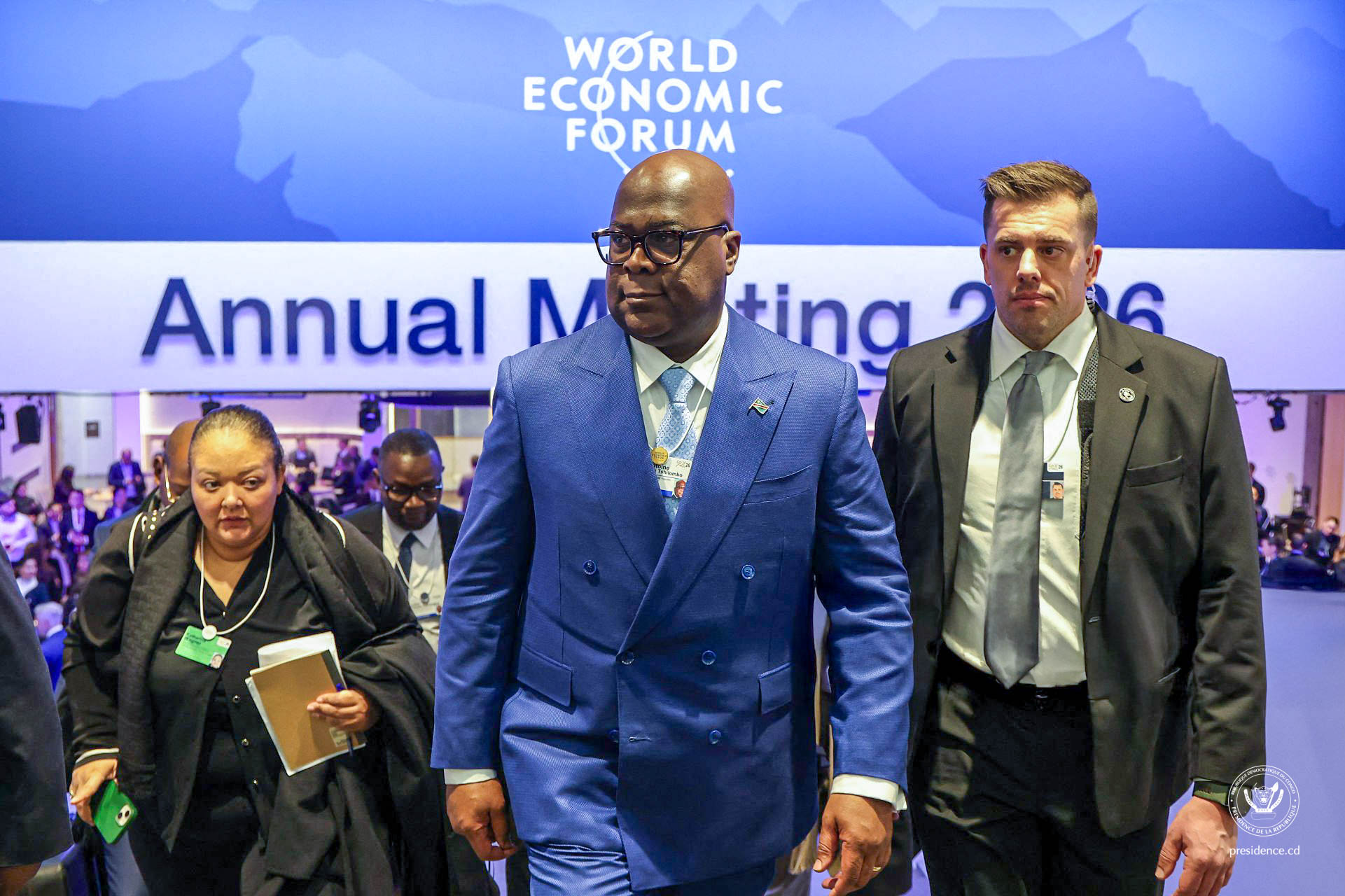
In the prestigious framework of the 56th World Economic Forum in Davos, the President of the Democratic Republic of Congo, Félix Tshisekedi, delivered a remarkable speech on Wednesday, firmly positioning his country as an indispensable player and a "solution country" for the global challenges of energy transition and the fight against climate change.

In front of a meeting of world leaders, CEOs and investors during the session "Strategic Partnership on Minerals and Investments", the Congolese Head of State articulated a bold and demanding vision for the future of the critical minerals industry, essential to the manufacture of batteries and green technologies.

From Dependence to Strategic Partnership
President Tshisekedi immediately set the tone, rejecting the traditional role of a simple supplier of raw materials. "The time has come to substitute for partnership between dependence," he said, calling for a redesign of international economic relations around three key commitments:
  1. Security through diversification: He advocated massive investments in the exploration of new deposits in the DRC to strengthen the robustness and plurality of global supply chains.
  2. Prosperity through local transformation: Insisting on the end of the era of "pure extraction", he launched a firm call for the "relocation of value segments" - such as the refining and manufacture of components - in the heart of African production areas. "In transforming our resources on our soil, we are moving from an economy of extraction to an economy of sustainable industrialization," he said.
  3. Financial and industrial innovation: The President stressed the need for innovative financial mechanisms to attract long-term capital to integrative projects and industrial development corridors in the DRC.
Davos, showcase of a claimed economic sovereignty
This participation in Davos, placed under the theme "A spirit of dialogue", is strategic for the DRC. It allows it to capitalize on its status as a non-permanent member of the UN Security Council to promote multilateralism, while presenting concrete assets such as the "Kivu-Kinshasa Green Corridor" initiative for the climate and its immense potential in hydroelectricity and minerals.

President Tshisekedi's speech comes in a context where the DRC seeks to consolidate and balance its international partnerships. He referred to the strategic partnership agreement signed with the United States, aimed at accelerating industrialization and securing supply chains. However, he implicitly responded to internal criticism - such as those of the Archbishop of Lubumbashi, Fulgence Muteba Mugalu, who denounces a "sale" - by insisting on partnerships "mutually beneficial, respectful of the sovereignty of States and bearers of shared prosperity".

A call to build with Africa
The final message was a clear call to action and confidence: "Africa is no longer just waiting to be heard, it is ready to build. The DRC is open to those who see far and agree to take risks with it. "

With this speech, President Tshisekedi has gone beyond the traditional framework of soliciting investments. He presented a demanding roadmap for reinvented economic cooperation, where the DRC intends to be a strategic partner and not a mere reservoir of resources, thus affirming its willingness to play a central and sovereign role in the global energy transition.
By Marius Bopenga
CONGO PUB Online


But multiple reports continue to uncover the corruption 👇


  • Like
  • Fire
Reactions: 3 users
Top Bottom