
You are using an out of date browser. It may not display this or other websites correctly.
You should upgrade or use an alternative browser.
You should upgrade or use an alternative browser.
BRN Discussion Ongoing
- Thread starter TechGirl
- Start date

stockduck
Regular
Is it technologically/economically conceivable that the Akida chip in the field of lighting technology for LED lamps will bring a significant improvement in terms of energy utilization and efficiency in relation to the durability of an LED lamp and/or electricity savings in general? Could it be possible to build Akida IP into LED chips, or is that too far-fetched. In my opinion, there needs to be significant progress in the development of LED lamps in order to improve their quality (lifespan, power consumption, light frequency on/off).
Which are the big led manufacturing companies in the world?
Do some have a relationship with BRN?
How manny chips/year does this market need?
Which are the big led manufacturing companies in the world?
Do some have a relationship with BRN?
How manny chips/year does this market need?
stockduck
Regular
Is it technologically/economically conceivable that the Akida chip in the field of lighting technology for LED lamps will bring a significant improvement in terms of energy utilization and efficiency in relation to the durability of an LED lamp and/or electricity savings in general? Could it be possible to build Akida IP into LED chips, or is that too far-fetched. In my opinion, there needs to be significant progress in the development of LED lamps in order to improve their quality (lifespan, power consumption, light frequency on/off).
Which are the big led manufacturing companies in the world?
Do some have a relationship with BRN?
How manny chips/year does this market need?
...after small research, my impression is....there is a market not only for lamps, also for security (z.B. hospitals)
thelittleshort
Top Bloke
Mercedes Benz sustainability report for 2022 has just been released by Markus Schäfer
Pretty mundane generally, but found a familiar sentence in the ‘3rd Principle: protection of privacy’ section


Pretty mundane generally, but found a familiar sentence in the ‘3rd Principle: protection of privacy’ section
Hi stockduck,Is it technologically/economically conceivable that the Akida chip in the field of lighting technology for LED lamps will bring a significant improvement in terms of energy utilization and efficiency in relation to the durability of an LED lamp and/or electricity savings in general? Could it be possible to build Akida IP into LED chips, or is that too far-fetched. In my opinion, there needs to be significant progress in the development of LED lamps in order to improve their quality (lifespan, power consumption, light frequency on/off).
Which are the big led manufacturing companies in the world?
Do some have a relationship with BRN?
How manny chips/year does this market need?
Some LED diodes are made using gallium nitride, and would not be compatible with the Akida.
n Australian company, BluGlass, has invented a revolutionary GaN LED/laser diode manufacturing process, RPCVD, which operates at a few hundred degrees lower than standard CVD/MCVD. They have licenced out their LED manufacturing, but kept the laser manufacturing in-house.
This is a slide of manufacturers from the BluGlass webinar:
Investor Webcast | Bluglass
Last edited:
D
Deleted member 118
Guest
Ai in banking a small read for a Sunday

Tothemoon24
Top 20
Qualcomm Is Poised to Dominate EVs Before Apple Gets a Chance
Its digital chassis is an internet-connected platform for the whole car, and the tech giant has General Motors, Jeep, Mercedes, and many more on board.
Much was said at the CES technology show back in January about the teaming up of car companies and tech firms. Beyond one merely providing the infotainment systems, apps, and touchscreens for the other, foundations are seemingly being laid for deep-routed collaborations. Cars are, after all, inevitably turning into highly connected platforms as reliant on efficient and upgradeable software architecture as smartphones and laptops.
For technology companies this means the opportunity to build an entire automotive software stack, from the parking sensors and driver-assistance radar to the dashboard display and smartphone app. For carmakers, finding the right technology partner could mean simplifying a vehicle’s architecture and unlocking new revenue streams in the form of passenger entertainment and downloadable upgrades. Finding the wrong one could be equally impactful—just ask automakers who have had dealings with Apple.
Unearthing new customer experiences—and, of course, charging for them—is key to LG Electronics’ new technical collaboration with Magna, a major global automotive parts supplier that also assembles cars for companies like Mercedes-Benz, BMW, Jaguar, and Fisker.
LG says with Magna it will develop a proof of concept for an “automated driver infotainment solution” providing “differentiated customer experiences,” which means there will be several levels of optional tech in this infotainment package so it can potentially be sold to multiple auto manufacturers. Audi explored a similar concept back in 2019 with the Immersive In-Car Entertainment project that used sound, light, vibrating seats, and even the car’s active suspension to give passengers a “4D” movie theater experience.
Sony Honda Mobility (SHM) is another example of an auto-tech alliance gearing up to build the car of the future. The alliance used CES 2023 to show off the first vehicle under a new brand called Afeela. Sat among televisions and virtual-reality headsets on Sony’s stand, the concept car obligingly featured Fortnite and Spider-Mangameplay imagery on a digital display above its front bumper.
Although falling short of saying Afeela cars would include a PlayStation 5 to pacify road-trip boredom, SHM said it has started to “build new values and concepts for mobility” with Epic Games. Horizon Forbidden West, a PS5 game published by Sony, appeared on rear seat displays of the Afeela show car. Tesla, incidentally, recently added access to the Steam video game library to its newest cars.
One System to Rule Them All?
PHOTOGRAPH: QUALCOMMAfeela cars will use Qualcomm’s new Snapdragon Digital Chassis system for driver assistance, autonomous driving, interfaces, and telematics. Also revealed at CES, the Digital Chassis is an automotive technology platform that combines safety and connectivity systems, entertainment, customization, and upgradability all into one product.
Unsurprisingly, it's a key growth pillar for Qualcomm as the company's revenue declines, as demand weakens for handsets and IoT products. Indeed, its automotive segment grew 58 percent in Q4 last year to $456 million—driven, according to Counterpoint, by the Digital Chassis.
Within Digital Chassis are four key Qualcomm automotive systems: These are called Snapdragon Auto Connectivity (connected systems like 5G and vehicle-to-vehicle technologies), Snapdragon Cockpit Platform (digital instrument clusters and infotainment), Snapdragon Car-to-Cloud (catering for over-the-air software updates), and Snapdragon Ride Platform (driver-assistance tech and autonomous driving capabilities).
“There is a tremendous amount of opportunity to reinvent the car,” says Nakul Duggal, Qualcomm’s senior vice president and general manager for automotive, “and a tremendous amount of that reinvention is happening because the car is becoming a truly digital product.”
Duggal says today’s automakers need to envisage “a tremendous number of use cases” that may present themselves over the lifetime of a vehicle, and that these “require you to really think about the platform very differently.”
PHOTOGRAPH: QUALCOMM
By adopting Qualcomm’s Digital Chassis, Duggal claims car manufacturers will benefit from faster development of connected systems. “If you think about the way the car architecture is being designed going forward, you have centralization of compute capabilities, larger processors in the car, built-in connectivity, safety features built-in,” he says. “All of these require the car architecture to shift, and you need somebody who actually understands what it means to be able to build a platform.”
Most established auto marques are slow to adopt new tech, realize its significance, or sort hype from truly useful offerings when it comes to car systems. However, the uniformity and simplicity of electric drivetrains compared to internal combustion has helped level a playing field previously dominated by carmakers with more than a century of engine-building experience. Newcomers such as Chinese firm Nio hope that connected technologies and dashboard-mounted AI assistants will tempt new buyers away from more established brands, while BYD Auto, founded in 2003, made six of the top 10 EVmodels sold worldwide in Q4 last year.
Duggal says technology, software, and electrical architecture are among “the key differentiators” automakers will have to consider in a future where how a car drives no longer sets it apart from its rivals. “We have been working with everyautomaker for the past dozen years or so. We are clearly seeing trends that are common across what everybody needs. We include that in our platform, we provide a tremendous amount of software capability, integration capability—and that just allows automakers to move faster.”
To give you some indication of how popular Qualcomm's automotive system is appearing to be, customers for its Digital Chassis include Sony Honda Mobility, Mercedes-Benz, General Motors, Cadillac, and Stellantis, a group that includes Peugeot, Fiat, Citroen, Jeep, Dodge, Maserati, and Chrysler among others. Qualcomm also says it has received support for the new platform from BMW, Hyundai Motor Group, Nio, and Volvo.
At a time when automakers are still struggling with semiconductor shortages, these manufacturers clearly hope to benefit from the supposed inherent simplicity offered by the Digital Chassis.
Efficient Car “Brains”
Duggal told WIRED how the platform drastically lowers the number of electronic control units (ECUs) used to form the “brain” of a car. “In the past, you would have a dozen different ECUs that were responsible for everything from displays to parking, to driver monitoring, to the audio and speakers,” says Duggal. “All of that is getting integrated into a common platform. We are now seeing next-generation EE architectures get reduced down to less than five main subsystems—cockpit for the in-car experience, telematics for in-car and cloud connectivity, driver assistance and automated driving systems, in-car networking, and zonal controllers being the main ones.”The Digital Chassis also brings together a car’s various technology systems—including telematics, navigation, multimedia, EV charging, and autonomy—into an internet-connected platform.
Qualcomm has designed Digital Chassis to run on a set of system-on-chips (SoCs), and it can be customized based on the requirements of carmakers and their tier-one suppliers, with headroom for future upgrades delivered over-the-air. Ultimately, by bundling more systems onto fewer chips, the Digital Chassis supposedly intends to save car makers money.
PHOTOGRAPH: QUALCOMM
Perhaps crucially, Qualcomm also says its Digital Chassis allows automakers to “own the in-vehicle experience … [and] extend their brand and bring engaging consumer interactions into the vehicle.” This will be particularly welcomed by manufacturers after the announcement in June last year of Apple’s next-gen multiscreen version of CarPlay, which will likely not be anywhere near as collaborative as Qualcomm’s offering. Indeed, when CarPlay 2 was announced, WIRED reached out to a number of major automakers for comment on the Cupertino system, only to find that it seemed as if the companies had no idea the news, and the potential impact to their dominance over their own car UIs, was coming.
The Digital Chassis system is designed to work across all regions and in all types of vehicle, and Qualcomm says it hopes the chassis will “inspire new business models for automakers” that go beyond merely selling and maintaining a car.
If You Thought Paying for Heated Seats Was Bad …
Aside from in-car gaming, these new business models will also include drivers being asked to pay to unlock features already installed in their vehicle. BMW caused controversy when it suggested heated seats already fitted to a car would require a subscription to function. Mercedes will soon ask drivers to pay $1,200 to unlock more performance, hidden behind a paywall written into their EV’s code. The latest model of Polestar 2 can be made more powerful by purchasing the Performance Pack, which arrives via a software update, no wrenches required.As well as software and connectivity, technology companies can help automakers—especially startups—when it comes to mass production. Such a collaboration can be found with Fisker and Foxconn. The former is a Californian EV startup headed by former Aston Martin designer Henrik Fisker, and the latter is a Taiwanese company best known for assembling iPhones. The two plan to codevelop a circa-$30,000 EV due to go into production at a facility in Ohio in 2024.
Fisker said in 2021 that Foxconn will help with product development, sourcing, and manufacturing, and that the partnership will enable his company to deliver products “at a price point that truly opens up electric mobility to the mass market.”
Not wishing to put all of its automotive eggs in one basket, Foxconn is also involved in a joint venture with Chinese automotive giant Geely, parent of Volvo, Polestar, and Lotus among others. Similarly, Pegatron, another Taiwanese firm tasked with assembling iPhones, is now also a manufacturing partner of Tesla.
Finding a technology partner could soon be of utmost importance for car brands yet to fully embrace advanced infotainment, driver assistance, and connectivity systems. Lei Zhou, a partner at Deloitte Tohmatsu Consulting, told WIRED it is “highly likely” that automakers who go it alone with their own technology are in danger of being left behind.
Zhou added: “If conventional OEMs develop connected technologies with their current capabilities, they may find themselves left behind by emerging EV makers with IT backgrounds or OEMs that have partnered with powerful tech partners … significant value can be generated by collaboration with a variety of players, including technology and business fields.”
And Just What Is Apple Up to?
The opposite is also true, where technology companies keen to develop their first car require help from automakers with manufacturing experience.Tyson Jominy, vice president of automotive consulting at JD Power, told WIRED: “Tesla, Rivian, Dyson, Lucid, and others have all done really well through the process of designing a car. But when you get down to the brass tacks of building a car it’s very difficult. When a lot of startups run into problems, it’s [because] mass-producing cars at scale is hard. So partnering up does make sense.”
Such partnering between auto and tech makes us wonder what Apple’s current position is. Its Project Titan division has ebbed and flowed for years now, reportedly growing, shrinking, and changing direction without ever revealing itself in public. CES this year showed how there are numerous ways for technology companies to break into automotive—so much so that it’s now easy to imagine Apple being unable to decide between running out an entire car, a major upgrade to CarPlay, an autonomous driving system, enhanced mapping, or a computational platform like the Qualcomm Digital Chassis.
If Apple is still interested in cars—and if Project Titan is even still active—we’re now starting to see precisely how its tech rivals are placing their bets. Going it alone would be tough, even for a company with Apple’s mighty resources.
“I just don’t think the nuts and bolts of building cars is something of interest to Apple,” says Jominy says. “So I could see something like a Sony-type play … Apple has one of the most envious positions in the auto industry [with CarPlay] ... there’s more dollars to chase and it probably will, but the auto industry as a whole is still relatively low-margin, certainly relative to software.”
Whoever cuts the right deal with the strongest ally will secure the best position to succeed in what has become a rapidly evolving car industry—one that is now more reliant than ever on intelligent, connected technology (and entertainment, if autonomous driving ever becomes reality). Those who go it alone, or pick their partners poorly, run the risk of being left behind.
D
Deleted member 118
Guest
Akida 2nd Generation | Nandan Nayampally
Pretty big moment for BrainChip , and yet, just another step on our path to enabling the rapid growth in the #AIoT market. The 2nd generation #Akida platform builds on the fully digital, event-based #neuromorphic foundation and adds some very key ingredients like #VisionTransformers, very...
Last edited by a moderator:
Fact Finder
Top 20
Interesting article and well worth a read. Thanks for sharing.
Qualcomm Is Poised to Dominate EVs Before Apple Gets a Chance
Its digital chassis is an internet-connected platform for the whole car, and the tech giant has General Motors, Jeep, Mercedes, and many more on board.
PHOTOGRAPH: QUALCOMM
Much was said at the CES technology show back in January about the teaming up of car companies and tech firms. Beyond one merely providing the infotainment systems, apps, and touchscreens for the other, foundations are seemingly being laid for deep-routed collaborations. Cars are, after all, inevitably turning into highly connected platforms as reliant on efficient and upgradeable software architecture as smartphones and laptops.
For technology companies this means the opportunity to build an entire automotive software stack, from the parking sensors and driver-assistance radar to the dashboard display and smartphone app. For carmakers, finding the right technology partner could mean simplifying a vehicle’s architecture and unlocking new revenue streams in the form of passenger entertainment and downloadable upgrades. Finding the wrong one could be equally impactful—just ask automakers who have had dealings with Apple.
Unearthing new customer experiences—and, of course, charging for them—is key to LG Electronics’ new technical collaboration with Magna, a major global automotive parts supplier that also assembles cars for companies like Mercedes-Benz, BMW, Jaguar, and Fisker.
LG says with Magna it will develop a proof of concept for an “automated driver infotainment solution” providing “differentiated customer experiences,” which means there will be several levels of optional tech in this infotainment package so it can potentially be sold to multiple auto manufacturers. Audi explored a similar concept back in 2019 with the Immersive In-Car Entertainment project that used sound, light, vibrating seats, and even the car’s active suspension to give passengers a “4D” movie theater experience.
Sony Honda Mobility (SHM) is another example of an auto-tech alliance gearing up to build the car of the future. The alliance used CES 2023 to show off the first vehicle under a new brand called Afeela. Sat among televisions and virtual-reality headsets on Sony’s stand, the concept car obligingly featured Fortnite and Spider-Mangameplay imagery on a digital display above its front bumper.
Although falling short of saying Afeela cars would include a PlayStation 5 to pacify road-trip boredom, SHM said it has started to “build new values and concepts for mobility” with Epic Games. Horizon Forbidden West, a PS5 game published by Sony, appeared on rear seat displays of the Afeela show car. Tesla, incidentally, recently added access to the Steam video game library to its newest cars.
One System to Rule Them All?
PHOTOGRAPH: QUALCOMM
Afeela cars will use Qualcomm’s new Snapdragon Digital Chassis system for driver assistance, autonomous driving, interfaces, and telematics. Also revealed at CES, the Digital Chassis is an automotive technology platform that combines safety and connectivity systems, entertainment, customization, and upgradability all into one product.
Unsurprisingly, it's a key growth pillar for Qualcomm as the company's revenue declines, as demand weakens for handsets and IoT products. Indeed, its automotive segment grew 58 percent in Q4 last year to $456 million—driven, according to Counterpoint, by the Digital Chassis.
Within Digital Chassis are four key Qualcomm automotive systems: These are called Snapdragon Auto Connectivity (connected systems like 5G and vehicle-to-vehicle technologies), Snapdragon Cockpit Platform (digital instrument clusters and infotainment), Snapdragon Car-to-Cloud (catering for over-the-air software updates), and Snapdragon Ride Platform (driver-assistance tech and autonomous driving capabilities).
“There is a tremendous amount of opportunity to reinvent the car,” says Nakul Duggal, Qualcomm’s senior vice president and general manager for automotive, “and a tremendous amount of that reinvention is happening because the car is becoming a truly digital product.”
Duggal says today’s automakers need to envisage “a tremendous number of use cases” that may present themselves over the lifetime of a vehicle, and that these “require you to really think about the platform very differently.”
PHOTOGRAPH: QUALCOMM
By adopting Qualcomm’s Digital Chassis, Duggal claims car manufacturers will benefit from faster development of connected systems. “If you think about the way the car architecture is being designed going forward, you have centralization of compute capabilities, larger processors in the car, built-in connectivity, safety features built-in,” he says. “All of these require the car architecture to shift, and you need somebody who actually understands what it means to be able to build a platform.”
Most established auto marques are slow to adopt new tech, realize its significance, or sort hype from truly useful offerings when it comes to car systems. However, the uniformity and simplicity of electric drivetrains compared to internal combustion has helped level a playing field previously dominated by carmakers with more than a century of engine-building experience. Newcomers such as Chinese firm Nio hope that connected technologies and dashboard-mounted AI assistants will tempt new buyers away from more established brands, while BYD Auto, founded in 2003, made six of the top 10 EVmodels sold worldwide in Q4 last year.
Duggal says technology, software, and electrical architecture are among “the key differentiators” automakers will have to consider in a future where how a car drives no longer sets it apart from its rivals. “We have been working with everyautomaker for the past dozen years or so. We are clearly seeing trends that are common across what everybody needs. We include that in our platform, we provide a tremendous amount of software capability, integration capability—and that just allows automakers to move faster.”
To give you some indication of how popular Qualcomm's automotive system is appearing to be, customers for its Digital Chassis include Sony Honda Mobility, Mercedes-Benz, General Motors, Cadillac, and Stellantis, a group that includes Peugeot, Fiat, Citroen, Jeep, Dodge, Maserati, and Chrysler among others. Qualcomm also says it has received support for the new platform from BMW, Hyundai Motor Group, Nio, and Volvo.
At a time when automakers are still struggling with semiconductor shortages, these manufacturers clearly hope to benefit from the supposed inherent simplicity offered by the Digital Chassis.
Efficient Car “Brains”
Duggal told WIRED how the platform drastically lowers the number of electronic control units (ECUs) used to form the “brain” of a car. “In the past, you would have a dozen different ECUs that were responsible for everything from displays to parking, to driver monitoring, to the audio and speakers,” says Duggal. “All of that is getting integrated into a common platform. We are now seeing next-generation EE architectures get reduced down to less than five main subsystems—cockpit for the in-car experience, telematics for in-car and cloud connectivity, driver assistance and automated driving systems, in-car networking, and zonal controllers being the main ones.”
The Digital Chassis also brings together a car’s various technology systems—including telematics, navigation, multimedia, EV charging, and autonomy—into an internet-connected platform.
Qualcomm has designed Digital Chassis to run on a set of system-on-chips (SoCs), and it can be customized based on the requirements of carmakers and their tier-one suppliers, with headroom for future upgrades delivered over-the-air. Ultimately, by bundling more systems onto fewer chips, the Digital Chassis supposedly intends to save car makers money.
PHOTOGRAPH: QUALCOMM
Perhaps crucially, Qualcomm also says its Digital Chassis allows automakers to “own the in-vehicle experience … [and] extend their brand and bring engaging consumer interactions into the vehicle.” This will be particularly welcomed by manufacturers after the announcement in June last year of Apple’s next-gen multiscreen version of CarPlay, which will likely not be anywhere near as collaborative as Qualcomm’s offering. Indeed, when CarPlay 2 was announced, WIRED reached out to a number of major automakers for comment on the Cupertino system, only to find that it seemed as if the companies had no idea the news, and the potential impact to their dominance over their own car UIs, was coming.
The Digital Chassis system is designed to work across all regions and in all types of vehicle, and Qualcomm says it hopes the chassis will “inspire new business models for automakers” that go beyond merely selling and maintaining a car.
If You Thought Paying for Heated Seats Was Bad …
Aside from in-car gaming, these new business models will also include drivers being asked to pay to unlock features already installed in their vehicle. BMW caused controversy when it suggested heated seats already fitted to a car would require a subscription to function. Mercedes will soon ask drivers to pay $1,200 to unlock more performance, hidden behind a paywall written into their EV’s code. The latest model of Polestar 2 can be made more powerful by purchasing the Performance Pack, which arrives via a software update, no wrenches required.
As well as software and connectivity, technology companies can help automakers—especially startups—when it comes to mass production. Such a collaboration can be found with Fisker and Foxconn. The former is a Californian EV startup headed by former Aston Martin designer Henrik Fisker, and the latter is a Taiwanese company best known for assembling iPhones. The two plan to codevelop a circa-$30,000 EV due to go into production at a facility in Ohio in 2024.
Fisker said in 2021 that Foxconn will help with product development, sourcing, and manufacturing, and that the partnership will enable his company to deliver products “at a price point that truly opens up electric mobility to the mass market.”
Not wishing to put all of its automotive eggs in one basket, Foxconn is also involved in a joint venture with Chinese automotive giant Geely, parent of Volvo, Polestar, and Lotus among others. Similarly, Pegatron, another Taiwanese firm tasked with assembling iPhones, is now also a manufacturing partner of Tesla.
Finding a technology partner could soon be of utmost importance for car brands yet to fully embrace advanced infotainment, driver assistance, and connectivity systems. Lei Zhou, a partner at Deloitte Tohmatsu Consulting, told WIRED it is “highly likely” that automakers who go it alone with their own technology are in danger of being left behind.
Zhou added: “If conventional OEMs develop connected technologies with their current capabilities, they may find themselves left behind by emerging EV makers with IT backgrounds or OEMs that have partnered with powerful tech partners … significant value can be generated by collaboration with a variety of players, including technology and business fields.”
And Just What Is Apple Up to?
The opposite is also true, where technology companies keen to develop their first car require help from automakers with manufacturing experience.
Tyson Jominy, vice president of automotive consulting at JD Power, told WIRED: “Tesla, Rivian, Dyson, Lucid, and others have all done really well through the process of designing a car. But when you get down to the brass tacks of building a car it’s very difficult. When a lot of startups run into problems, it’s [because] mass-producing cars at scale is hard. So partnering up does make sense.”
Such partnering between auto and tech makes us wonder what Apple’s current position is. Its Project Titan division has ebbed and flowed for years now, reportedly growing, shrinking, and changing direction without ever revealing itself in public. CES this year showed how there are numerous ways for technology companies to break into automotive—so much so that it’s now easy to imagine Apple being unable to decide between running out an entire car, a major upgrade to CarPlay, an autonomous driving system, enhanced mapping, or a computational platform like the Qualcomm Digital Chassis.
If Apple is still interested in cars—and if Project Titan is even still active—we’re now starting to see precisely how its tech rivals are placing their bets. Going it alone would be tough, even for a company with Apple’s mighty resources.
“I just don’t think the nuts and bolts of building cars is something of interest to Apple,” says Jominy says. “So I could see something like a Sony-type play … Apple has one of the most envious positions in the auto industry [with CarPlay] ... there’s more dollars to chase and it probably will, but the auto industry as a whole is still relatively low-margin, certainly relative to software.”
Whoever cuts the right deal with the strongest ally will secure the best position to succeed in what has become a rapidly evolving car industry—one that is now more reliant than ever on intelligent, connected technology (and entertainment, if autonomous driving ever becomes reality). Those who go it alone, or pick their partners poorly, run the risk of being left behind.
Yesterday Socionext’s absence from the website even though it is actively promoting automotive solutions for AKIDA technologies was discussed.
We do know for a fact that Socionext has a number of active engagements with Foxconn.
These two Facts AKIDA for Automotive via Socionext and Foxconn ties to Socionext make me wonder about the following extract from this article:
“As well as software and connectivity, technology companies can help automakers—especially startups—when it comes to mass production. Such a collaboration can be found with Fisker and Foxconn. The former is a Californian EV startup headed by former Aston Martin designer Henrik Fisker, and the latter is a Taiwanese company best known for assembling iPhones. The two plan to codevelop a circa-$30,000 EV due to go into production at a facility in Ohio in 2024.
Fisker said in 2021 that Foxconn will help with product development, sourcing, and manufacturing, and that the partnership will enable his company to deliver products “at a price point that truly opens up electric mobility to the mass market.”
Not wishing to put all of its automotive eggs in one basket, Foxconn is also involved in a joint venture with Chinese automotive giant Geely, parent of Volvo, Polestar, and Lotus among others.”
If you are building an affordable EV one way to reduce the BOM is to reduce the number of semiconductors required.
Peter van der Made is on the record from the 2019 AGM as saying he could provide all the compute for fully autonomous driving with 100 AKD1000 chips.
Logic says if you are building a reasonably priced small EV you would not be looking to full autonomy so considerably less than 100 AKD1000 chips would be required.
Less than 100 chips against many hundreds to thousands would when the chips are $US25.00 each and less as IP create considerable savings.
So I ask the question if Socionext based on AKIDA technology was engaged in such a project with Foxconn would it be something they would be hiding from public view to protect first to market advantage or shouting from the rooftops.
My opinion and speculation only so DYOR
FF
AKIDA BALLISTA
Tothemoon24
Top 20
Like your thinking FFInteresting article and well worth a read. Thanks for sharing.
Yesterday Socionext’s absence from the website even though it is actively promoting automotive solutions for AKIDA technologies was discussed.
We do know for a fact that Socionext has a number of active engagements with Foxconn.
These two Facts AKIDA for Automotive via Socionext and Foxconn ties to Socionext make me wonder about the following extract from this article:
“As well as software and connectivity, technology companies can help automakers—especially startups—when it comes to mass production. Such a collaboration can be found with Fisker and Foxconn. The former is a Californian EV startup headed by former Aston Martin designer Henrik Fisker, and the latter is a Taiwanese company best known for assembling iPhones. The two plan to codevelop a circa-$30,000 EV due to go into production at a facility in Ohio in 2024.
Fisker said in 2021 that Foxconn will help with product development, sourcing, and manufacturing, and that the partnership will enable his company to deliver products “at a price point that truly opens up electric mobility to the mass market.”
Not wishing to put all of its automotive eggs in one basket, Foxconn is also involved in a joint venture with Chinese automotive giant Geely, parent of Volvo, Polestar, and Lotus among others.”
If you are building an affordable EV one way to reduce the BOM is to reduce the number of semiconductors required.
Peter van der Made is on the record from the 2019 AGM as saying he could provide all the compute for fully autonomous driving with 100 AKD1000 chips.
Logic says if you are building a reasonably priced small EV you would not be looking to full autonomy so considerably less than 100 AKD1000 chips would be required.
Less than 100 chips against many hundreds to thousands would when the chips are $US25.00 each and less as IP create considerable savings.
So I ask the question if Socionext based on AKIDA technology was engaged in such a project with Foxconn would it be something they would be hiding from public view to protect first to market advantage or shouting from the rooftops.
My opinion and speculation only so DYOR
FF
AKIDA BALLISTA
Fact Finder
Top 20
Interesting article and well worth a read. Thanks for sharing.
Yesterday Socionext’s absence from the website even though it is actively promoting automotive solutions for AKIDA technologies was discussed.
We do know for a fact that Socionext has a number of active engagements with Foxconn.
These two Facts AKIDA for Automotive via Socionext and Foxconn ties to Socionext make me wonder about the following extract from this article:
“As well as software and connectivity, technology companies can help automakers—especially startups—when it comes to mass production. Such a collaboration can be found with Fisker and Foxconn. The former is a Californian EV startup headed by former Aston Martin designer Henrik Fisker, and the latter is a Taiwanese company best known for assembling iPhones. The two plan to codevelop a circa-$30,000 EV due to go into production at a facility in Ohio in 2024.
Fisker said in 2021 that Foxconn will help with product development, sourcing, and manufacturing, and that the partnership will enable his company to deliver products “at a price point that truly opens up electric mobility to the mass market.”
Not wishing to put all of its automotive eggs in one basket, Foxconn is also involved in a joint venture with Chinese automotive giant Geely, parent of Volvo, Polestar, and Lotus among others.”
If you are building an affordable EV one way to reduce the BOM is to reduce the number of semiconductors required.
Peter van der Made is on the record from the 2019 AGM as saying he could provide all the compute for fully autonomous driving with 100 AKD1000 chips.
Logic says if you are building a reasonably priced small EV you would not be looking to full autonomy so considerably less than 100 AKD1000 chips would be required.
Less than 100 chips against many hundreds to thousands would when the chips are $US25.00 each and less as IP create considerable savings.
So I ask the question if Socionext based on AKIDA technology was engaged in such a project with Foxconn would it be something they would be hiding from public view to protect first to market advantage or shouting from the rooftops.
My opinion and speculation only so DYOR
FF
AKIDA BALLISTA
Fisker and Foxconn sign deal to build electric vehicles
Rebecca Bellan@rebeccabellan / 6:58 pm PDT • May 13, 2021

Image Credits: Fisker
Electric car startup Fisker signed an agreement with Foxconn, the Taiwanese company that assembles iPhones, to co-develop and manufacture a new electric vehicle. Production on the car, which will be sold under the Fisker brand name in North America, Europe, China and India, will begin in the U.S. by the end of 2023.
Numerous details, including the name of the car and the location of future manufacturing plants, have not been disclosed by the two companies. As for form factor, Fisker describes it as a “breakthrough new segment vehicle,” so neither a sedan nor an SUV, that’s capable of carrying five people, a Fisker spokesperson told TechCrunch.
Fisker is calling the joint program Project PEAR, which stands for Personal Electric Automotive Revolution. Fisker chairman and CEO Henrik Fisker has bragged that the PEAR vehicle will be the “next big thing in car design,” a car that’s both “emotionally desirable” and “eco-friendly,” meaning a car that doesn’t shout “Look at me, I’m electric!” and rather appeals to the driver moving over from gasoline vehicles, according to a spokesperson from Fisker
The two companies had signed a memorandum of understanding agreement in February, setting the expectation that a formal agreement would be reached by this time. Included in the agreement signed on Thursday is a goal to produce 250,000 units annually across multiple sites. In January, Foxconn partnered with Chinese automaker Zhejiang Geely Holding Group to form a joint venture that would provide car manufacturers with production and consulting services, so the deal with Fisker is one of the company’s first forays into the automotive industry.
“In order to deliver on our promise of product breakthroughs from Project PEAR, we needed to rethink every aspect of product development, sourcing and manufacturing,” said Fisker chairman and CEO Henrik Fisker in a statement. “Our partnership with Foxconn enables us to deliver those industry firsts at a price point that truly opens up electric mobility to the mass market.”
The new vehicle will be priced under $30,000, according to Fisker, who touted the uniqueness and innovation of his car’s designs. Fisker will also begin production on its first model, Ocean, an electric SUV, in Europe by the end of next year. The company also intends to release a prototype of Ocean at the Los Angeles Auto Show later this year.
“We have world-class supply chains in place to support Project PEAR – in particular, securing the reliable delivery of chipsets and semiconductors,” said Young-way Liu, chairman of Foxconn, in a statement.
Liu noted how Foxconn would be able to connect Project PEAR with suppliers around the world through its software and hardware open platform for EVs, MIH, which aligns with the company’s “3+3” vision which symbolizes the infinite technological and industry advancements available through the platform.
Foxconn and Fisker are still shopping for potential U.S. manufacturing sites, so they’ve set up an office between the U.S. and Taiwan to coordinate design, engineering, purchasing and manufacturing operations.
This article has been updated to reflect new information from Fisker
stockduck
Regular
Thank you very much for this insight... I see there is maybe a connection to BRN possible.Hi stockduck,
Some LED diodes are made using gallium nitride, and would not be compatible with the Akida.
n Australian company, BluGlass, has invented a revolutionary GaN LED/laser diode manufacturing process, RPCVD, which operates at a few hundred degrees lower than standard CVD/MCVD. They have licenced out their LED manufacturing, but kept the laser manufacturing in-house.
This is a slide of manufacturers from the BluGlass webibar:
Investor Webcast | Bluglass
View attachment 32565
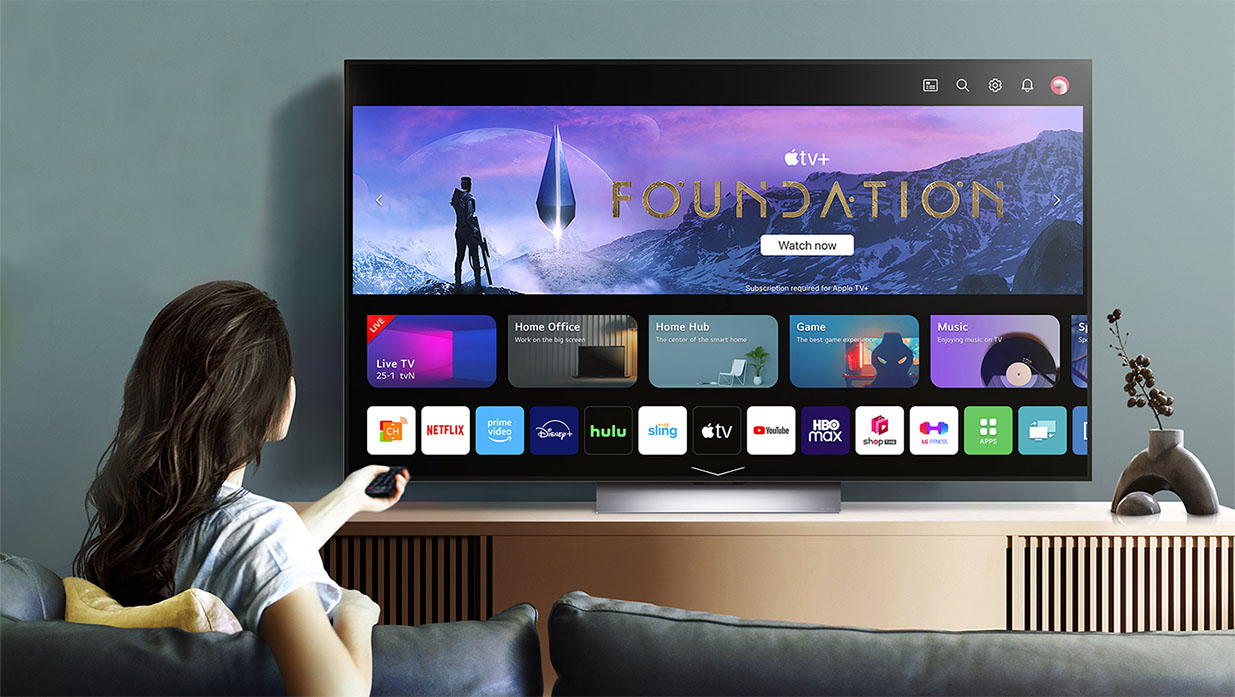
In germany these days there are some articles for a new television from LG....... LG OLED65G39LA
LG introduces its 2023 OLED TVs lineups with enhanced features for better viewing experience at CES 2023
At this year’s CES, LG unveiled its 2023 TV lineup that features premium self-lit...
 www.myeverydaytech.com
and I couldn`t found much to read about this new α9 Gen6 4K AI-Prozessor.
But I think 75W powerconsumtion for the whole TV is to much.....?
Fact Finder
Top 20
And there we go again Brainchip identifying Renesas as a “KEY PARTNER.”View attachment 32567

Akida 2nd Generation | Nandan Nayampally
Pretty big moment for BrainChip , and yet, just another step on our path to enabling the rapid growth in the #AIoT market. The 2nd generation #Akida platform builds on the fully digital, event-based #neuromorphic foundation and adds some very key ingredients like #VisionTransformers, very...www.linkedin.com
Prophesee is also described as a “KEY PARTNER” which I find confusing given Luca Verre’s comment about hoping to one day come to a commercial agreement.
All very strange and to this old retired lawyer who admittedly does get confused by the ways of the young lawyer, but even so how can someone or something be ‘KEY’ to the development of a commercially released product and there not be the scratch of a pen anywhere even one of those chook scratches on an iPad screen that looks nothing at all like the persons signature and could never be used as proof of anything. (Old technophobe rant)
“I’d like to personally thank the BrainChip teams as well as our key partners who are working with us on this journey, Renesas Electronics, Intel Corporation foundry services, PROPHESEE, Edge Impulse, SiFive, Ai Labs who are all a part of this announcement and BrainChip’s growth path.”
How can they be part of Brainchip’s growth path without at least an understanding of what that growth path is and in the normal course of business such an understanding used to be reduced to writing and called a ‘Memorandum of Understanding’ and the authorised officer from each party would dip their quills in ink and sign next to the pencil marked “X” placed their by the lawyers who have drawn the document.
I personally cannot believe that if this social media post is the truth that there are not one or more Memorandum of Understanding covering these KEY PARTNERSHIPS.
The ways of the modern world are certainly a mystery to which those attending the AGM may be able to find the key.
My opinion only DYOR
FF
AKIDA BALLISTA

chapman89
Founding Member
If you remember from the white paper published by Brainchip, it says and states that “automotive companies ARE ADOPTING akida for multiple use cases within the car”Fisker and Foxconn sign deal to build electric vehicles
Rebecca Bellan
@rebeccabellan / 6:58 pm PDT • May 13, 2021
Image Credits: Fisker
Electric car startup Fisker signed an agreement with Foxconn, the Taiwanese company that assembles iPhones, to co-develop and manufacture a new electric vehicle. Production on the car, which will be sold under the Fisker brand name in North America, Europe, China and India, will begin in the U.S. by the end of 2023.
Numerous details, including the name of the car and the location of future manufacturing plants, have not been disclosed by the two companies. As for form factor, Fisker describes it as a “breakthrough new segment vehicle,” so neither a sedan nor an SUV, that’s capable of carrying five people, a Fisker spokesperson told TechCrunch.
Fisker is calling the joint program Project PEAR, which stands for Personal Electric Automotive Revolution. Fisker chairman and CEO Henrik Fisker has bragged that the PEAR vehicle will be the “next big thing in car design,” a car that’s both “emotionally desirable” and “eco-friendly,” meaning a car that doesn’t shout “Look at me, I’m electric!” and rather appeals to the driver moving over from gasoline vehicles, according to a spokesperson from Fisker
The two companies had signed a memorandum of understanding agreement in February, setting the expectation that a formal agreement would be reached by this time. Included in the agreement signed on Thursday is a goal to produce 250,000 units annually across multiple sites. In January, Foxconn partnered with Chinese automaker Zhejiang Geely Holding Group to form a joint venture that would provide car manufacturers with production and consulting services, so the deal with Fisker is one of the company’s first forays into the automotive industry.
“In order to deliver on our promise of product breakthroughs from Project PEAR, we needed to rethink every aspect of product development, sourcing and manufacturing,” said Fisker chairman and CEO Henrik Fisker in a statement. “Our partnership with Foxconn enables us to deliver those industry firsts at a price point that truly opens up electric mobility to the mass market.”
The new vehicle will be priced under $30,000, according to Fisker, who touted the uniqueness and innovation of his car’s designs. Fisker will also begin production on its first model, Ocean, an electric SUV, in Europe by the end of next year. The company also intends to release a prototype of Ocean at the Los Angeles Auto Show later this year.
“We have world-class supply chains in place to support Project PEAR – in particular, securing the reliable delivery of chipsets and semiconductors,” said Young-way Liu, chairman of Foxconn, in a statement.
Liu noted how Foxconn would be able to connect Project PEAR with suppliers around the world through its software and hardware open platform for EVs, MIH, which aligns with the company’s “3+3” vision which symbolizes the infinite technological and industry advancements available through the platform.
Foxconn and Fisker are still shopping for potential U.S. manufacturing sites, so they’ve set up an office between the U.S. and Taiwan to coordinate design, engineering, purchasing and manufacturing operations.
This article has been updated to reflect new information from Fisker
It didn’t say potentially or it didn’t say we believe it can be adopted, it said automotive companies ARE ADOPTING AKIDA

Fact Finder
Top 20
And on a separate but significant enough to have its very own post point WHY does MegaChips not rate in this post as a KEY PARTNER when as they have said they were responsible for designing the backend of AKD1500. The only implication to be drawn is they had no part to play in the development of AKIDA 2nd gen.And there we go again Brainchip identifying Renesas as a “KEY PARTNER.”
Prophesee is also described as a “KEY PARTNER” which I find confusing given Luca Verre’s comment about hoping to one day come to a commercial agreement.
All very strange and to this old retired lawyer who admittedly does get confused by the ways of the young lawyer, but even so how can someone or something be ‘KEY’ to the development of a commercially released product and there not be the scratch of a pen anywhere even one of those chook scratches on an iPad screen that looks nothing at all like the persons signature and could never be used as proof of anything. (Old technophobe rant)
“I’d like to personally thank the BrainChip teams as well as our key partners who are working with us on this journey, Renesas Electronics, Intel Corporation foundry services, PROPHESEE, Edge Impulse, SiFive, Ai Labs who are all a part of this announcement and BrainChip’s growth path.”
How can they be part of Brainchip’s growth path without at least an understanding of what that growth path is and in the normal course of business such an understanding used to be reduced to writing and called a ‘Memorandum of Understanding’ and the authorised officer from each party would dip their quills in ink and sign next to the pencil marked “X” placed their by the lawyers who have drawn the document.
I personally cannot believe that if this social media post is the truth that there are not one or more Memorandum of Understanding covering these KEY PARTNERSHIPS.
The ways of the modern world are certainly a mystery to which those attending the AGM may be able to find the key.
My opinion only DYOR
FF
AKIDA BALLISTA
Then again was it a simple omission or is it that AKIDA 2nd gen was a separate project that only involved the named KEY PARTNERS.
If so it was far more formal than a get together over a coffee where the subject of how to build AKIDA 2nd gen came up and a few ideas were chucked around by Brainchip with SIX KEY PARTNERS.
By the way did you know that social media in all its forms is riddled with FAKE news and huge numbers of researchers are working on ways to use Ai to identify visual and written FAKES without definitive success. The point being perhaps this post by a Brainchip employee is FAKE so DYOR at the AGM.
My opinion only DYOR
FF
AKIDA BALLISTA

Boab
I wish I could paint like Vincent
Perhaps the suggestion from BrainChip to it's Key Partners that the Akida 2nd generation could achieve the things listed below would have been met with a "Yes please" but I feel there may have been a bit of prodding from the partners by saying "can you do this?"And there we go again Brainchip identifying Renesas as a “KEY PARTNER.”
Prophesee is also described as a “KEY PARTNER” which I find confusing given Luca Verre’s comment about hoping to one day come to a commercial agreement.
All very strange and to this old retired lawyer who admittedly does get confused by the ways of the young lawyer, but even so how can someone or something be ‘KEY’ to the development of a commercially released product and there not be the scratch of a pen anywhere even one of those chook scratches on an iPad screen that looks nothing at all like the persons signature and could never be used as proof of anything. (Old technophobe rant)
“I’d like to personally thank the BrainChip teams as well as our key partners who are working with us on this journey, Renesas Electronics, Intel Corporation foundry services, PROPHESEE, Edge Impulse, SiFive, Ai Labs who are all a part of this announcement and BrainChip’s growth path.”
How can they be part of Brainchip’s growth path without at least an understanding of what that growth path is and in the normal course of business such an understanding used to be reduced to writing and called a ‘Memorandum of Understanding’ and the authorised officer from each party would dip their quills in ink and sign next to the pencil marked “X” placed their by the lawyers who have drawn the document.
I personally cannot believe that if this social media post is the truth that there are not one or more Memorandum of Understanding covering these KEY PARTNERSHIPS.
The ways of the modern world are certainly a mystery to which those attending the AGM may be able to find the key.
My opinion only DYOR
FF
AKIDA BALLISTA
Time will tell.
Architecture and Notable Features
Skip connections:
The Akida neural processor has the ability to handle multiple layers simultaneously which is an important feature. It now adds support for short or long-range skip connections in the neural mesh or in the local scratchpad. Skip connections reduce degradation (ResNet) or future usability (DenseNet) of the network and are usually handled by the host CPU, and are now handled directly by the Akida neural processor substantially reducing latency and complexity. So networks like ResNet50 are now completely handled in the neural processor without CPU intervention.
Vision transformers provide a performance boost:
The Vision Transformer, or ViT, is a model for image classification that employs a Transformer-like architecture over patches of the image. An image is split into fixed-size patches, each of them are then linearly embedded, position embeddings are added, and the resulting sequence of vectors is fed to a standard Transformer encoder. In order to perform classification, the standard approach of adding an extra learnable “classification token” to the sequence is used. Akida now supports patch and position embeddings and the encoder block in hardware.
Learn More
Spatial Temporal convolutions:
Akida’s 2nd generation supports extremely efficient 3D convolutions.
This capability simplifies and accelerates the handling of 3D data such as video data, so applications like video object detection and target tracking.
Temporal Event-Based Neural Nets:
Temporal Event-based Neural Networks (TENNs) are lightweight, energy-efficient neural networks developed by Brainchip that excel at processing temporal data. TENNs offer state-of-the-art performance using significantly fewer parameters and address the low-power requirements of Edge based devices that need to support larger workloads.
TENNs process many types of temporal data including one-dimensional time series from microphones, vitals from health monitors, spatio-temporal events from dynamic vision sensors, live video from traditional cameras, and many others, allowing developers flexibility in performing compute-heavy tasks on devices with limited memory, battery, and compute resources.
Learn More


Fact Finder
Top 20
A very interesting new idea for Brainchip & PROPHESEE to explore:
arXiv:2206.06047v2 [cs.IT] 8 Jan 2023
Neuromorphic Wireless Cognition:
Event-Driven Semantic Communications for
Remote Inference
Jiechen Chen, Student Member, IEEE, Nicolas Skatchkovsky, Member, IEEE,
Osvaldo Simeone, Fellow, IEEE Abstract
Neuromorphic computing is an emerging computing paradigm that moves away from batched processing towards the online, event-driven, processing of streaming data. Neuromorphic chips, when coupled with spike-based sensors, can inherently adapt to the “semantics” of the data distribution by consuming energy only when relevant events are recorded in the timing of spikes and by proving a low-latency response to changing conditions in the environment. This paper proposes an end-to- end design for a neuromorphic wireless Internet-of-Things system that integrates spike-based sensing,
processing, and communication. In the proposed NeuroComm system, each sensing device is equipped with a neuromorphic sensor, a spiking neural network (SNN), and an impulse radio (IR) transmitter with multiple antennas. Transmission takes place over a shared fading channel to a receiver equipped with a multi-antenna impulse radio receiver and with an SNN. In order to enable adaptation of the receiver to the fading channel conditions, we introduce a hypernetwork to control the weights of the decoding SNN using pilots. Pilots, encoding SNNs, decoding SNN, and hypernetwork are jointly trained across multiple channel realizations. The proposed system is shown to significantly improve over conventional frame-based digital solutions, as well as over alternative non-adaptive training methods, in terms of time-to-accuracy and energy consumption metrics.
Index Terms
Neuromorphic computing, spiking neural networks, semantic communications.
The work of Osvaldo Simeone and Nicolas Skatchkovsky was supported by the European Research Council (ERC) under the European Union’s Horizon 2020 research and innovation programme, grant agreement No. 725731, by an Open Fellowship of the EPSRC with reference EP/W024101/1, and by the European Union through project CENTRIC (101096379), and the work by Jiechen Chen was funded by the China Scholarship Council and King’s College London for their Joint Full-Scholarship (K-CSC) under Grant CSC202108440223.
The authors are with the King’s Communications, Learning and Information Processing (KCLIP) lab, King’s College London, London, WC2R 2LS, UK. (email:{jiechen.chen, nicolas.skatchkovsky, osvaldo.simeone}@kcl.ac
VII. CONCLUSION
This paper has introduced NeuroComm, a novel neuromorphic end-to-end solution for remote wireless inference in applications involving always-on online monitoring. The proposed system integrates neuromorphic sensing and neuromorphic computing with impulse radio transmission, enabling the adaptation of energy consumption to the dynamics of the monitored environment while ensuring low-latency inference. At a system level, the innovations of this paper also include the use of a hypernetwork at the receiver side to optimize adaptation of the receiver to the current channel conditions. Extensive experimental results have demonstrated the benefits of neuromorphic sensing and computing for the implementation of wireless cognition in terms of time-to-accuracy and energy consumption. It is the hope of the authors that this work will pave the way for further study of the synergy between neuromorphic sensing and processing technologies with wireless communications. A particularly interesting avenue for research would be the development of a testbed incorporating software-defined radio that implement IR, as well
as neuromorphic hardware, possibly accessed using cloud services such as Intel’s Lava [43]. This would make it possible to assess the relative contributions of processing and transmit- receive chains on the overall energy consumption. Furthermore, one could consider other types of inference tasks such as tracking [16]. Finally, the IR interface could be leveraged for conventional data transmission as well as a probing signal for sensing applications.”

 ieeexplore.ieee.org
Disrupting industries that do not yet exist.
My opinion only DYOR
FF
AKIDA BALLISTA
arXiv:2206.06047v2 [cs.IT] 8 Jan 2023
Neuromorphic Wireless Cognition:
Event-Driven Semantic Communications for
Remote Inference
Jiechen Chen, Student Member, IEEE, Nicolas Skatchkovsky, Member, IEEE,
Osvaldo Simeone, Fellow, IEEE Abstract
Neuromorphic computing is an emerging computing paradigm that moves away from batched processing towards the online, event-driven, processing of streaming data. Neuromorphic chips, when coupled with spike-based sensors, can inherently adapt to the “semantics” of the data distribution by consuming energy only when relevant events are recorded in the timing of spikes and by proving a low-latency response to changing conditions in the environment. This paper proposes an end-to- end design for a neuromorphic wireless Internet-of-Things system that integrates spike-based sensing,
processing, and communication. In the proposed NeuroComm system, each sensing device is equipped with a neuromorphic sensor, a spiking neural network (SNN), and an impulse radio (IR) transmitter with multiple antennas. Transmission takes place over a shared fading channel to a receiver equipped with a multi-antenna impulse radio receiver and with an SNN. In order to enable adaptation of the receiver to the fading channel conditions, we introduce a hypernetwork to control the weights of the decoding SNN using pilots. Pilots, encoding SNNs, decoding SNN, and hypernetwork are jointly trained across multiple channel realizations. The proposed system is shown to significantly improve over conventional frame-based digital solutions, as well as over alternative non-adaptive training methods, in terms of time-to-accuracy and energy consumption metrics.
Index Terms
Neuromorphic computing, spiking neural networks, semantic communications.
The work of Osvaldo Simeone and Nicolas Skatchkovsky was supported by the European Research Council (ERC) under the European Union’s Horizon 2020 research and innovation programme, grant agreement No. 725731, by an Open Fellowship of the EPSRC with reference EP/W024101/1, and by the European Union through project CENTRIC (101096379), and the work by Jiechen Chen was funded by the China Scholarship Council and King’s College London for their Joint Full-Scholarship (K-CSC) under Grant CSC202108440223.
The authors are with the King’s Communications, Learning and Information Processing (KCLIP) lab, King’s College London, London, WC2R 2LS, UK. (email:{jiechen.chen, nicolas.skatchkovsky, osvaldo.simeone}@kcl.ac
VII. CONCLUSION
This paper has introduced NeuroComm, a novel neuromorphic end-to-end solution for remote wireless inference in applications involving always-on online monitoring. The proposed system integrates neuromorphic sensing and neuromorphic computing with impulse radio transmission, enabling the adaptation of energy consumption to the dynamics of the monitored environment while ensuring low-latency inference. At a system level, the innovations of this paper also include the use of a hypernetwork at the receiver side to optimize adaptation of the receiver to the current channel conditions. Extensive experimental results have demonstrated the benefits of neuromorphic sensing and computing for the implementation of wireless cognition in terms of time-to-accuracy and energy consumption. It is the hope of the authors that this work will pave the way for further study of the synergy between neuromorphic sensing and processing technologies with wireless communications. A particularly interesting avenue for research would be the development of a testbed incorporating software-defined radio that implement IR, as well
as neuromorphic hardware, possibly accessed using cloud services such as Intel’s Lava [43]. This would make it possible to assess the relative contributions of processing and transmit- receive chains on the overall energy consumption. Furthermore, one could consider other types of inference tasks such as tracking [16]. Finally, the IR interface could be leveraged for conventional data transmission as well as a probing signal for sensing applications.”
Neuromorphic Wireless Cognition: Event-Driven Semantic Communications for Remote Inference
Neuromorphic computing is an emerging computing paradigm that moves away from batched processing towards the online, event-driven, processing of streaming data. Neuromorphic chips, when coupled with spike-based sensors, can inherently adapt to the “semantics” of the data distribution by...
Disrupting industries that do not yet exist.
My opinion only DYOR
FF
AKIDA BALLISTA

SharesForBrekky
Regular
Great pick up Evermont. Looks like Nasdaq could be keeping a close eye on Brainchip's progress.I find the timing here most interesting. Are we ready?
Top 20 owns 45%
Top 1000 owns 72%
View attachment 32572
View attachment 32575
View attachment 32576
View attachment 32577
Good signs here if that's the case I believe, because you'd think that Neil and co would have some sort of confidence then in where Brainchip could be heading.

Similar threads

- Replies
- 3
- Views
- 12K
D

- Replies
- 0
- Views
- 5K
- Replies
- 9
- Views
- 6K
- Replies
- 0
- Views
- 3K