thelittleshort
Top Bloke
One of the people that liked his BrainChip post

Now this has to be a significant large black dot made with permanent ink.One of the people that liked his BrainChip post
View attachment 31945
View attachment 31942
View attachment 31943
View attachment 31944
Yeah, and also consider that BrainChips longer term plans are not restricted to just the edge - they plan to proliferate; and then there’s AGI by 2030 from the mouth of the man himself PVDM. On top of this BrainChip intend to disrupt industries that haven’t even been thought of yet. These kinds of reports are guides but they cannot anticipate the amount of disruption that is likely to occur - they can only ever base their finding on past performance and disruption that has taken place in previous periods. AIMO.Yeah but it is faster moving these days mate… gone from zero to 100 in no time flat, it definitely won’t take 20 years.

Agree, RF could be an interesting one.I used to work with EW and have always thought that training Akida to recognise the different emitters (which are basically signals emitted to be repelled back of the different surfaces of particular military hardware to categorise that hardware by the signal returned) would be a bread and butter use case for Akida - which we know is particularly good at understanding RF and then also be able to learn new emitters it hasn’t been trained for in the field. This would change the way military reconnaissance is being performed and make the process a whole lot easier to keep up to date.

 www.ipsolonresearch.com
www.ipsolonresearch.com
www.ipsolonresearch.com
www.ipsolonresearch.com
www.ipsolonresearch.com

 thestockexchange.com.au
thestockexchange.com.au
thestockexchange.com.au
thestockexchange.com.au
thestockexchange.com.au

OutstandingOne of the people that liked his BrainChip post
View attachment 31945
View attachment 31942
View attachment 31943
View attachment 31944
Hi BL
Interesting that the company released a top 20, just 2 business days after the one you just published from the 27th of January. The main difference in those two days was, that HSBC Custody Nominees (Australia) Limited A/C 2 disappeared from the top 20 (was number 16); Top 3, HSBC Nominees (Australia) Limited, went up by about 1.2 million and Certane CT went up by about 3 million (the name is slightly different here but I assume it is the same Certane account. Cheers, Deena
View attachment 31941


Wow and our man in Germany!
Strong automotive and battery background
View attachment 31948

View attachment 31949
View attachment 31951
View attachment 31952
You have to love coincidences that keep mounting as eventually they provide proof beyond doubt.Agree, RF could be an interesting one.
Not just military but also Lidar amongst others.
I saw @Fact Finder earlier post discussing 16nm as well as Xilinx.
From Nandans tweet I decided to have a closer look at Ipsolon Research as he provided a web link. One of the companies he thanked re Akida Gen 2.
View attachment 31947
Was curious where they fit into picture.
So, snip of Ipsolon.
AeroVironment, Inc. | Transforming the Future of Global Defense
At BlueHalo, we are united by a mission to create and rapidly deploy purpose-built solutions to those who defend us at home and abroad where and when they need it.
Ipsolon Research is an innovator in software defined radio technology.
We launched Ipsolon Research in 2017 to develop and improve the analog and digital signal processing system for an airborne obstruction penetrating LIDAR system. Since then, we’ve engineered hardware, software, and FPGA design for a range of Software Defined Radios (SDR) and advanced wireless systems.
In addition to work for commercial wireless IC, we also manufacture and sell Chameleon and Cerberus Radios, both are wideband, small-form factor SDR for military communications, anti-jamming, and other advanced wireless signal processing applications. Our goal is to provide the wireless community with advanced radio system software and hardware development, early SDR conceptual design, advanced signal processing, and rapid prototyping.
From Ipsolon product page...16nm Xilinx.
They have a new product due soon but doesn't give specs yet.
ARAGMA
Coming soon!
AeroVironment, Inc. | Transforming the Future of Global Defense
At BlueHalo, we are united by a mission to create and rapidly deploy purpose-built solutions to those who defend us at home and abroad where and when they need it.
DIGITAL SIGNAL PROCESSING HORSEPOWER
16 TX/RX Channels, Smallest Footprint Software Defined Radio/RADAR
Multi-processor Subsystem
FPGA Resources
- Xilinx 16nm FinFET RFSoC XCZU29
- Quad-core 1.2 GHz ARM Cortex-A53 64b with L1/L2, MMU, DMA
- Dual 500MHz R5 real-time processor, power manager & secure boot
- 4GB DDR4, Micro SD memory
- Range of IO including UARTs, 1G Ethernet, USB3.0
- Massive parallel AXI IO between PS and FPGA fabric
Ipsolon also connected with US Navy via SBIR in 2021.
- 30+ system logic cells (K), 16 32g SERDES
- 4,272 DSP slices, 2.13 TMACs @ 500 Mhz
AeroVironment, Inc. | Transforming the Future of Global Defense
At BlueHalo, we are united by a mission to create and rapidly deploy purpose-built solutions to those who defend us at home and abroad where and when they need it.
Ipsolon Research wins follow-on contract with Navy
September 9, 2021
Fredrick, MD – The United States Navy has selected Ipsolon Research’s SBIR for a phase II follow-on contract after a successful phase I demonstration of its Deep Learning (DL) techniques.
“We used DL techniques to replace or extend the PDW-based approach to radar signal detection, “explained Ipsolon Research CEO, John Shanton.
Deep learning (DL) algorithms are a form of Machine Learning (ML) that use neural network (NN) architectures to process data and predict the presence of data patterns often called prediction or inference.
The specific goal of this project is to develop a deployable electronic sensor optimized to use ML techniques for real-time detection of radar signals and other signals of interest.
“The phase I results demonstrated that ML is a viable method for detection of a known radar signal type in power- and space-efficient FPGA devices,” Shanton said.
Was reading an article from 2020 about..
Artificial Intelligence in Radio Frequencies
Artificial Intelligence in Radio Frequencies | IEEE Signal Processing Society
Artificial intelligence (AI) and machine learning (ML) as an application of AI, has today become an inevitable part of major industries such as healthcare, financial trending, and transportation. Future urgent need to intelligently utilize wireless resources to meet the need of ever-increasing...signalprocessingsociety.org
Excerpt.
Application of Machine Learning in Cognitive Radio
The concept of CR was first proposed by Joseph Mitola [1] in order for mitigating the scarcity in limited radio spectrum by improving spectrum allocation efficiency by allowing unlicensed users (cognitive radio users) to identify and transmit over the frequency bands which are already assigned to the licensed users (primary users), but idle over specific time/space (spectrum holes). Spectrum hole identification is usually achieved by sensing the radio frequency (RF) environment through a process called spectrum sensing. It should be noted that the title of CR is not limited only to unlicensed wireless users and implied to any wireless user that adds the cognition capability along with reconfigurability to its system function.
So, where had I heard of "cognitive radio"?...oh that's right...from the Ph I and Ph II NASA solicitation with Intellisense using Akida.
So some prev posts on NECR and related SBIRs as refresh.
BRN Discussion Ongoing
The traders and shortee's will do their thing trying to panic investors into dropping our cookies citing interest rate changes, inflation fears, gas shortages, lithium downgrades, index restructures, wars, monkey pox pandemics and invaders from Mars! We are all well aware of the games and that...
BRN Discussion Ongoing
Fair call. Although some might be selling other things to purchase more BRN, there you go got the selling covered for you.
BRN Discussion Ongoing
Yes!! after opening 4c up I thought we are in for a good day ... but 'others' didn't like that so put a stop to it! :mad: I hope we get an announcement to burn shorters but I guess we won't be getting one anytime soon:( We are almost in top 30 stock to be shorted :( Imo

One of the people that liked his BrainChip post
View attachment 31945
View attachment 31942
View attachment 31943
View attachment 31944

Machine learning can give computers the ability “learn” a specific task without expressly programming the computer for that task. One type of machine learning system is called convolutional neural networks (CNNs)—a class of deep learning neural networks. Such networks (and other forms of machine learning) can be used to, for example, help with automatically recognizing whether a cat is in a photograph. The learning takes places by using thousands or millions of photos to “train” the model to recognize when a cat is in a photograph. While this can be a powerful tool, the resulting processing of using a trained model (and training the model) can still be computationally expensive when deployed in a real-time environment.
Image up-conversion is a technique that allows for conversion of images produced in a first resolution (e.g., 540p resolution or 960×540 with 0.5 megapixels) to a higher resolution (e.g., 1080p resolution, 1920×1080, with 2.1 megapixels). This process can be used to show images of the first resolution on a higher resolution display. Thus, for example, a 540p image can be displayed on a 1080p television and (depending on the nature of the up-conversion process) may be shown with increased graphical fidelity as compared to if the 540p image were displayed directly with traditional (e.g., linear) upscaling on a 540 television. Different techniques for image up-conversion can present a trade off between speed (e.g., how long the process takes for converting a given image) and the quality of the up-converted image. For example, if a process for up-converting is performed in real-time (e.g., such as during a video game), then the image quality of the resulting up-converted image may suffer.
Accordingly, it will be appreciated that new and improved techniques, systems, and processes are continually sought after in these areas of technology.
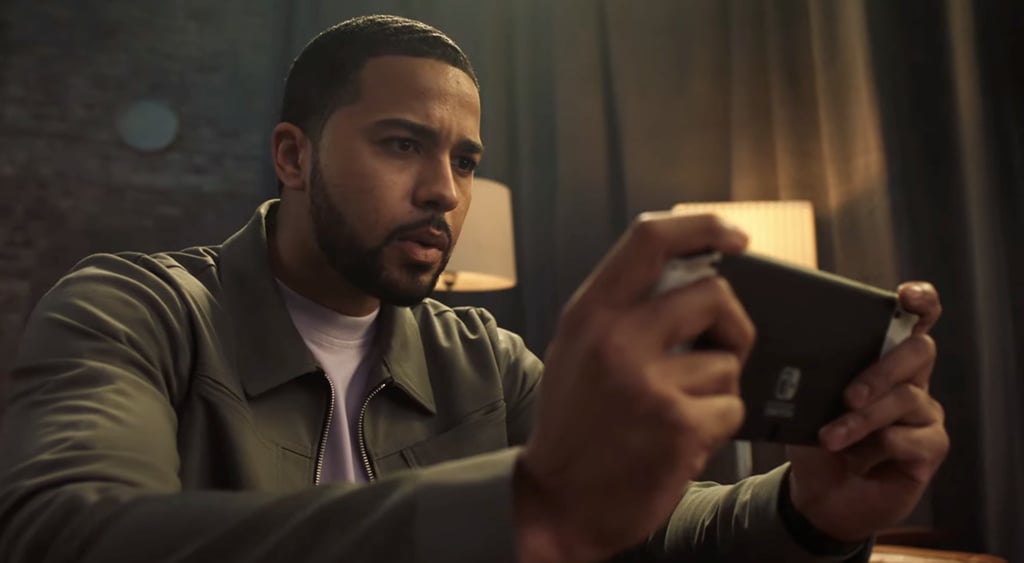
 www.nintendolife.com
Now this has to be a significant large black dot made with permanent ink.
Great pick up @thelittleshort
My opinion only DYOR
FF
AKIDA BALLISTA


Wow the 2 new additions appear to have excellent experience and connections.Wow and our mann in Germany!
Strong automotive and battery background
View attachment 31948
View attachment 31949
View attachment 31951
View attachment 31952
 www.hpcwire.com
Nintendo article from October 2021.
Patent Reveals Nintendo Is Working On Upscaling Technology
Just made public, the patent was first placed in March 2020
- by Thomas Whitehead Fri 1st Oct 2021
Patents are always a rather intriguing thing to track in the technology industry - sometimes they represent ideas and products that'll never see the light of day, but there are occasions when they give clues to future releases. A freshly released US patent application could be the latter, as it addresses technology that could allow Nintendo to boost visuals in its hardware.
Opened on 25th March 2020 and released publicly yesterday (30th September), the application is titled 'systems and methods for machine learned image conversion', and though the initial language can be a headscratcher it is essentially an idea similar to NVIDIA's DLSS. That's short for Deep Learning Super Sampling in NVIDIA's case, which works on some of its GPUs to upscale image resolution and quality in real time, while also being remarkably efficient and ensuring that the graphics card is under less strain. It's impressive technology, and it's been front and centre in a lot of talk about how Nintendo could produce a new Switch-style portable device that outputs higher resolution visuals while still working with low power output. Digital Foundry has explored this in detail.
What makes this application intriguing is that Nintendo is clearly exploring this internally - a named party on the application is Alexandre Delattre, who is a co-founder of Nintendo European Research and Development. It's also acknowledged in the 'Introduction' of the patent that this is an area being explored throughout the industry:
Ultimately it shouldn't be a surprise that Nintendo is researching upscaling through machine learning, as it is likely to be a vital factor should the company opt to retain a Switch-style form factor while offering greater graphical fidelity in the future. Whether Nintendo will still utilise NVIDIA technology in future devices is also interesting; if it develops its own solution it may not need NVIDIA's DSSL tools. Of course, depending on what and who you believe, there are reports that '4K' development units are already out in the wild.
Patent Reveals Nintendo Is Working On Upscaling Technology
Just made public, the patent was first placed in March 2020

GPT-3 used 10,000 Nvidia V100 GPU's !
ChatGPT - estimate is 4480 Nvidia A100 GPU's ( At $200,000 each, that's $896,000,000 )

'sfunny. I remember Donald Duck comics in which, when Scrooge used his computer to count his fortune, it used so much electricity that it caused a blackout.Intel Sorts out Supercomputing Future Amid Cancellation of GPUs
Intel Sorts out Supercomputing Future Amid Cancellation of GPUs
Intel CEO Pat Gelsinger is taking a no-holds-barred approach to cutting costs as he whips the company back into financial shape. Intel has already exited seven businesses, and recently made wholesale graphics processors changes by axing products and changing its enterprise GPU roadmap. Intel has...
Intel also has a set of additional AI accelerators with the AI training chips like Gaudi3, which is due this year, and its FPGAs. The chipmaker is also building incremental AI-acceleration units – mostly capable of inferencing – directly into its server chips. But GPUs will remain a mainstay for the company’s AI ambitions.
Just a couple of Sunday night observations.Wow the 2 new additions appear to have excellent experience and connections.
Amazing bunch of people they are recruiting.
Thanks for the share.

Oh my lord DodgeyKnees, you're certainly not Robinson CrusoeUntil Peter said that Akida could do maths, I did not believe that it could, and I still do not understand how it can.
Many years ago, philosophers and computer scientists used to talk about fuzzy logic. At the time, I did not follow the discussion:
https://en.wikipedia.org/wiki/Fuzzy_logic
von Neumann digital computers do not use fuzzy logic - it's a one or it's a zero.
Akida does something like "It's more likely to be one than zero", but not on an individual bit basis, rather on the basis of a batch of bits representing spikes, something I would classify as a form of fuzzy logic. Keep in mind that I am not familiar with what constitutes fuzzy logic.
I would think that things like N-of-M coding (rank coding) would be incompatible with mathematical logic.
There is much I do not understand about Akida.