
Easytiger
Regular
Yep must rebalance the portfolio to the specified weightingWould it be the same with the multiple Vanguard and other fund’s buying into BRN ?

Yep must rebalance the portfolio to the specified weightingWould it be the same with the multiple Vanguard and other fund’s buying into BRN ?

Hi there.
Just because our ambition is to be ubiquitous, that doesn't mean we will be the ultimately perfect or even best solution to every technical conundrum out there.
Many applications are being developed by competitors in these still early days of neuromorphic processing and our patent wall necessitates that novel competing designs and approaches will be developed that our manufacturing users will want to examine and test against our offering.
We will win some and we will lose some.
Sean, Peter and now Antonio have all explained, and we have seen evidence in the many examples reproduced here on these threads, that in some applications extant and perhaps cruder and less efficient solutions have, and continue to be adopted instead of our Akida solution.
The people who are making the decisions have grown up on and are familiar and comfortable with older technology.
As new concepts and applications are developed and shown to be superior but which would strain the capacity of existing tech our offerings will become an available solution.
As yet, such applications that are pushing the boundaries and capabilities of existing tech tend towards autonomous vehicles (from spacecraft through passenger vehicles and into multifarious drones), military spec applications (of which we will only get peeks due to security concerns) and other areas where innovation is a necessity because of either status or status quo concerns.
Much of this is still at the developmental stage and yet to be made available for mainstream consumption.
So.
It's all taking longer than many of us would like.
I think that this is as much of a surprise and concern for the Company as it is for us.
I think they also expected faster and earlier adoption and are also struggling with the current situation, but being, for the most part, experienced professionals they express these facts with little hysteria.
Every engagement BrainChip has with a prospective user comes with mutual NDA's as standard operating procedure and as stated above by Antonio, just what we can announce at any given time is very restricted by our end user's corporate and marketing requirements.
Hence the extremely conservative approach to ASX releases which irks so many and which provides such rich fodder for the shorts and other manipulators.
Looking back we have to conclude that our share price was over inflated at our $2+ peaks driven by a combination of exuberant enthusiasm sparked by the MB declaration, pent up expectation from existing holders, and market force hype granted to any spiking share price by traders looking for quick returns and both ignorant and uninterested in any fundamental or intrinsic value or property of the stock in question.
None of this makes we true believers wrong or should give cause to turning upon or eating each other.
We know progress, however seemingly glacial, is occurring, much of which is behind closed doors.
We know the announcements we all pine for are drafted and awaiting release.
Will it be this Monday.......next month.......December this year or January next????
As one particularly talented musical instrumentalist I know says.......our FOMO keeps us here.
Hang in their fellow believers.
We may or may not get smashed again on Monday, but at the moment, we are all we've got.
So......Fuch the splitters!

 The Next Platform

Very good article, link provided. Properly explains the partnership environment which Brainchip is building. This should put more at ease, even if it's just until we get the next update
Redirect Notice
www.google.com
Neuromorphic Computing Will Need Partners To Break Into The Datacenter
Jeffrey Burt
1 year ago
The emerging field of neuromorphic processing isn’t an easy one to navigate. There are major players in the field that are leveraging their size and ample resources – the highest profile being Intel with its Loihi processors and IBM’s TrueNorth initiative – and a growing list of startups that include the likes of SynSense, Innatera Nanosystems and GrAI Matter Labs.
Included in that latter list is BrainChip, a company that has been developing its Akida chip – Akida is Greek for “spike” – and accompanying IP for more than a decade. We’ve followed BrainChip over the past few years, speaking with them in 2018 and then again two years later, and the company has proven to be adaptable in a rapidly evolving space. The initial plan was to get the commercial SoC into the market by 2019, but BrainChip extended the deadline to add the capability to run convolutional neural networks (CNNs) along with spiking neural networks (SNNs).
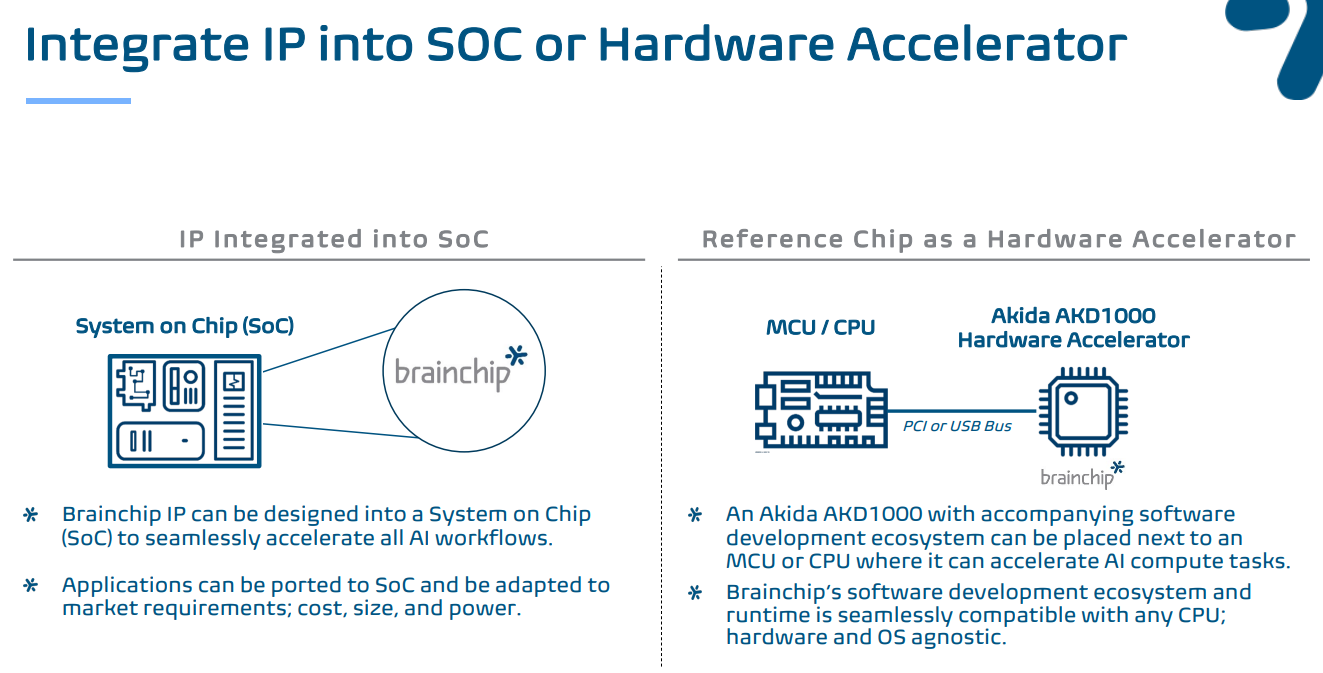
In January, the company announced the full commercialization of its AKD1000 platform, which includes its Mini PCIe board that leverages the Akida neural network processor. It’s a key part of BrainChip’s strategy of using the technology as reference models as it pursues partnerships with hardware and chip vendors that will incorporate it in their own designs.
“Looking at our fundamental business model, is it a chip or IP or both?” Jerome Nadel, BrainChip’s chief marketing officer, tells The Next Platform. “It’s an IP license model. We have reference chips, but our go-to-market is definitely to work with ecosystem partners, especially who would take a license, like a chip vendor or a ASIC designer and tier one OEMs. … If we’re connected with a reference design to sensors for various sensor modalities or to an application software development, when somebody puts together AI enablement, they want to run it on our hardware and there’s already interoperability. You’ll see a lot of these building blocks as we’re trying to penetrate the ecosystem, because ultimately when you look at the categoric growth in edge AI, it’s really going to come from basic devices that leverage intelligent sensors.”
BrainChip is aiming its technology at the edge, where more data is expected to be generated in the coming years. Pointing to IDC and McKinsey research, BrainChip expects the market for edge-based devices needing AI to grow from $44 billion this year to $70 billion by 2025. In addition, at last week’s Dell Technologies World event, CEO Michael Dell reiterated his belief that while 10 percent of data now is generated at the edge, that will shift to 75 percent by 2025. Where data is created, AI will follow. BrainChip has designed Akida for the high-processing, low-power environment and to be able to run AI analytic workloads – particularly inference – on the chip to lessen the data flow to and from the cloud and thus reduce latency in generating results.
Neuromorphic chips are designed to mimic the brain through the use of SNNs. BrainChip broaden the workloads Akida could run by being able to run CNNs as well, which are useful in edge environments for such tasks as embedded vision, embedded audio, automated driving for LiDAR and RADAR remote sensing devices, and industrial IoT. The company is looking at such sectors as autonomous driving, smart health and smart cities as growth areas.
BrainChip already is seeing some success. It’s Akida 1000 platform is being used in Mercedes-Benz’s Vision EQXX concept car for in-cabin AI, including driver and voice authentication, keyword spotting and contextual understanding.
The vendor sees partnerships as an avenue for increasing its presence in the neuromorphic chip field.
“If we look at a five-year strategic plan, our outer three years probably look different than our inner two,” Nadel says. “In the inner two we we’re still going to focus on chip vendors and designers and tier-one OEMs. But the outer three, if you look at categories, it’s really going to come from basic devices, be they in-car or in-cabin. be they in consumer electronics that are looking for this AI enablement. We need to be in the ecosystem. Our IP is de facto and the business model wraps around that.”
The company has announced a number of partnerships, including with nViso, an AI analytics company. The collaboration will target battery-powered applications in robotics and automotive sectors using Akida chips for nViso’s AI technology for social robots and in-cabin monitoring systems. BrainChip also is working with SiFive to integrate the Akida technology with SiFive’s RISC-V processors for edge AI computing workloads and MosChip, running its Akida IP with the vendor’s ASIC platform for smart edge devices. BrainChip also is working with Arm.
To accelerate the strategy, the company this week rolled out its AI Enablement Program to offer vendors working prototypes of BrainChip IP atop Akida hardware to demonstrate the platform’s capabilities for running AI inference and learning on-chip and in a device. The vendor also is offering support for identifying use cases for sensor and model integration.
The program includes three levels – the Basic and Advanced prototypes to the Functioning Solution – with the number of AKD1000 chips scaling to 100, custom models for some users, 40 to 160 hours with machine learning experts and two to ten development systems. The prototypes will enable BrianChip to get its commercial products to users at a time when other competitors are still developing their own technologies in the relatively nascent market.
“There’s a step of being clear about the use cases and perhaps a road map of more sensory integration and sensor fusion,” Nadel says. “This is not how we make a living as a business model. The intent is to demonstrate real, tangible working systems out of our technology. The thinking was, we could get these into the hands of people and they could see what we do.”
BrainChips Akida IP includes support for up to 1,024 nodes that can be configured into two to 256 nodes connected over a mesh network, with each node comprising four neural processing units. Each of the NPUs includes configurable SRAM and each NPU can be configured for CNNs if needed and each is based on events or spikes, using data sparsity, activations, and weights to reduce the number operations by at least two-fold. The Akida Neural SoC can be used standalone or integrated as a co-processor a range of use cases and provides 1.2 million neurons and 10 billion synapses.
The offering also includes the MetaTF machine learning framework for developing neural networks for edge applications and three reference development systems for PCI, PC shuttle and Raspberry Pi systems.
The platform can be used for one-shot on-chip learning by using the trained model to extract features and adding new classes onto it or in multi-pass processing that leverages parallel processing to reduce the number of NPUs needed.
Here is the one shot:
And there is the multi-pass:
“The idea of our accelerator being close to the sensor means that you’re not sending sensor data, you’re sending inference data,” Nadel said. “It’s really a systems architectural play that we envision our micro hardware is buddied up with sensors. The sensor captures data, it’s pre-processed. We do the inference off of that and the learning at the center, but especially the inference. Like an in-car Advanced Driver Assistance System, you’re not tasking the server box loaded with GPUs with all of the data computation and inference. You’re getting the inference data, the metadata, and your load is going to be lighter.”
The on-chip data processing is part of BrainChip’s belief that for much of edge AI, the future will not require clouds. Rather than send all the data to the cloud – bringing in the higher latency and costs – the key will be doing it all on the chip itself. Nadel says it’s a “bit of a provocation to the semiconductor industry talking about cloud independence. It’s not anti-cloud, but the idea is that hyperscale down to the edge is probably the wrong approach. You have to go sensor up.”
Going back to the cloud also means having to retraining the model if there is a change in object classification, Anil Mankar, co-founder and chief development officer, tells The Next Platform. Adding more classes means changing the weights in the classification.
“On-chip learning,” Mankar says. “It’s called incremental learning or continuous learning, and that is only possible because … we are working with spikes and we actually copy similarly how our brain learns faces and objects and things like that. People don’t want to do transfer learning – go back to the cloud, get new weights. Now you can classify more objects. Once you have an activity on the device, you don’t need cloud, you don’t need to go backwards. Whatever you learn, you learn” and that doesn’t change when something new is added.
Categories: AI
Tags: Akida, Brainchip, Neuromorphic
The Next Platform
Back to top


 . It's just below Brian Coglan's
  (Microchip).


Worth remembering this still flashes across the front page of our website … very much an active relationshipGood points ...
With reference to Valeo, a "Joint Development " agreement can have numerous commercial iterations. There was agreement with Valeo that would cover some of BrainChips development costs, but no insight to what the commercial outcome of a successful "development using Akida" would be like.
From articles in 2020
Tech developer BrainChip (BRN) has signed a joint development agreement with European automotive supplier Valeo for its Akida system.
Valeo supplies sensors and systems for autonomous vehicles (AV) and advanced driver assistance systems (ADAS).
The tier-one auto supplier will incorporate BrainChip’s Akida neuromorphic System-on-Chip (SoC) as a neural network processor in Valeo’s sensing system.
The SoC will be developed to process data and learn in a way that is a lot more focused and streamlined than previous system architectures.
The low-power, reliable system will bypass the need for an exterior processing unit to integrate large amounts of sensor data, and instead provide a potentially better and more elastic solution in one compact package.
Most likely commercial outcome, IMHO, is a royalty from sales.
Something like 1% - 2%
And this would only become " worthy of ASX announcement" on sales being achieved. Even though Valeo have pre-orders etc, what happens if Valeo goes bust, or production fails etc. etc.
So my logic goes, it's been 3.5 years. Valeo scientists were lauding Spiking Neural Networks as the future back in 2018, they choose to work with BrainChip, so Valeo have been at it for more than 5 years, nothing has been announced that the joint development has been terminated. Is it SCALA 3 ? Very good chance, but not definite. We could still be "developing"


"I also wonder if Sean and the board can see the hurt and start to expedite the sales and /or contracts. If the product is there with Gen 2 Akida, the patents are there, sales forces are there, the partnerships are there, what's the delay?"That's a good point I am bullish and optimistic about the company however I do share a level of disappointment with all here regards to the salaries and share perks so removed from reality like it is a blue chip multi million dollar earning company at present. I do have a substantial investment because I believe in our tech however the value of our shares keeps dropping. There must be a stop to this pattern.
Shareholders effectively pay for these salaries & perks and we just want our money working for us.
I also wonder if Sean and the board can see the hurt and start to expedite the sales and /or contracts. If the product is there with Gen 2 Akida, the patents are there, sales forces are there, the partnerships are there, what's the delay? I still think they could surprise the market with another substantial announcement in the next few days we wait and see.

This may be true however these guys are making the business which in turn will make us and them some money ,Without them where stuffed , Peter was Ceo and the company went no where, now where starting to look a professional outfit, Time will tellManagement doesn't give a F__K about Shareholders we are MUSHROOMS keep in the dark and feed SHIT.

Hi B. Wouldn't it be fantastic to find out your right.Hey Brain Fam,
View attachment 43008
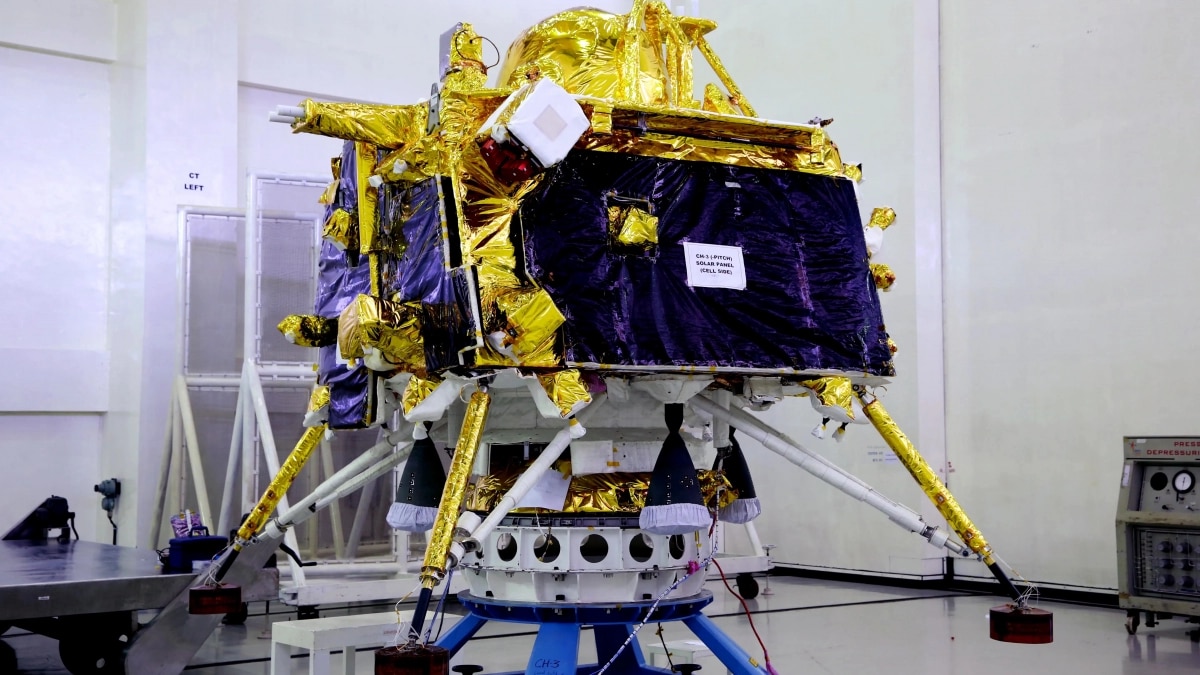
I've come to the conclusion that it's 99.999% likely WE ARE ACTUALLY ON THE MOON, LIKE WE ARE LITERALLY (NOT US BUT AKIDA IS) ON THE SOUTH POLE OF THE MOON RIGHT THIS VERY SECOND!!!!
Contrary to the naysayers who reckon that Rob spends most of his days "liking" random blogs about vacuum cleaners and horny goat weed, I happen to believe the opposite and this should prove my case in point. But if I'm wrong about this, then I promise I'll stop posting for two days.
Rob Telson liked Shakeel Perra (Micrchip) Linkedin post congratulating ISRO (Indian Space Research Organisation) on the landing of the Chandrayaan-3 on the Moon's south pole.
Here's Rob's
View attachment 43004
And, here's a couple of extracts from an article which I highlighted which I think helps to explain why Rob likes it so much and hence why I believe WE ARE ON THE MOOOOOOOOOOOOOOOOON!!!!!.
How else is the rover able to learn/ adapt and respond in real-time?
View attachment 43005
View attachment 42999
Chandrayaan 3 touchdown: ISRO monitoring a high stakes game of AI and sensors for moon landing - BusinessToday
What sets this mission apart is the pivotal role of artificial intelligence (AI) in guiding the spacecraft during its critical descent to the moon's surfacewww.businesstoday.in

Hi B. Wouldn't it be fantastic to find out your right.


...
So my logic goes, it's been 3.5 years. Valeo scientists were lauding Spiking Neural Networks as the future back in 2018, they choose to work with BrainChip, so Valeo have been at it for more than 5 years, nothing has been announced that the joint development has been terminated. Is it SCALA 3 ? Very good chance, but not definite. ...

Wouldn’t they no longer appear on the Brainchip website if terminatedBut the question is: Would BrainChip or any other company officially announce that the joint development was terminated? I would say NO. It would just not talk about it anymore, which they didn't do for for a longer time.
So we cannot be sure if it still exists.
@Fact Finder confirmed with Tony Dawe not so long ago that the partnership with Valeo remains in tact.But the question is: Would BrainChip or any other company officially announce that the joint development was terminated? I would say NO. It would just not talk about it anymore, which they didn't do for for a longer time.
So we cannot be sure if it still exists.
A couple of reasonsBut the question is: Would BrainChip or any other company officially announce that the joint development was terminated? I would say NO. It would just not talk about it anymore, which they didn't do for for a longer time.
So we cannot be sure if it still exists.
AcceptedWouldn’t they no longer appear on the Brainchip website if terminated
... IF the page is kept up-to-date, but as I have put all my trust into BrainChip for years now, I will also trust, that it is.
Thanks for this reassurance.A couple of reasons
1) Ethically. Promoting Valeo on your website as a key partner, if they are not, is morally wrong. I believe Peter, Antonio, Anil to be of strong moral character.
2) ASX rules. Continuous Disclosure rule 3.1. If the agreement was material enough to disclose, then the termination of this agreement would also be material (IMO) and BrainChip would be in breach of rule 3.1 if they did not.
Hi B. Wouldn't it be fantastic to find out your right.
I'm a long-term holder and been holding this for years now. Rode highs and lows but always remained hopefull that BRN will succeed eventually. But im now less and less confident now to believe anything what BRN is publicly stating. Moving the goal post at every broken promise is not confidence boosting. I'm not saying this because of the half yearly. As anyone I expected nothing else but only a surprise just in case, which as usual not to be there. But my main concern is potential customer r deferring engagement till AKD 2. Unless this is another move by brn to buy more time to keep LTHs dream alive, if true I understand customers will prefer the new beter akd2 over old akd 1. But as brn itself stated development cycle (assessment adopting production)will take 3yr +. So this mean are we looking for yet another more than 3 years of oblivion of BRN story? How many things can change by that time??
I really wish brn prove my pessimism is wrong sooner than later..anyway better or worse I'll ride this till to the end and worse case, I'll live my life as its now..

LMAO... nothing factually incorrect about my post either.This is not a positive. Well done to the 50 odd people that liked ROBT "buying up big" post
It took 3 minutes to look up how ROBT is composed. All tech companies in this ETF are ranked into 3 categories. 30 companies per category. Each company has the SAME equal weighting with this being rebalanced quarterly.
SO the only reason they are "BUYING UP BIG" is because they have to due to BRN share price falling quarter on quarter on quarter. The "BUYING UP BIG" is to keep BRN weighted the same in the category they are in.
I guess this post wont get 50 likes even though its correct and factual.
View attachment 42969
"The share price will do what the share price will do"
Spoken by a person that will never put one dollar of his own money into the company.


