
You are using an out of date browser. It may not display this or other websites correctly.
You should upgrade or use an alternative browser.
You should upgrade or use an alternative browser.
BRN Discussion Ongoing
- Thread starter TechGirl
- Start date

Keeping things in simple in terms of mathematics.
I have used the Valeo Scala 3 @ $500/unit. The link has them @ $600/unit but I have reduced the price for volume production.
$1B Euro's @ $500/unit = 2,000,000 units
https://www.forbes.com/sites/sabbirrangwala/2020/11/23/money-for-everythin/?sh=37d109f14e1c
Noting the difference between the Euro and USD is also another variable.
I have used the Valeo Scala 3 @ $500/unit. The link has them @ $600/unit but I have reduced the price for volume production.
$1B Euro's @ $500/unit = 2,000,000 units
https://www.forbes.com/sites/sabbirrangwala/2020/11/23/money-for-everythin/?sh=37d109f14e1c
Noting the difference between the Euro and USD is also another variable.
Dear Tech, I am puzzled by your repeated preoccupation with a January 1, 2025 date. Why that day? The 3rd quarter 2024 results will be announced before then. The 2024 year end report will be released / announced after that date.Good morning FF.
That is a first class post...when someone in the "know" says that we are looking forward to an exciting year ahead, which in real terms
really means within the next 9 months, well, I'm excited along with Big Kev !
1 January 2025 will be an excellent day to just sit back and take it all in...ah Akida, do you like red roses
Regards...Tech
So,....except for the fact that that the highly regarded Rose Parade from Pasedena, CA will be televised live worldwide that morning (in the USA at least), and the fact those not watching that iconic event may be hungover on January 1st,.... what has you so excited? Can you share a bit more color on your opinion / expectation? I'm really curious.
Thanks, dippY
Vladsblood
Regular
Great to see on a Friday morn that the Nasdaq "Our Target Index" has just broken the 12,000 mark and technically is now in bull Market territory!!
We can only wait for the news from the AGM on 23rd May as to when we will join "Takeover the Nasdaq". We will have our MC really building into the ten's of billions $$$$$ when we begin doing "The Nasdaq Splits". At the top of the Nasdaq company list is where we belong in a few years time, IMO. Because it seems Sean was right when he stated WE WILL SATURATE THE WORLD WITH AKIDA.
The coverage and responses from the leading Companies in the A1 Field at the World Embedded Forum are testament that OUR AKIDA 2 platform is the real deal they all have need of to better their products across all businesses globally. Then OUR IP Award recognizing us as unique to all others by around a 5-6 year head start all promoted from the World Embedded Forum.
Then Anil's "to busy working on Akida to go to any awards presentation" says it all about OUR Team Brainchip's dedication.
Cheers Chippers on a Great Friday for us, Vlad.
We can only wait for the news from the AGM on 23rd May as to when we will join "Takeover the Nasdaq". We will have our MC really building into the ten's of billions $$$$$ when we begin doing "The Nasdaq Splits". At the top of the Nasdaq company list is where we belong in a few years time, IMO. Because it seems Sean was right when he stated WE WILL SATURATE THE WORLD WITH AKIDA.
The coverage and responses from the leading Companies in the A1 Field at the World Embedded Forum are testament that OUR AKIDA 2 platform is the real deal they all have need of to better their products across all businesses globally. Then OUR IP Award recognizing us as unique to all others by around a 5-6 year head start all promoted from the World Embedded Forum.
Then Anil's "to busy working on Akida to go to any awards presentation" says it all about OUR Team Brainchip's dedication.
Cheers Chippers on a Great Friday for us, Vlad.
Because TECH would like to sell in December 2024. Sorry - only thing I can think ofDear Tech, I am puzzled by your repeated preoccupation with a January 1, 2025 date. Why that day? The 3rd quarter 2024 results will be announced before then. The 2024 year end report will be released / announced after that date.
So,....except for the fact that that the highly regarded Rose Parade from Pasedena, CA will be televised live worldwide that morning (in the USA at least), and the fact those not watching that iconic event may be hungover on January 1st,.... what has you so excited? Can you share a bit more color on your opinion / expectation? I'm really curious.
Thanks, dippY


Fact Finder
Top 20
Is the Rose Parade from Pasedena CA like your baseball World Series? Are there many more of these non World events that you guys have the pleasure of enjoying without the rest of us?Dear Tech, I am puzzled by your repeated preoccupation with a January 1, 2025 date. Why that day? The 3rd quarter 2024 results will be announced before then. The 2024 year end report will be released / announced after that date.
So,....except for the fact that that the highly regarded Rose Parade from Pasedena, CA will be televised live worldwide that morning (in the USA at least), and the fact those not watching that iconic event may be hungover on January 1st,.... what has you so excited? Can you share a bit more color on your opinion / expectation? I'm really curious.
Thanks, dippY
I will say this in my younger days just the simple fact of finding myself still alive on 1st January in any given year was a massive cause for celebration which was not so once I became more responsible but is now as I mature becoming a more important milestone and reaching a point where it is again slowly but surely becoming worthy of celebration.
My opinion only DYOR
FF
AKIDA BALLISTA
Fact Finder
Top 20
Well keeping the speculation rolling Blind Freddie has worked out if Brainchip receives a percentage of the product price - $500 at 2.5% it would be $12.50 x 2,000,000 units which would be $US25 million.Keeping things in simple in terms of mathematics.
I have used the Valeo Scala 3 @ $500/unit. The link has them @ $600/unit but I have reduced the price for volume production.
$1B Euro's @ $500/unit = 2,000,000 units
https://www.forbes.com/sites/sabbirrangwala/2020/11/23/money-for-everythin/?sh=37d109f14e1c
Noting the difference between the Euro and USD is also another variable.
At 2.5% this would be the bottom number going by all previous research on this subject without any allowance for uniqueness of the AKIDA technology and based on the notion that the IP equivalent of only one AKD1000 is required for all the processing in a SCALA 3 Lidar unit. I personally doubt that would be the case and would expect at least two AKD1000 equivalents would be necessary allowing the need for redundancy so Blind Freddie's number would double to $US50 million at 5% to account for the amount of IP and the uniqueness factor.
But Blind Freddie thinks he went on a bus trip yesterday so what would he know anyway. You would think he would have picked up it was Sir David Attenborough doing the commentary.
My opinion only DYOR
FF
AKIDA BALLISTA
2023-03-31 07:46 HKT
BrainChip, the world's first commercial producer of neuromorphic artificial intelligence chips and IP, today announced that Information Systems Laboratories (ISL) is developing an AI-based radar for the U.S. Air Force Research Laboratory (AFRL) based on its Akida™ Neural Network Processor Research solutions.
ISL is a specialist in expert research and complex analysis, software and systems engineering, advanced hardware design and development, and high-quality manufacturing for a variety of clients worldwide.ISL focuses on areas such as advanced signal processing, space exploration, subsea technology, surveillance and tracking, cybersecurity, advanced radar systems and energy independence.
As a member of the BrainChip Early Partnership Program (EAP), ISL will be able to evaluate boards for Akida devices, software and hardware support, and dedicated engineering resources.
"As part of BrainChip's EAP, we had the opportunity to directly assess the capabilities Akida offers to the AI ecosystem," said Jamie Bergin, Senior Vice President, Research, Development and Engineering Solutions Manager at ISL. BrainChip brings AI to the edge in ways not possible with existing technologies. Akida processors feature ultra-low power consumption and high performance to support the development of edge AI technologies by using neuromorphic architecture, a type of artificial intelligence inspired by the biology of the human brain.
BrainChip's EAP program provides partners with the ability to realize significant benefits of power consumption, design flexibility and true learning at the edge."ISL's decision to use Akida and Edge-based learning as a tool to incorporate into their research and engineering solutions portfolio is in large part due to the go-to-market advantages our innovation capabilities and production-ready status provide ” said Sean Hehir, CEO of BrainChip, “We are delighted to be a partner of AFRL and ISL on edge AI and machine learning. We believe the combination of technologies will help accelerate the deployment of AI in the field.”
Akida is currently licensed as IP and is also available to order for chip production. It focuses on low power consumption and high performance, supports sensory processing, and is suitable for applications that benefit artificial intelligence, as well as applications such as smart healthcare, smart cities, smart transportation, and smart homes.
This just got posted on the Crapper by Waihik Joe.

gex
Regular
its oldThis just got posted on the Crapper by Waihik Joe.
Not for those who are reading it for the first time on this websiteits old
 : https://inf.news/en/science/791bf988657af0e134c475ca748067c6.html
gex
Regular
it's not the first time it's been on that websiteNot for those who are reading it for the first time on this website
Fact Finder
Top 20
Anyone else aware that Mercedes Benz alone does 3 million automobiles each year so if Scala 3 becomes a standard this first 2 million units is but a drop in the ocean.Well keeping the speculation rolling Blind Freddie has worked out if Brainchip receives a percentage of the product price - $500 at 2.5% it would be $12.50 x 2,000,000 units which would be $US25 million.
At 2.5% this would be the bottom number going by all previous research on this subject without any allowance for uniqueness of the AKIDA technology and based on the notion that the IP equivalent of only one AKD1000 is required for all the processing in a SCALA 3 Lidar unit. I personally doubt that would be the case and would expect at least two AKD1000 equivalents would be necessary allowing the need for redundancy so Blind Freddie's number would double to $US50 million at 5% to account for the amount of IP and the uniqueness factor.
But Blind Freddie thinks he went on a bus trip yesterday so what would he know anyway. You would think he would have picked up it was Sir David Attenborough doing the commentary.
My opinion only DYOR
FF
AKIDA BALLISTA
My opinion only DYOR
FF
AKIDA BALLISTA
it's not the first time it's been on that website
Ok, then it's new for the person who's been in a coma for the last 6 months and is seeing it for the first time and will now be calling his broker to buy BRN's asap.

White Horse
Regular
For those that used to love a good bonfire.
https://www.afr.com/markets/equity-...m-armageddon-upon-hedge-funds-20230329-p5cwfc

https://www.afr.com/markets/equity-...m-armageddon-upon-hedge-funds-20230329-p5cwfc

Fullmoonfever
Top 20
Given Valeo a topic at the mo.
Older May 2022 article / interview and nothing new per se but extra additional background info and comments on using AI software....trusting it's ours but yet tbc unfortunately
Also wondered on the electric power train supply to MB and the e-axles and whether this is also an area that Akida could slot into for something like vibration analysis
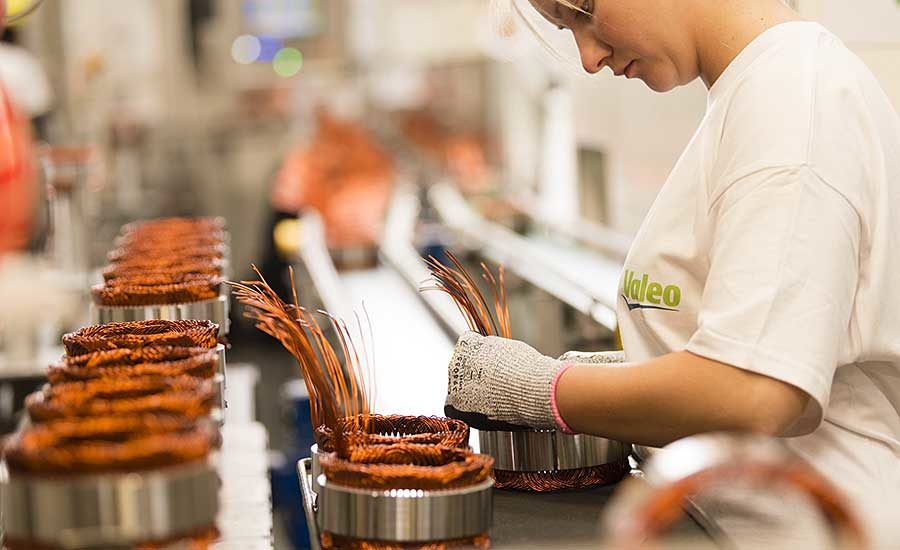
 www.assemblymag.com
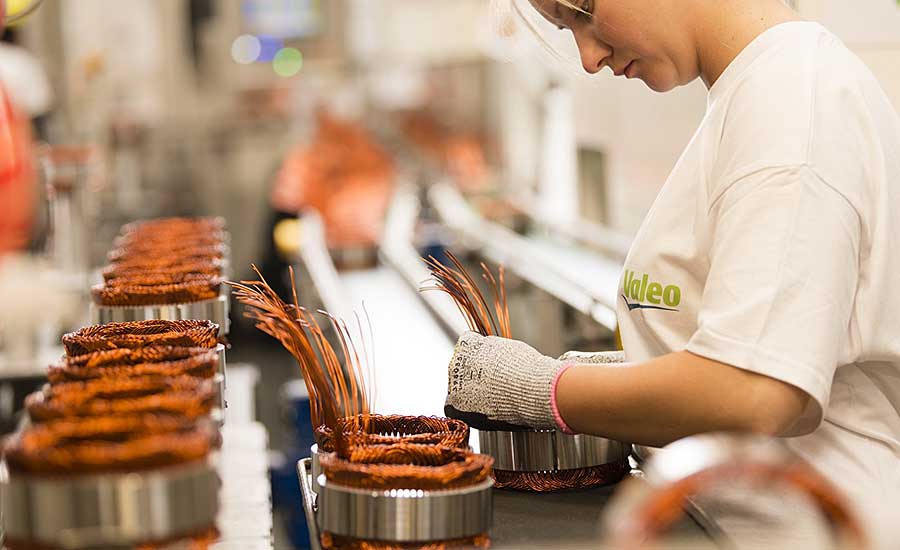
Valeo is a leading supplier of high-voltage electric drives and 48-volt electrical systems. Photo courtesy Valeo
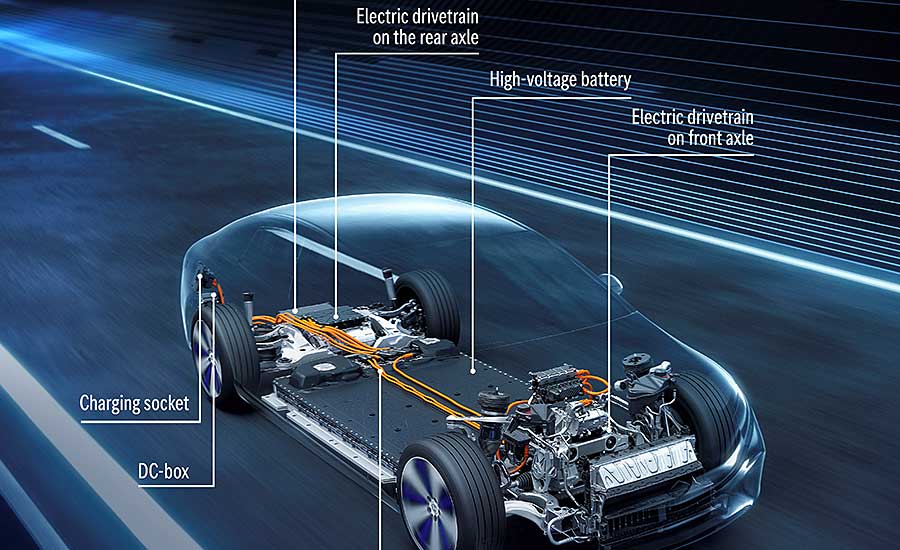
Valeo recently supplied the entire electric power train of the Mercedes-Benz EQS sedan. Illustration courtesy Daimler AG
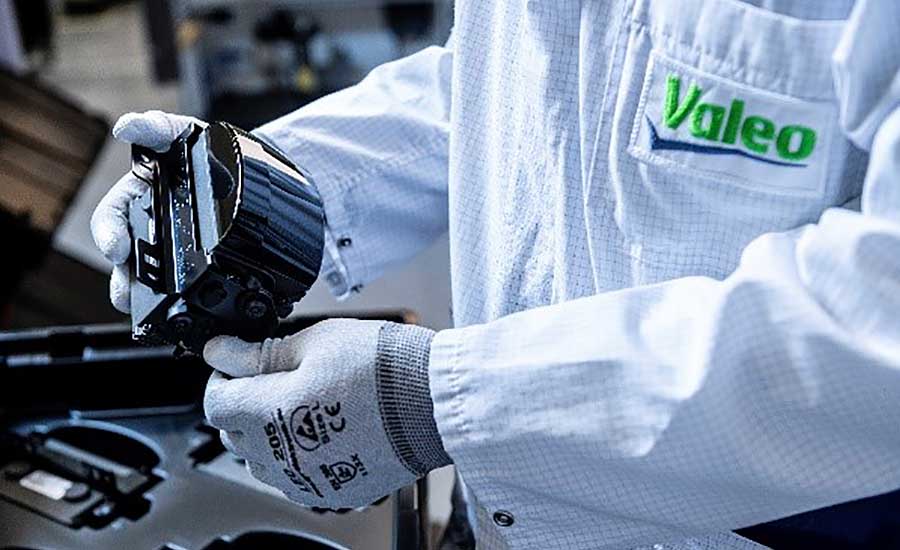
One-third of all new vehicles produced worldwide contain advanced driver-assistance systems made by Valeo. Photo courtesy Valeo
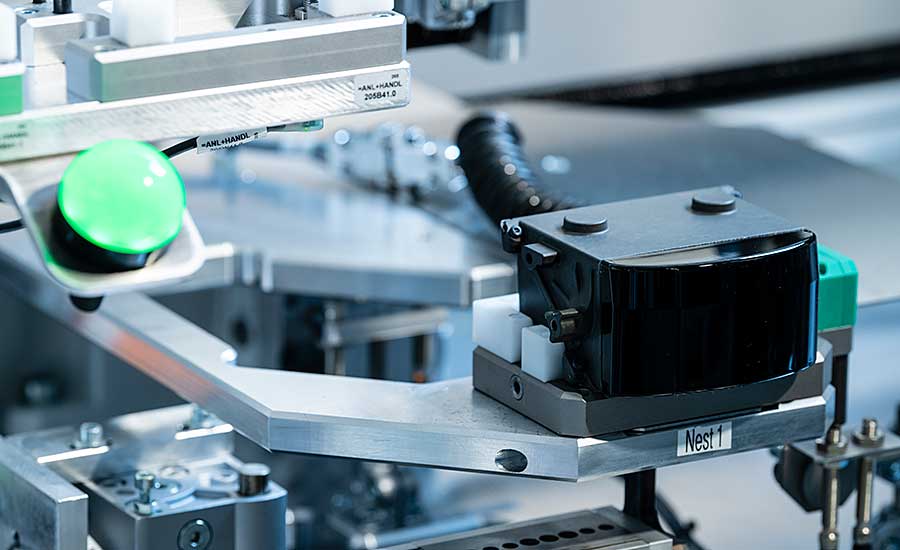
Valeo is a leading producer of lidar systems, which it assembles at a state-of-the-art factory in Germany. Photo courtesy Valeo
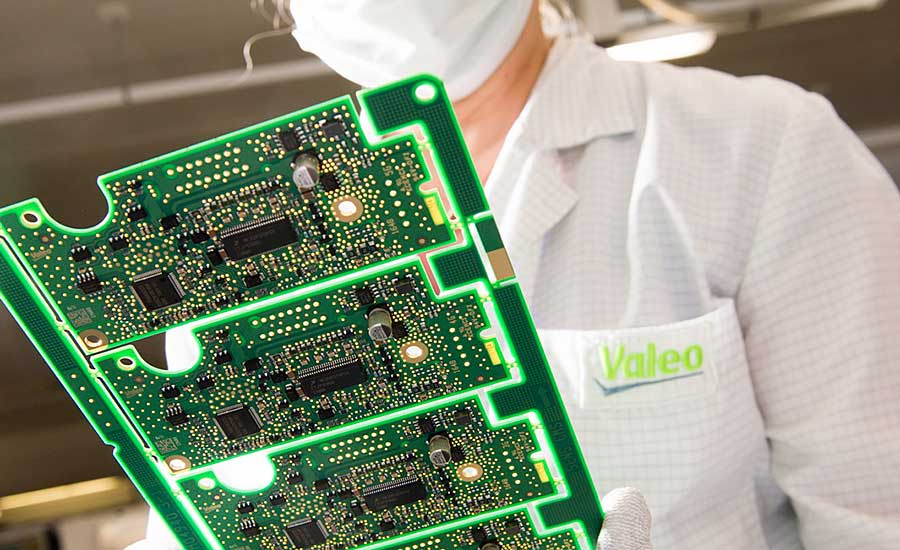
Electronics form the heart of many Valeo products. Photo courtesy Valeo
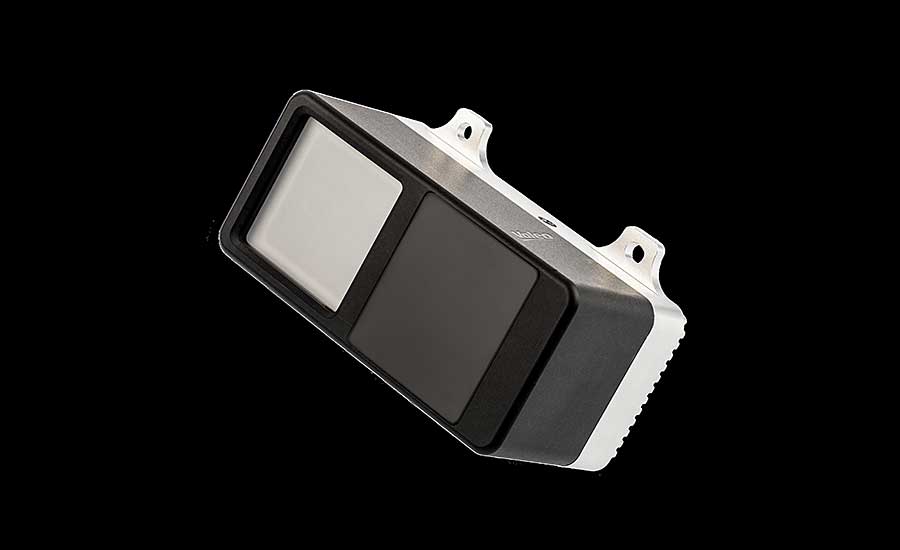
In addition to producing long-range sensors, Valeo recently unveiled a near-field lidar device. Photo courtesy Valeo
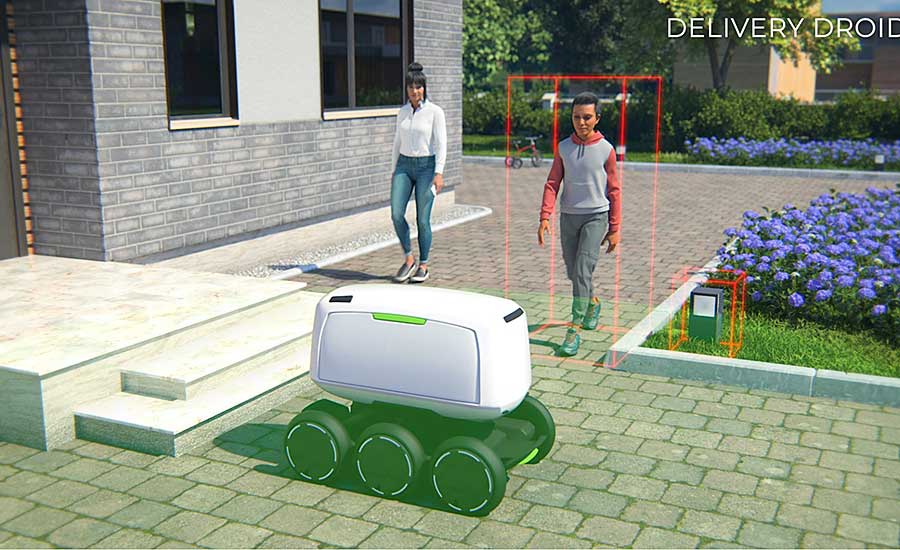
NFL is designed for use on autonomous vehicles, such as driverless delivery pods. Illustration courtesy Valeo
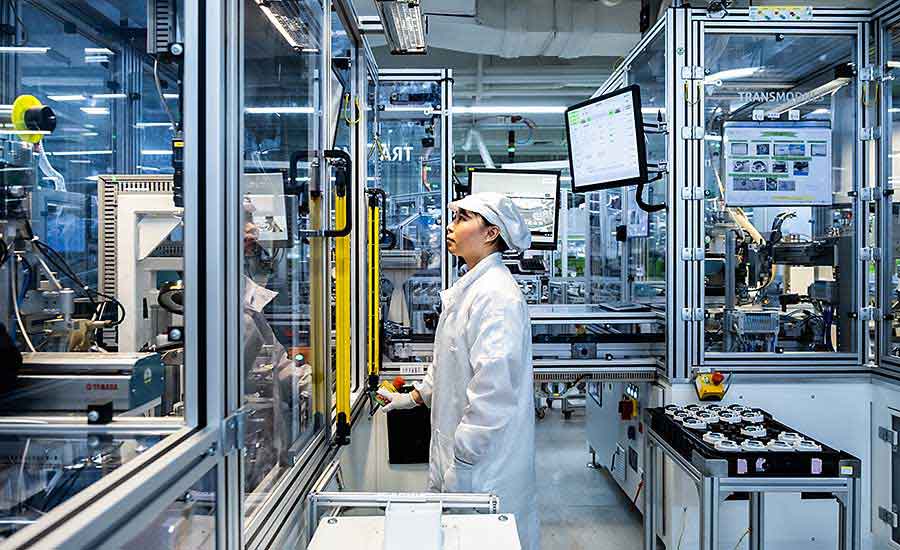
Valeo operates 187 plants in 33 countries around the world that support both traditional automakers and startups. Photo courtesy Valeo
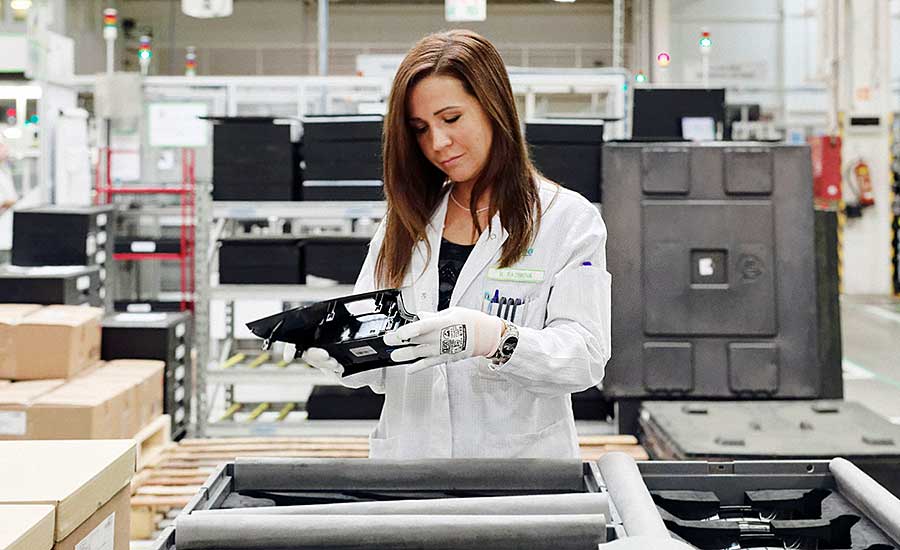
Autonomous technology is an increasingly important part of Valeo’s diverse product portfolio. Photo courtesy Valeo
Valeo is a Tier One automotive supplier that specializes in advanced driver-assistance systems (ADAS), interior, lighting, power train and thermal management systems. The $17 billion French company operates 184 plants in 31 countries around the world that support both traditional automakers and startups. Valeo is based in Paris, but its North American headquarters is located in Troy, MI.
Next year, Valeo will celebrate its centennial. The company traces its roots to a small workshop outside of Paris that made brake linings and friction materials. By the 1930s, Valeo expanded into clutches, followed by thermal systems in the 1960s. In the 1970s, the company branched out into electrical components and lighting, following the acquisition of Cibie and Marchal.
Today, Valeo claims that 25 percent of all new vehicles produced worldwide contain its ADAS technology, which includes state-of-the-art cameras and sensors. In recent years, the company has doubled in size and become a leader in autonomous and electric mobility technology.
For instance, Valeo recently supplied the entire electric power train of the Mercedes-Benz EQS sedan, including dual motors (the rear e-axle provides 300 kilowatts of power, while the front axle generates 170 kilowatts), an inverter and a reducer.
Valeo is also a leading manufacturer of lidar systems. In fact, it has already produced more than 160,000 units, and a wide variety of cars equipped with laser scanners and lidar use the company’s products.
Valeo recently unveiled a third-generation lidar system that enables Level 3 automation and is set to debut on production vehicles in 2024. It offers significantly enhanced performance, makes autonomous mobility a reality and provides previously unseen levels of road safety due to cutting-edge range, resolution and frame rate.
This laser scanner can detect objects located at distances of more than 200 meters. It reconstructs a 3D real-time image of the vehicle's surroundings at a rate of 4.5 million pixels and 25 frames per second. Because of its unique perception capabilities, the device can see things that humans, cameras and radars cannot.
Together with software based on artificial intelligence (AI), the system combines collected data and enables the vehicle to instantly make the right decision. It automatically adapts to the environment and improves its performance over time through regular updates.
Earlier this year, at the CES Show in Las Vegas, the company demonstrated a new short-range lidar system dubbed Valeo NFL (Near Field Lidar).
When used on driverless delivery pods and other vehicles, it creates a safety “bubble” that provides peripheral vision, eliminating blind spots.
Valeo's lidar units are produced at the company’s state-of-the-art factory in Wemding, Germany, where components are assembled and tested with a micron level of precision.
Autonomous and Electric Mobility recently asked Michel Forissier, chief engineering and marketing officer at Valeo, to outline his company’s strategy for next-generation vehicles.
AEM: Valeo’s motto is “smart technology for smarter mobility.” Why is this strategy important in today’s rapidly evolving auto industry?
Forissier: Most functions in an automobile today are turning electronic. All components now comprise electronic hardware and software, which allows new functions that make vehicles smarter. For instance, ADAS systems and intelligent lighting make vehicles safer, while electric and electronic systems make vehicles more efficient.
AEM: Does electrification require a new production mindset or a new way for suppliers to approach manufacturing?
Forissier: Electric motors are very different than internal combustion engines, because they are less complex and much simpler. But, there are new challenges that must be addressed, such as managing balance, sound and vibration-related issues due to the elimination of traditional engine noise. Power electronics become more important while dealing with high voltages and high currents. Battery management and temperature control must also be carefully addressed in EVs. Current efficiency and safety become critical, which requires automation and tighter quality control. In particular, robots are necessary for handling EV parts that tend to be heavier and bulkier.
AEM: How is the transition from internal combustion engine vehicles to electric vehicles affecting plant floor operations in your factories?
Forissier: We’ve made a progressive evolution in our factories. For instance, some of our plants in France that have traditionally produced alternators and clutches have slowly shifted to making traction motors and other components used in electric vehicles.
AEM: Have you invested in any Industry 4.0 technology to prepare your factories for the EV era?
Forissier: Yes, we have installed a lot of new automation in our plants. For instance, we currently have more than 1,000 collaborative robots in operation. Most applications involve material handling. We also use AI technology to improve quality as we produce more advanced electronics, which are used in many of our products.
AEM: How will your experience from producing low-voltage products during the past 10 years help as you produce more high-voltage devices during the next 10 years?
Forissier: Most of the technology is the same. However, wire diameter is different for high-voltage products. Power electronics are also more complicated. We’ve learned a lot through our joint-venture partnership with Siemens, which focused on e-motors, inverters and power electronics (the company recently announced that it will buy 100 percent of the shares of the joint venture in July). End-of-line testing and quality are increasingly critical, but the big challenge is to do it fast.
AEM: ADAS technology has evolved from relatively simple mechanical devices to complex mechatronic products. Has that changed how your products are assembled and tested?
Forissier: Yes. Products such as lidar require extremely precise machining, assembly and quality control. All parts are controlled to the micron. And, because software is a key attribute of product performance, end-of-line testing has become much more sophisticated to ensure performance and compliance.
AEM: How is Valeo preparing for the future era of autonomous vehicles?
Forissier: This is one of the key areas that we are focusing on today, with many exciting opportunities for growth. We are the largest producer of ADAS sensors in the world, supplying many of the top automakers. We’re also developing a new 360-degree system, including cameras and chips, for automatic parking applications.
SCALA is the automotive industry's first commercial 3D lidar sensor for AV applications. It provides a wide field of view up to 145 degrees. Its AI-based integrated software detects, recognizes and classifies static and dynamic objects up to a distance of 200 meters in all weather and lighting conditions.
Our third-generation laser scanner technology, which is scheduled to hit the market in 2024, will go even further, making it possible to delegate driving in many situations, including at speeds of up to 130 kilometers per hour on the highway.
Older May 2022 article / interview and nothing new per se but extra additional background info and comments on using AI software....trusting it's ours but yet tbc unfortunately
Also wondered on the electric power train supply to MB and the e-axles and whether this is also an area that Akida could slot into for something like vibration analysis
Valeo Sees Big Opportunity in EVs
Valeo is a Tier One automotive supplier that specializes in advanced driver-assistance systems (ADAS), interior, lighting, power train and thermal management systems. The $17 billion French company operates 184 plants in 31 countries around the world that support both traditional automakers and...
Valeo Sees Big Opportunity in EVs
By Austin Weber
Valeo is a leading supplier of high-voltage electric drives and 48-volt electrical systems. Photo courtesy Valeo
Valeo recently supplied the entire electric power train of the Mercedes-Benz EQS sedan. Illustration courtesy Daimler AG
One-third of all new vehicles produced worldwide contain advanced driver-assistance systems made by Valeo. Photo courtesy Valeo
Valeo is a leading producer of lidar systems, which it assembles at a state-of-the-art factory in Germany. Photo courtesy Valeo
Electronics form the heart of many Valeo products. Photo courtesy Valeo
In addition to producing long-range sensors, Valeo recently unveiled a near-field lidar device. Photo courtesy Valeo
NFL is designed for use on autonomous vehicles, such as driverless delivery pods. Illustration courtesy Valeo
Valeo operates 187 plants in 33 countries around the world that support both traditional automakers and startups. Photo courtesy Valeo
Autonomous technology is an increasingly important part of Valeo’s diverse product portfolio. Photo courtesy Valeo
Valeo is a Tier One automotive supplier that specializes in advanced driver-assistance systems (ADAS), interior, lighting, power train and thermal management systems. The $17 billion French company operates 184 plants in 31 countries around the world that support both traditional automakers and startups. Valeo is based in Paris, but its North American headquarters is located in Troy, MI.
Next year, Valeo will celebrate its centennial. The company traces its roots to a small workshop outside of Paris that made brake linings and friction materials. By the 1930s, Valeo expanded into clutches, followed by thermal systems in the 1960s. In the 1970s, the company branched out into electrical components and lighting, following the acquisition of Cibie and Marchal.
Today, Valeo claims that 25 percent of all new vehicles produced worldwide contain its ADAS technology, which includes state-of-the-art cameras and sensors. In recent years, the company has doubled in size and become a leader in autonomous and electric mobility technology.
For instance, Valeo recently supplied the entire electric power train of the Mercedes-Benz EQS sedan, including dual motors (the rear e-axle provides 300 kilowatts of power, while the front axle generates 170 kilowatts), an inverter and a reducer.
Valeo is also a leading manufacturer of lidar systems. In fact, it has already produced more than 160,000 units, and a wide variety of cars equipped with laser scanners and lidar use the company’s products.
Valeo recently unveiled a third-generation lidar system that enables Level 3 automation and is set to debut on production vehicles in 2024. It offers significantly enhanced performance, makes autonomous mobility a reality and provides previously unseen levels of road safety due to cutting-edge range, resolution and frame rate.
This laser scanner can detect objects located at distances of more than 200 meters. It reconstructs a 3D real-time image of the vehicle's surroundings at a rate of 4.5 million pixels and 25 frames per second. Because of its unique perception capabilities, the device can see things that humans, cameras and radars cannot.
Together with software based on artificial intelligence (AI), the system combines collected data and enables the vehicle to instantly make the right decision. It automatically adapts to the environment and improves its performance over time through regular updates.
Earlier this year, at the CES Show in Las Vegas, the company demonstrated a new short-range lidar system dubbed Valeo NFL (Near Field Lidar).
When used on driverless delivery pods and other vehicles, it creates a safety “bubble” that provides peripheral vision, eliminating blind spots.
Valeo's lidar units are produced at the company’s state-of-the-art factory in Wemding, Germany, where components are assembled and tested with a micron level of precision.
Autonomous and Electric Mobility recently asked Michel Forissier, chief engineering and marketing officer at Valeo, to outline his company’s strategy for next-generation vehicles.
AEM: Valeo’s motto is “smart technology for smarter mobility.” Why is this strategy important in today’s rapidly evolving auto industry?
Forissier: Most functions in an automobile today are turning electronic. All components now comprise electronic hardware and software, which allows new functions that make vehicles smarter. For instance, ADAS systems and intelligent lighting make vehicles safer, while electric and electronic systems make vehicles more efficient.
AEM: Does electrification require a new production mindset or a new way for suppliers to approach manufacturing?
Forissier: Electric motors are very different than internal combustion engines, because they are less complex and much simpler. But, there are new challenges that must be addressed, such as managing balance, sound and vibration-related issues due to the elimination of traditional engine noise. Power electronics become more important while dealing with high voltages and high currents. Battery management and temperature control must also be carefully addressed in EVs. Current efficiency and safety become critical, which requires automation and tighter quality control. In particular, robots are necessary for handling EV parts that tend to be heavier and bulkier.
AEM: How is the transition from internal combustion engine vehicles to electric vehicles affecting plant floor operations in your factories?
Forissier: We’ve made a progressive evolution in our factories. For instance, some of our plants in France that have traditionally produced alternators and clutches have slowly shifted to making traction motors and other components used in electric vehicles.
AEM: Have you invested in any Industry 4.0 technology to prepare your factories for the EV era?
Forissier: Yes, we have installed a lot of new automation in our plants. For instance, we currently have more than 1,000 collaborative robots in operation. Most applications involve material handling. We also use AI technology to improve quality as we produce more advanced electronics, which are used in many of our products.
AEM: How will your experience from producing low-voltage products during the past 10 years help as you produce more high-voltage devices during the next 10 years?
Forissier: Most of the technology is the same. However, wire diameter is different for high-voltage products. Power electronics are also more complicated. We’ve learned a lot through our joint-venture partnership with Siemens, which focused on e-motors, inverters and power electronics (the company recently announced that it will buy 100 percent of the shares of the joint venture in July). End-of-line testing and quality are increasingly critical, but the big challenge is to do it fast.
AEM: ADAS technology has evolved from relatively simple mechanical devices to complex mechatronic products. Has that changed how your products are assembled and tested?
Forissier: Yes. Products such as lidar require extremely precise machining, assembly and quality control. All parts are controlled to the micron. And, because software is a key attribute of product performance, end-of-line testing has become much more sophisticated to ensure performance and compliance.
AEM: How is Valeo preparing for the future era of autonomous vehicles?
Forissier: This is one of the key areas that we are focusing on today, with many exciting opportunities for growth. We are the largest producer of ADAS sensors in the world, supplying many of the top automakers. We’re also developing a new 360-degree system, including cameras and chips, for automatic parking applications.
SCALA is the automotive industry's first commercial 3D lidar sensor for AV applications. It provides a wide field of view up to 145 degrees. Its AI-based integrated software detects, recognizes and classifies static and dynamic objects up to a distance of 200 meters in all weather and lighting conditions.
Our third-generation laser scanner technology, which is scheduled to hit the market in 2024, will go even further, making it possible to delegate driving in many situations, including at speeds of up to 130 kilometers per hour on the highway.
Falling Knife
Regular
This is not new news either, but it goes some way towards explaining to the plebs like me what the 2nd Gen Akida brings to the table
I like what NN has to say about it too.
“This is truly event based, which means it only operates when needed; it only communicates when needed,” said Nandan Nayampally, chief marketing officer at BrainChip. “The notable features are that it handles many layers simultaneously, which is unlikely for the traditional deep learning accelerators. It handles long range skip connections, which means it can go across multiple layers, which is important for simplifying data propagation. And then it supports 8-,4-, 2- and 1-bit weights and activations, which makes it very scalable across most edge AI models.”
“The real thing is you can think of very disruptive edge solutions now,” said Nayampally. “And by that we mean you can think of cloudless edge solutions that are intelligent enough to handle all kinds of vision, sensory, and predictive capabilities.”
No matter where you look this technology, our company BRN and future of Neuromorphic compute is being sold / praised and revered by the BRN team, their ecosystem partners and the tech industry in general.
Are there any events, symposiums, conferences or tech demos Akida is not being discussed?
The snowball is rolling.
BrainChip’s second generation Akida platform cultivates high-performance, intelligent edge devices
I like what NN has to say about it too.
“This is truly event based, which means it only operates when needed; it only communicates when needed,” said Nandan Nayampally, chief marketing officer at BrainChip. “The notable features are that it handles many layers simultaneously, which is unlikely for the traditional deep learning accelerators. It handles long range skip connections, which means it can go across multiple layers, which is important for simplifying data propagation. And then it supports 8-,4-, 2- and 1-bit weights and activations, which makes it very scalable across most edge AI models.”
“The real thing is you can think of very disruptive edge solutions now,” said Nayampally. “And by that we mean you can think of cloudless edge solutions that are intelligent enough to handle all kinds of vision, sensory, and predictive capabilities.”
No matter where you look this technology, our company BRN and future of Neuromorphic compute is being sold / praised and revered by the BRN team, their ecosystem partners and the tech industry in general.
Are there any events, symposiums, conferences or tech demos Akida is not being discussed?
The snowball is rolling.

HopalongPetrovski
I'm Spartacus!
Looking forward to when we are the hosts.For those that used to love a good bonfire.
https://www.afr.com/markets/equity-...m-armageddon-upon-hedge-funds-20230329-p5cwfc

Talking about 3D point clouds etc., Valeo have patents for a combination of standard cameras and LiDaR. Standard cameras produce 2D images. LidaR produces 3D by measuring the time of flight of the reflected pulses.I only have a couple of comments and a quote from Anil Mankar to add.
Yes Brainchip made a formal ASX announcement regarding Valeo and to date it has not made any announcement stating that the relationship has ended and in fact continues to encourage the belief on its website that they are engaged with them.
Yes the former CEO Mr. Dinardo did famously say that Brainchip's AKIDA technology is finding a sweet spot with Lidar.
Thirdly, if you are building any product for use in Electric Vehicles that requires electrical power to operate then you will be operating under a design constraint that calls for you to minimise as far as possible the amount of electrical power you draw to maximise the power available for the driving wheels.
Whether Valeo is building the entire system or not it will need to source GPU's or CPU's and these are electricity guzzlers and we know because Edge Impulse told us Brainchip's AKIDA Science Fiction can running at 300 Gigahertz compete with a GPU running at 900 Gigahertz.
If for no other reason than to save power Valeo would be most likely to choose AKIDA over GPU's or CPU's to process its 3D point clouds and can source AKIDA as IP to design into its own product from the ground up.
The other advantage of AKIDA technology which should never be ignored in the automotive space is the fact that it can operate unconnected which is absolutely essential at 130 kph a feature which Peter van der Made spoke about at length going back to 2021. The recent reveal of ANT61 that AKIDA was the brain in its service and repair robot for autonomous unconnected deployment in space suggests that this feature has not gone away.
Finally at the 2021 Ai Field Day Anil Mankar said
"Similarly 3D point cloud, by definition, 3D point clouds are very sparse.
Lidar data is very sparse.
Today people are taking Lidar data and converting it into a 2D kind of image because it's much easier to process the image and detect the object.
There is no reason why we can't do that directly in a 3D point cloud and take advantage of that.
WE ARE WORKING ON SOME OF THOSE APPLICATIONS AND ALSO THERE ARE OTHER SENSORS THAT SEND 3D POINT CLOUD POINTS AND THAT'S ACTUALLY ONE OF THE APPLICATIONS THAT WE HAVE, IS, LATER ON COMING IN,..."
If you are thinking other sensors do not go past ultrasonic sensors which Valeo produce for automotive use and when it commissioned a brand new factory last year to build its Lidar units it made the point of mentioning that it would also increase their capacity to produce its ultrasonic sensors.
My opinion only DYOR
FF
AKIDA BALLISTA
WO2020127151A1 METHOD FOR IMPROVED OBJECT DETECTION
Overlaying the LiDaR on the camera images enables the system to identify the object from the camera images (s210) and to measure speed and direction of the objects (S500).

ndefries
Regular
I wish we had footage from when they were asked about Brainchip at the CES 2022 presentation. from all reports that was telling in some way.Given Valeo a topic at the mo.
Older May 2022 article / interview and nothing new per se but extra additional background info and comments on using AI software....trusting it's ours but yet tbc unfortunately
Also wondered on the electric power train supply to MB and the e-axles and whether this is also an area that Akida could slot into for something like vibration analysis
Valeo Sees Big Opportunity in EVs
Valeo is a Tier One automotive supplier that specializes in advanced driver-assistance systems (ADAS), interior, lighting, power train and thermal management systems. The $17 billion French company operates 184 plants in 31 countries around the world that support both traditional automakers and...
Valeo Sees Big Opportunity in EVs
By Austin Weber
Valeo is a leading supplier of high-voltage electric drives and 48-volt electrical systems. Photo courtesy Valeo
Valeo recently supplied the entire electric power train of the Mercedes-Benz EQS sedan. Illustration courtesy Daimler AG
One-third of all new vehicles produced worldwide contain advanced driver-assistance systems made by Valeo. Photo courtesy Valeo
Valeo is a leading producer of lidar systems, which it assembles at a state-of-the-art factory in Germany. Photo courtesy Valeo
Electronics form the heart of many Valeo products. Photo courtesy Valeo
In addition to producing long-range sensors, Valeo recently unveiled a near-field lidar device. Photo courtesy Valeo
NFL is designed for use on autonomous vehicles, such as driverless delivery pods. Illustration courtesy Valeo
Valeo operates 187 plants in 33 countries around the world that support both traditional automakers and startups. Photo courtesy Valeo
Autonomous technology is an increasingly important part of Valeo’s diverse product portfolio. Photo courtesy Valeo
Valeo is a Tier One automotive supplier that specializes in advanced driver-assistance systems (ADAS), interior, lighting, power train and thermal management systems. The $17 billion French company operates 184 plants in 31 countries around the world that support both traditional automakers and startups. Valeo is based in Paris, but its North American headquarters is located in Troy, MI.
Next year, Valeo will celebrate its centennial. The company traces its roots to a small workshop outside of Paris that made brake linings and friction materials. By the 1930s, Valeo expanded into clutches, followed by thermal systems in the 1960s. In the 1970s, the company branched out into electrical components and lighting, following the acquisition of Cibie and Marchal.
Today, Valeo claims that 25 percent of all new vehicles produced worldwide contain its ADAS technology, which includes state-of-the-art cameras and sensors. In recent years, the company has doubled in size and become a leader in autonomous and electric mobility technology.
For instance, Valeo recently supplied the entire electric power train of the Mercedes-Benz EQS sedan, including dual motors (the rear e-axle provides 300 kilowatts of power, while the front axle generates 170 kilowatts), an inverter and a reducer.
Valeo is also a leading manufacturer of lidar systems. In fact, it has already produced more than 160,000 units, and a wide variety of cars equipped with laser scanners and lidar use the company’s products.
Valeo recently unveiled a third-generation lidar system that enables Level 3 automation and is set to debut on production vehicles in 2024. It offers significantly enhanced performance, makes autonomous mobility a reality and provides previously unseen levels of road safety due to cutting-edge range, resolution and frame rate.
This laser scanner can detect objects located at distances of more than 200 meters. It reconstructs a 3D real-time image of the vehicle's surroundings at a rate of 4.5 million pixels and 25 frames per second. Because of its unique perception capabilities, the device can see things that humans, cameras and radars cannot.
Together with software based on artificial intelligence (AI), the system combines collected data and enables the vehicle to instantly make the right decision. It automatically adapts to the environment and improves its performance over time through regular updates.
Earlier this year, at the CES Show in Las Vegas, the company demonstrated a new short-range lidar system dubbed Valeo NFL (Near Field Lidar).
When used on driverless delivery pods and other vehicles, it creates a safety “bubble” that provides peripheral vision, eliminating blind spots.
Valeo's lidar units are produced at the company’s state-of-the-art factory in Wemding, Germany, where components are assembled and tested with a micron level of precision.
Autonomous and Electric Mobility recently asked Michel Forissier, chief engineering and marketing officer at Valeo, to outline his company’s strategy for next-generation vehicles.
AEM: Valeo’s motto is “smart technology for smarter mobility.” Why is this strategy important in today’s rapidly evolving auto industry?
Forissier: Most functions in an automobile today are turning electronic. All components now comprise electronic hardware and software, which allows new functions that make vehicles smarter. For instance, ADAS systems and intelligent lighting make vehicles safer, while electric and electronic systems make vehicles more efficient.
AEM: Does electrification require a new production mindset or a new way for suppliers to approach manufacturing?
Forissier: Electric motors are very different than internal combustion engines, because they are less complex and much simpler. But, there are new challenges that must be addressed, such as managing balance, sound and vibration-related issues due to the elimination of traditional engine noise. Power electronics become more important while dealing with high voltages and high currents. Battery management and temperature control must also be carefully addressed in EVs. Current efficiency and safety become critical, which requires automation and tighter quality control. In particular, robots are necessary for handling EV parts that tend to be heavier and bulkier.
AEM: How is the transition from internal combustion engine vehicles to electric vehicles affecting plant floor operations in your factories?
Forissier: We’ve made a progressive evolution in our factories. For instance, some of our plants in France that have traditionally produced alternators and clutches have slowly shifted to making traction motors and other components used in electric vehicles.
AEM: Have you invested in any Industry 4.0 technology to prepare your factories for the EV era?
Forissier: Yes, we have installed a lot of new automation in our plants. For instance, we currently have more than 1,000 collaborative robots in operation. Most applications involve material handling. We also use AI technology to improve quality as we produce more advanced electronics, which are used in many of our products.
AEM: How will your experience from producing low-voltage products during the past 10 years help as you produce more high-voltage devices during the next 10 years?
Forissier: Most of the technology is the same. However, wire diameter is different for high-voltage products. Power electronics are also more complicated. We’ve learned a lot through our joint-venture partnership with Siemens, which focused on e-motors, inverters and power electronics (the company recently announced that it will buy 100 percent of the shares of the joint venture in July). End-of-line testing and quality are increasingly critical, but the big challenge is to do it fast.
AEM: ADAS technology has evolved from relatively simple mechanical devices to complex mechatronic products. Has that changed how your products are assembled and tested?
Forissier: Yes. Products such as lidar require extremely precise machining, assembly and quality control. All parts are controlled to the micron. And, because software is a key attribute of product performance, end-of-line testing has become much more sophisticated to ensure performance and compliance.
AEM: How is Valeo preparing for the future era of autonomous vehicles?
Forissier: This is one of the key areas that we are focusing on today, with many exciting opportunities for growth. We are the largest producer of ADAS sensors in the world, supplying many of the top automakers. We’re also developing a new 360-degree system, including cameras and chips, for automatic parking applications.
SCALA is the automotive industry's first commercial 3D lidar sensor for AV applications. It provides a wide field of view up to 145 degrees. Its AI-based integrated software detects, recognizes and classifies static and dynamic objects up to a distance of 200 meters in all weather and lighting conditions.
Our third-generation laser scanner technology, which is scheduled to hit the market in 2024, will go even further, making it possible to delegate driving in many situations, including at speeds of up to 130 kilometers per hour on the highway.

Stable Genius
Regular
I wish we had footage from when they were asked about Brainchip at the CES 2022 presentation. from all reports that was telling in some way.
From memory it was early 2021 at the Q & A from the official Valeo Scala 3 launch!
This was before MB were known customers and the car used is MB which in hindsight was a hint of what was to come!
After the direct question the Q & A was shut down pretty quickly. The CTO recoiled like he was shot! The good thing was that he did not say no, Brainchip was not involved which he could easily have done if that was the case. Disappointingly the CTO did say they would reveal the Technology in a few months time but that never happened. Guessing due to the multi-billion dollar market they’re in they wanted to keep their advantage for as long as possible; which is fair enough!
Similar threads

- Replies
- 3
- Views
- 12K
D

- Replies
- 0
- Views
- 5K
- Replies
- 9
- Views
- 6K
- Replies
- 0
- Views
- 3K