
You are using an out of date browser. It may not display this or other websites correctly.
You should upgrade or use an alternative browser.
You should upgrade or use an alternative browser.
Media
- Thread starter cosors
- Start date

mpk1980
Regular
Getting an invalid URL here..... can you double check
blondeaussie
Regular
Getting an invalid URL here..... can you double check
blondeaussie
Regular
Finland opens Europe's first lithium mine
The long-planned project will create about 350 jobs and offers Europe’s only production chain of its kind, reducing reliance on Chinese imports.
 yle.fi
blondeaussie
Regular
the presenter almost dismisses the graphite separated from the black mass as an impurity.
Graphite definitely has an identity problem. Kinda like a roadie for the Lithium Battery Band!
blondeaussie
Regular
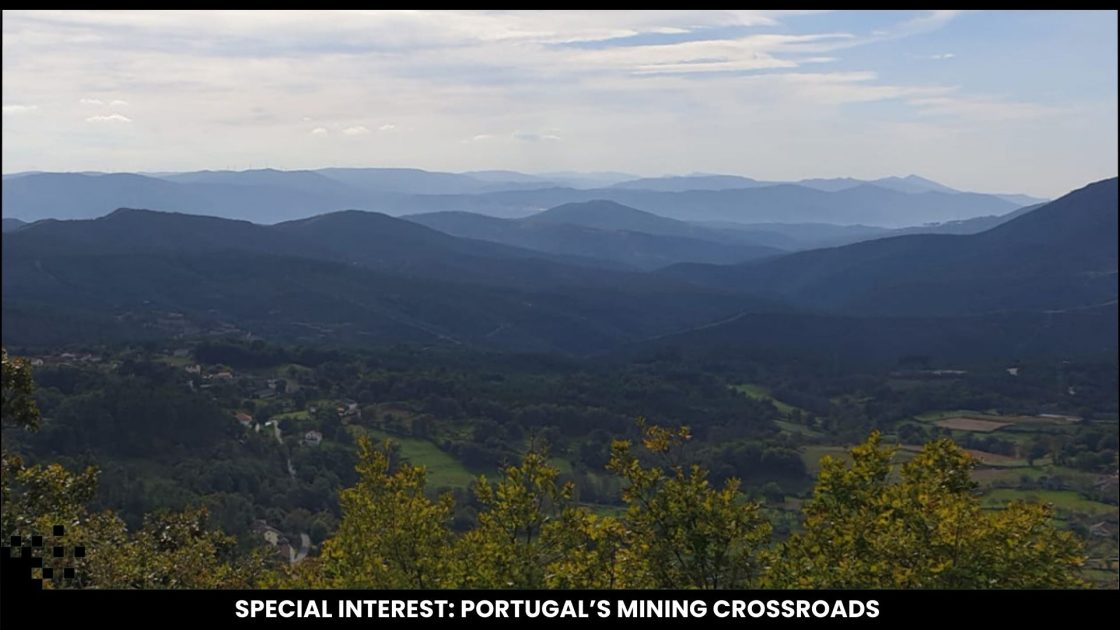
Mining crossroads in Europe: Portugal
Within Europe, a battle is unfolding over the continent’s energy future, as mining companies are working to develop projects necessary.
Not Talga but extremely relevant

cosors
👀
Mining crossroads in Europe: Portugal
Within Europe, a battle is unfolding over the continent’s energy future, as mining companies are working to develop projects necessary.mining.com.au
Not Talga but extremely relevant
Last sentence
"...can the continent, or Portugal specifically, decarbonise without domestic extraction."
the presenter almost dismisses the graphite separated from the black mass as an impurity.
Graphite definitely has an identity problem. Kinda like a roadie for the Lithium Battery Band!
Yeah, effectively it is. because no one has the tech to recycle it back into anode.
Just proves how big a deal Talgas tech is
blondeaussie
Regular

Riksintressen får inte hindra svensk tillväxt
LEDARE: Den gröna omställningen kräver mer än bara snabba tillståndsprocesser. Utan en översyn av systemet för riksintressen och en bättre balans mellan…
 www.di.se
National interests must not hinder Swedish growth
The green transition requires more than just fast permit processes. Without a review of the system of national interests and a better balance between natural values and the industry's need for minerals, future growth risks being lost. Politics must not drag the issue into a long bench.
Updated: February 17, 2026, 11:31 am
Published: February 17, 2026, 11:25 am
Recently the message came that Talga's graphite mine in Vittangi has been given the green light. It is a welcome message for Sweden and Europe. Without graphite, lithium batteries cannot be manufactured. The mineral is therefore crucial for the electrification of the vehicle fleet.
But that the mine would be allowed to start at all was not a matter of course. As Kiruna had long delayed the process, the government needed to step in and run over the municipality. Although the company had done the right thing, it took six years before they had successfully passed all the obstacles in the bureaucratic maze known as the Swedish environmental permit process.
Fortunately, this arduous process will not necessarily be required for the mines of the future. The government plans to improve the system by making it more efficient and predictable – something that Swedish industry has long wanted. It will create thousands of jobs and reduce our dependence on mineral imports from the outside world.
But politics gets don't stop there. A natural next step is to clear up among Swedish national interests.
A national interest is a geographical area that authorities have identified as particularly significant –, for example due to natural values or mineral deposits.
The balance between natural values and Sweden's need for minerals simply needs to be reviewed.
While there may be a legitimate aim to single out particularly important areas, the system has created a patchwork of overlapping areas that either delay or hinder the establishment of other activities. If several national interests collide, the matter must, as a rule, be decided by the authorities or the courts.
But all national interests doesn't weigh as much. Natural values have in practice been given priority. It has been harmful to the Swedish mining industry.
The question thus needs a retake. A better balance must be created when two interests stand against each other. The law should be amended so that courts and authorities must take into account the socio-economic costs it would incur if the project is not implemented. The balance between natural values and Sweden's need for minerals simply needs to be reviewed.
The government that is serious about ensuring that we remain a mining nation must complement the reform of the environmental permit process with a reformed system for Sweden's national interests. Otherwise, there won't be more finds, just more obstacles.
blondeaussie
Regular
V4Smart Performance data: V21700 HP-5X | V4Smart GmbH & Co. KG
📢Performance of V4Smart's next gen high energy & power cell: V21700 HP-5X This data release presents a snapshot of the fully validated performance of V4Smart’s next-generation high energy & power cell, V21700 HP-5X. At V4Smart, we share only data that has been rigorously tested and verified...