
You are using an out of date browser. It may not display this or other websites correctly.
You should upgrade or use an alternative browser.
You should upgrade or use an alternative browser.
BRN Discussion Ongoing
- Thread starter TechGirl
- Start date


Shadow59
Regular
The irony is in Rob's last sentence.

overpup
Regular
...it's a Brain Chips!The irony is in Rob's last sentence.

Bravo
Meow Meow 🐾
The full article requires paid subscription.



Arm's grand AI blueprint: standardizing chip designs with global partnership
Arm, the world's largest semiconductor IP company, is reportedly drafting a new blueprint for the AI era.
www.digitimes.com

buena suerte :-)
BOB Bank of Brainchip
Yep a bit of a mix up there I think !! ??...it's a Brain Chips!
Bravo
Meow Meow 🐾
Can the climate survive the insatiable energy demands of the AI arms race?
New computing infrastructure means big tech is likely to miss emissions targets but they can’t afford to get left behind in a winner takes all marketDan Milmo, Alex Hern and Jillian Ambrose
Thu 4 Jul 2024 15.00 AEST
Share
The artificial intelligence boom has driven big tech share prices to fresh highs, but at the cost of the sector’s climate aspirations.
Google admitted on Tuesday that the technology is threatening its environmental targets after revealing that datacentres, a key piece of AI infrastructure, had helped increase its greenhouse gas emissions by 48% since 2019. It said “significant uncertainty” around reaching its target of net zero emissions by 2030 – reducing the overall amount of CO2 emissions it is responsible for to zero – included “the uncertainty around the future environmental impact of AI, which is complex and difficult to predict”.
It follows Microsoft, the biggest financial backer of ChatGPT developer OpenAI, admitting that its 2030 net zero “moonshot” might not succeed owing to its AI strategy.
So will tech be able to bring down AI’s environmental cost, or will the industry plough on regardless because the prize of supremacy is so great?
Why does AI pose a threat to tech companies’ green goals?
Datacentres are a core component of training and operating AI models such as Google’s Gemini or OpenAI’s GPT-4. They contain the sophisticated computing equipment, or servers, that crunch through the vast reams of data underpinning AI systems. They require large amounts of electricity to run, which generates CO2 depending on the energy source, as well as creating “embedded” CO2 from the cost of manufacturing and transporting the necessary equipment.According to the International Energy Agency, total electricity consumption from datacentres could double from 2022 levels to 1,000 TWh (terawatt hours) in 2026, equivalent to the energy demand of Japan, while research firm SemiAnalysis calculates that AI will result in datacentres using 4.5% of global energy generation by 2030. Water usage is significant too, with one study estimating that AI could account for up to 6.6bn cubic metres of water use by 2027 – nearly two-thirds of England’s annual consumption.
What do experts say about the environmental impact?
A recent UK government-backed report on AI safety said that the carbon intensity of the energy source used by tech firms is “a key variable” in working out the environmental cost of the technology. It adds, however, that a “significant portion” of AI model training still relies on fossil fuel-powered energy.Indeed, tech firms are hoovering up renewable energy contracts in an attempt to meet their environmental goals. Amazon, for instance, is the world’s largest corporate purchaser of renewable energy. Some experts argue, though, that this pushes other energy users into fossil fuels because there is not enough clean energy to go round.
“Energy consumption is not just growing, but Google is also struggling to meet this increased demand from sustainable energy sources,” says Alex de Vries, the founder of Digiconomist, a website monitoring the environmental impact of new technologies.
Is there enough renewable energy to go round?
Global governments plan to triple the world’s renewable energy resources by the end of the decade to cut consumption of fossil fuels in line with climate targets. But the ambitious pledge, agreed at last year’s COP28 climate talks, is already in doubt and experts fear that a sharp increase in energy demand from AI datacentres may push it further out of reach.The IEA, the world’s energy watchdog, has warned that even though global renewable energy capacity grew by the fastest pace recorded in the past 20 years in 2023, the world may only double its renewable energy by 2030 under current government plans.
The answer to AI’s energy appetite may be for tech companies to invest more heavily in building new renewable energy projects to meet their growing power demand.

Can the climate survive the insatiable energy demands of the AI arms race?
New computing infrastructure means big tech is likely to miss emissions targets but they can’t afford to get left behind in a winner takes all market
Ultra-processed foods may not only affect our bodies, but our brains too. —such as chips
Space Cadet
Regular
Ahh so that is why, as I am getting older the missus keeps referring to me a chip for brains. My hearing is getting a lot worse as well.Ultra-processed foods may not only affect our bodies, but our brains too. —such as chips
I think that's what she says!
SC
Bravo
Meow Meow 🐾
Wonder if we get a look in or have had any input here at all?
This paper has just been released and whilst there is no mention of us and the work benefited from some input from Dr's at Numenta (they work with CPUs) after a guest lecture at CMU, there has been some history with Akida and cortical column work at CMU with John Shen et al as per a prev post of mine below for reference.
From memory I think @Diogenese or someone mentioned PVDM had looked at or studied or started on similar but could be mistaken.
Submitted on 20 May 2024]
NeRTCAM: CAM-Based CMOS Implementation of Reference Frames for Neuromorphic Processors
NeRTCAM: CAM-Based CMOS Implementation of Reference Frames for Neuromorphic Processors
Neuromorphic architectures mimicking biological neural networks have been proposed as a much more efficient alternative to conventional von Neumann architectures for the exploding compute demands of AI workloads. Recent neuroscience theory on intelligence suggests that Cortical Columns (CCs) are...arxiv.org
CAM-Based CMOS Implementation Of Reference Frames For Neuromorphic Processors (Carnegie Mellon U.)
A technical paper titled “NeRTCAM: CAM-Based CMOS Implementation of Reference Frames for Neuromorphic Processors” was published by researchers at Carnegie Mellon University. Abstract: “Neuromorphic architectures mimicking biological neural networks have been proposed as a much more efficient...semiengineering.com
View attachment 64271
Some info in the previous post on C3S cortical columns.
BRN Discussion Ongoing
This is old news. Just serving as a reminder... Hey Bravo, love your work. Where does this leave Antonio and Sean saying 1000 was a reference chip? One would think Renesas didn't tape out these for a few R&D engineers in their basement or garage..thestockexchange.com.au
Sri Lakshmi Vemulapalli
Research Assistant at Neuromorphic Computer Architecture Lab | ECE Graduate Student at Carnegie Mellon University | Seeking full time positions starting immediately.
Carnegie Mellon UniversityCarnegie Mellon University
Carnegie Mellon University
1 year 1 month
Teaching Assistant
Jan 2023 - May 20235 months
Pittsburgh, Pennsylvania, United States
Working as a Teaching Assistant for 18698 - Neural Signal Processing.Research Assistant
Aug 2022 - May 202310 months
Pittsburgh, Pennsylvania, United States
Working as a Research Assistant under Prof. John Shen on a Neural Processor, “Akida” by Brainchip.
- Developing a C3S designs in MetaTF and map to Akida chip.
- Developing a technique for the conversion of CNNs to Spiking Neural Networks (SNN) and designing a framework for Native TNNs.
Thousand Brains Project (not to be confused with the "thousand eyes" because that's us
 ) has received funding from the Gates Foundation - $2.69 million over two years.
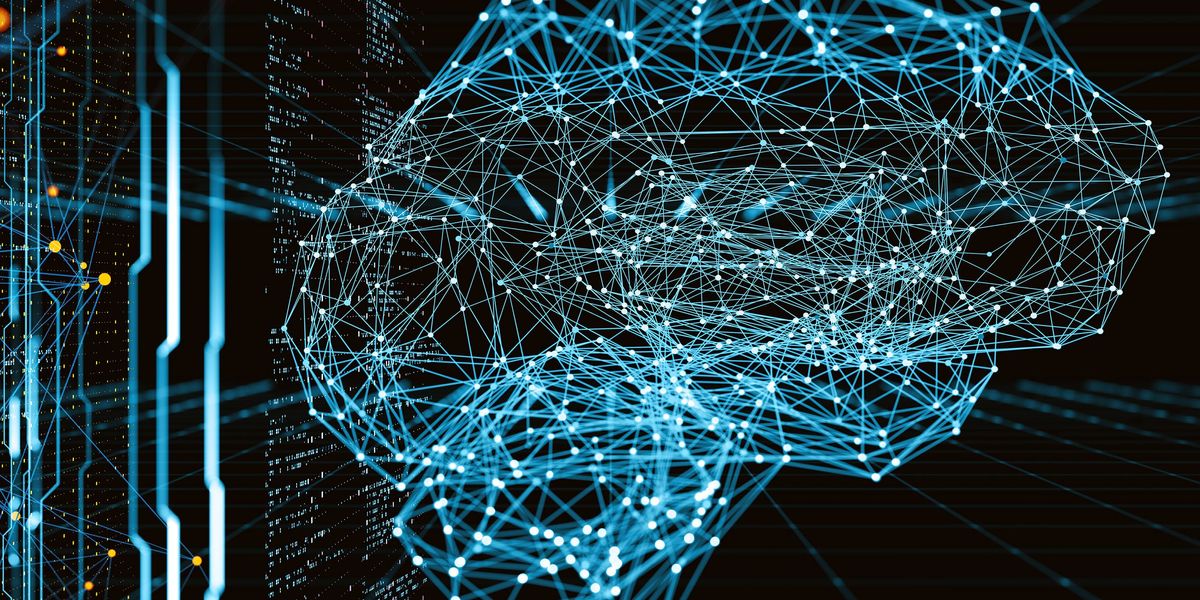
The Thousand Brains Project aims to develop a new AI platform based on the brains cortical columns (hello PVDM).
Professor John Shen from Carnegie Melon University is designing the hardware.
Refer to FMF's post above to re history of AKIDA + John Shen.
New AI Project Aims to Push Beyond Neural Networks
The Gates-funded Thousand Brains Project will mimic the human neocortex
 spectrum.ieee.org
Last edited:
Bravo
Meow Meow 🐾
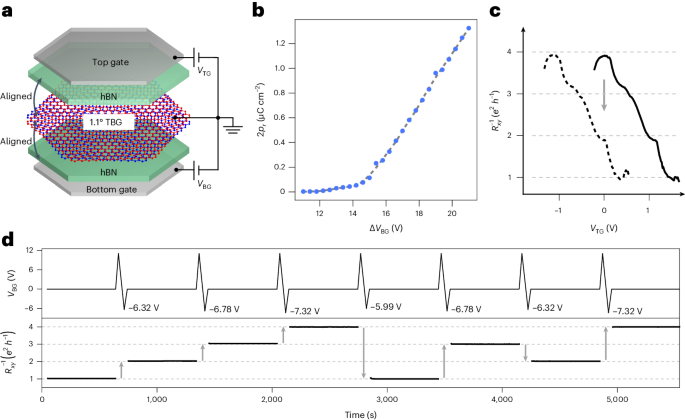
If anyone can read this summary and explain what it means and whether it might assist us in some way, I'll give you $100.


 www.nature.com
Topologically protected edge states for neuromorphic computing - Nature Nanotechnology
Coexisting ferroelectricity and Chern insulators have been achieved using a doubly aligned magic-angle twisted bilayer graphene device. This device enables selective switching of topologically protected edge states and quasi-continuous ferroelectric levels that can support noise-immune...
Last edited:
Bravo
Meow Meow 🐾
MERCEDES EXEC BLASTS TESLA FOR RECKLESS “FULL SELF-DRIVING” ROLLOUT
"IF THINGS ARE OVERPROMISED OR DO UNDERPERFORM, EVEN IF IT'S VERY SELDOM, THE ENTIRE TRUST IN AUTONOMOUS DRIVING ITSELF LOSES CONFIDENCE."
TESLA / FUTURISMBaby Steps
Tesla has gotten plenty of flack for the way it's been rolling out its controversial "Autopilot" and "Full Self-Driving" driver assistance software.For years now, the Elon Musk-led company has used the general public as guinea pigs, offering its customers to beta test FSD through a mind-bogglingly expensive beta.
And the data speaks for itself: regulators are investigating hundreds of crashes involving the company's self-driving software, including dozens of deaths.
It's an approach to autonomous driving that could backfire spectacularly, Musk's executive peers say, further eroding trust in self-driving tech overall.
Such a rollout "should be a step-by-step approach." Mercedes-Benz's autonomous driving head Jochen Haab told Drive. "Do it slowly, but do it the right way. Build trust, build confidence."
Overpromise and Underperform
Haab took aim at Tesla's boisterous marketing, something that regulators have found could lead to overconfident drivers who overestimate its capabilities and end up behaving dangerously on the road."We're concerned about others, let's say, promising too much," Haab told Drive. "That's not the way we approach things."
"The problem is — if things are overpromised or do underperform, even if it's very seldom, the entire trust in autonomous driving itself loses confidence," he added. "And that's a bad thing."
A JD Power study last year more or less confirmed Haab's suspicions, finding that consumers are losing confidence in self-driving cars. A separate AAA survey in March found that 68 percent of Americans are afraid of self-driving cars, an increase of 13 percent year over year.
Mercedes has been working on its own Level 3 autonomous driving system, meaning that vehicles can make informed decisions for themselves but still require human drivers poised to take over at any time — although they're able to take their eyes off the road for short periods. The tech was greenlit in California and Nevada last year, making the German automaker the first company in the US to sell cars with Level 3 features.
Tesla's FSD system is still technically considered Level 2, a subtle distinction that means humans are still very much expected to be in control over the vehicle.
By misleadingly marketing it as "Full Self-Driving," and allowing the public to beta test incomplete and deeply flawed software, Tesla is putting the self-driving cart in front of the horse.
"We deal with the risk and then we take the step," Haab told Drive. "We do field validation, we act as if we're the customers."
Haab argued that Mercedes only beta tests with trained employees, who are "skilled engineers or testing drivers."
Given the documented drop in confidence among consumers, there's good reason to be wary of Tesla's move-fast and break-things approach to what it calls "self-driving."
https://futurism.com/tesla-laying-off-every-employee-superchargers
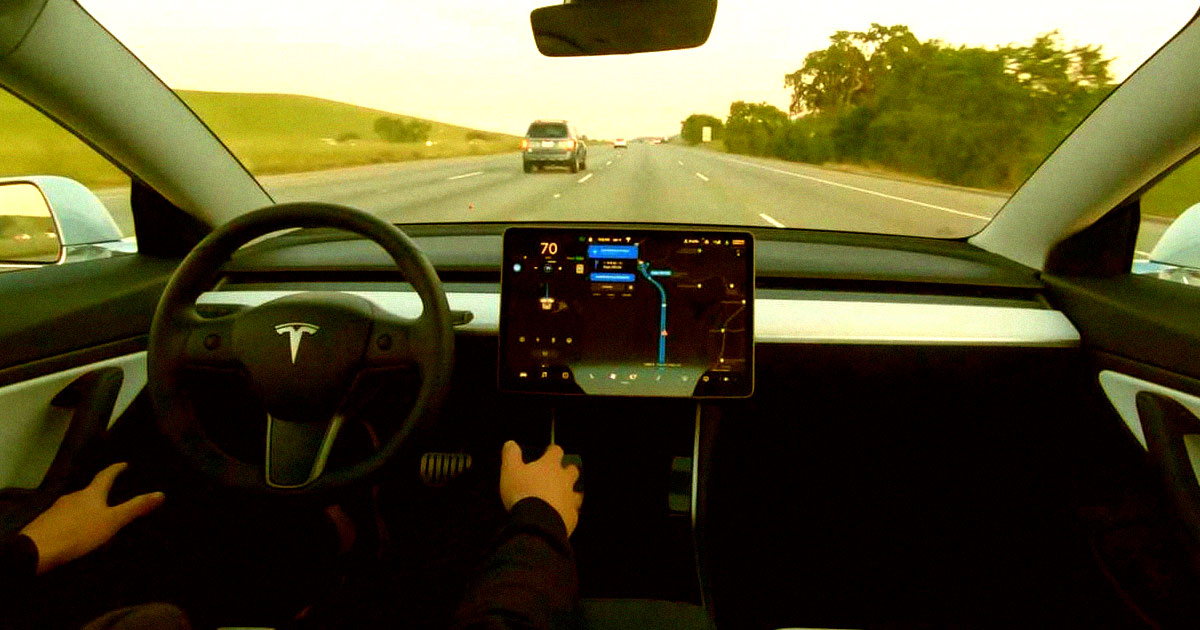
Mercedes Exec Blasts Tesla for Reckless “Full Self-Driving” Rollout
Mercedes-Benz's autonomous driving head Jochen Haab criticized Tesla's autonomous driving rollout, arguing it erodes trust.
Bravo
Meow Meow 🐾
Here's the most recent Nintendo investor-focused Q&A.
I used to google to translate the blue highlighted section on Q8.


I used to google to translate the blue highlighted section on Q8.

Smoothsailing
Regular
What are your thoughts on this Bravo, could we be apart of this ?
Bravo
Meow Meow 🐾
Hi @Smoothsailing,What are your thoughts on this Bravo, could we be apart of this ?
I beleive it's quite likely for reasons outlined here #58,557.
In addition, I beleive there has also been some speculation that the Nintendo Switch 2 might be a trimmed down variant of the NVIDIA Thor SoC, which if this proves to be true, then the power consumption/ battery life would likely be an issue, which AKIDA may be able to help offset IMO.
But, I'm not an expert and all of this is just speculation on my behalf.
Smoothsailing
Regular
Thanks Bravo , that put a smile on my face , it seems we are getting real close to ‘ game time ‘.
no pun intendo.
no pun intendo.

DingoBorat
Slim

Yoda
Regular
What do you use vinegar with? Chips of course! Brainchip perhaps? Now there's some premium dot joining for youThis was the translation from Q4.
I'm not really sure what "vinegar" has to with any of this though?
View attachment 65986


toasty
Regular
That's amateur dot joining. The Cockneys are the masters. For example, how do you get the name "Aris" for someones bottom? Well, Aris is short for Aristotle, Aristotle rhymes with bottle, bottle is made of glass, glass rhymes with arse!! And there you have it fellow Brainiacs, a perfect examlpe of the type of dot joining that often goes on around here!!!!!What do you use vinegar with? Chips of course! Brainchip perhaps? Now there's some premium dot joining for you
Similar threads


- Replies
- 0
- Views
- 4K
- Replies
- 9
- Views
- 6K
- Replies
- 0
- Views
- 3K