SGQ Thread

cosors

👀
1762266404683.png


With a focus on sustainability, the company announces the arrival of board member Marina Spinola.
St George Mining Limited, the Australian company responsible for the Araxá Project, which involves rare earths and niobium in the Minas Gerais municipality, announced the arrival of Marina Spinola as an advisory board member.


An executive with over 25 years of experience in sustainability, institutional relations, and corporate strategy, Marina Spinola is the Director of Institutional Relations and Sustainability at Fundação Dom Cabral, considered one of the best business schools in the world.


Her appointment reinforces St George's commitment to building a sustainable, transparent operation guided by dialogue with society, pillars that guide the development of the Araxá Project. The board member completed the board member development program and holds an MBA from Fundação Dom Cabral. She has previously served on boards, most recently the Board of Directors of the Global Compact in Brazil.


According to John Prineas, CEO of St. George Mining, Spinola's arrival "marks an important step in consolidating the company's presence in Brazil, combining institutional experience and a vision of sustainability at a strategic moment for the advancement of the Araxá Project."


The new advisor highlighted that "responsible mining, based on dialogue and shared value, is essential for the future of the sector and for strengthening the supply chains of critical minerals in the country.""
local press:
 

cosors

👀
From on site:
"ST. GEORGE MINING ANNOUNCES NEW LEGAL AND INSTITUTIONAL MANAGEMENT
Attorney Michele Carvalho, formerly of Mosaic, assumes the new area now
11/11/2025 10:41 10/11/2025 20:17

St. George Mineração's Araxá Project, focused on the production of niobium and rare earths in Minas Gerais, continues on its path of rapid development. At this stage, the company has announced the creation of a new legal and institutional department, which will be headed by lawyer Michele Carvalho. With over 25 years of experience in the mining industry, Michele has accumulated experience in virtually all areas of the sector, giving her a broad and integrated technical perspective. In recent years, her work has focused on the areas of law, responsible management, governance and sustainability. In addition to her solid professional background, Michele has a diverse academic background, which includes Mining, Law and Biology. ‘This combination allows me to understand the complexity of environmental, legal and social issues,’ she says.

For St. George's new manager, working on the Araxá Project brings countless motivations. ‘Being part of a project with such broad potential is an opportunity to contribute to the responsible growth of mining in the region,’ says the lawyer, who is proud to be from Araxá and to have first-hand knowledge of the demands of society and the challenges of mining in the city. She adds that the new position represents the possibility of combining purpose and experience, putting her career at the service of strengthening institutional relations and responsible, innovative, ethical mining committed to the development of the local community."


______________________________________________

1764249138463.png


_____________________________________

"Critical minerals project in Minas Gerais anticipates a 60% profit margin and attracts investors.​

November 9, 2025

The Australian mining company St George Mining stated that the Araxá Project, in Minas Gerais, is expected to generate an EBITDA (earnings before interest, taxes, depreciation, and amortization) of approximately US$130 million per year , with margins exceeding 60%.

The projections, released in a market report, reinforced investors' optimism regarding the progress of the project , which holds one of the largest reserves of niobium and rare earth elements in South America.

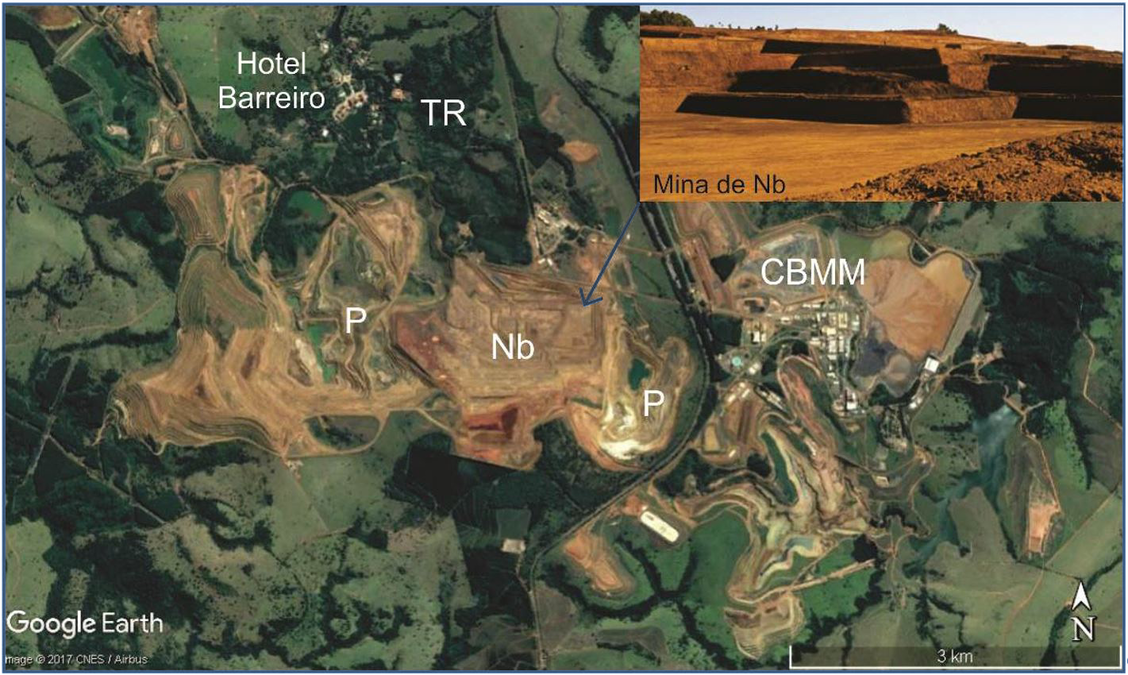
With operations projected to begin by 2027, the project is located next to the facilities of CBMM (Companhia Brasileira de Metalurgia e Mineração), the world's largest producer of niobium, responsible for approximately 80% of global supply.

St George understands that the strategic location, low extraction costs, and existing infrastructure in the region will ensure high profitability and an accelerated return on investment .

In addition to niobium, the project contains high-grade rare earth deposits, notably neodymium and praseodymium, essential minerals for permanent magnets used in wind turbines, electric motors, and high-tech equipment.

The company projects that niobium will be the main product in the initial phase, focusing on the global steel market and, subsequently, on the battery segment.

A scoping study is expected to be released in 2025, detailing costs, timeline, and production capacity, a step that precedes the bank feasibility study.

In September, the mining company confirmed a significant new discovery of high-grade rare earth elements and niobium in the Araxá Project, acquired by the company in February 2025. Following the announcement, shares rose as much as 23.1%, reaching 0.096 Australian dollars, the highest value since May 2021.

After the discovery, the company announced it had raised A$72.5 million (approximately R$254 million) to develop the Araxá Project and build a pilot plant (a scaled-down version of a factory used for testing) dedicated to processing niobium and rare earth elements.

Currently, the area does not yet engage in large-scale mining and refining.

St George Mining is preparing the project to reach the Final Investment Decision stage, at which point the company officially confirms the construction of the mine and processing infrastructure.

The company still needs to obtain environmental licenses and operating permits and finalize the mine's technical design, mandatory requirements before the start of commercial production.

US interest​

The United States is among the potential destinations for the ores produced by the company.

At the end of October, the US Chargé d'Affaires in Brazil, Gabriel Escobar, met with company representatives to discuss the project's progress and potential business partnerships.

The company's president, John Prineas, stated that, in addition to contributing to domestic supply chains, the Araxá Project is favorably positioned to support new and resilient supply chains demanded by the United States and the European Union. According to him, discussions were held with several of these parties during the mining conference, including representatives from the US and EU governments."
 

cosors

👀
" São Paulo

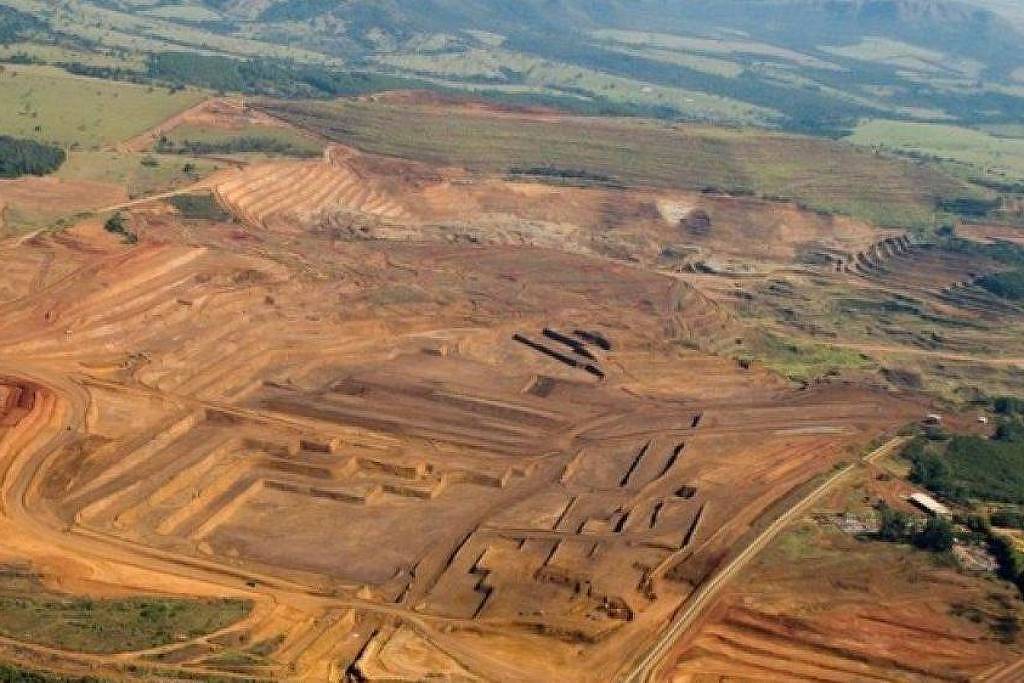
Australian mining company St. George, which plans to start operating in Brazil within two years, announced in recent weeks advances in the prospecting of rare earths in its reserves, as well as a partnership with a magnet supplier to the US government. The announcements are in addition to the company's niobium project, which aims to build a mine in the same city where the Moreira Salles family's mining company operates.

The company was founded in 2010 by John Prineas, who is in Brazil this week to attend Exposibram, the country's largest mining fair. In parallel with the event, which takes place in Salvador, he will meet with US Chargé d'Affaires Gabriel Escobar in a closed meeting with executives from critical minerals companies.

CBMM niobium mine in Araxá (MG) - CBMM Disclosure

To Folha, Prineas argued that Brazil, as Australia did, should sign an agreement with the US on critical minerals. He said that the company, publicly traded in Sydney, raised US$ 72.5 million two weeks ago, including US$ 22.5 million from Gina Rinehart, Australia's richest person and linked to several mining projects around the world. The amount represents 80% of the investment needed to get niobium operations up and running.

St. George's project in Brazil was more focused on niobium, but recently the company has been making more announcements about rare earths. Has there been a change in focus?

We want to produce both commodities. Niobium is the easiest option, given our location, so we are very confident that we can make commercial products from this metal. But rare earths have become super exciting and interesting this year; everyone wants to establish domestic supply chains for rare earths. We know that some investors are more interested in rare earths, but others we've talked to really like the niobium opportunity, so I think we're a critical minerals company.

And what is Gina Rinehart, Australia's richest person, interested in?

I think she's waiting for both. The beauty of niobium is that neither China nor the US has domestic production, so it's extremely important for both countries to try to secure long-term contracts. And one of the reasons the US is quite interested in St. George is that we have no Chinese affiliation, whereas the largest niobium producers have a very strong Chinese connection. So the niobium and rare earth space is a fantastic opportunity for us to get into production relatively quickly.

Read more​

Brazil dominates the niobium market; understand why it is so coveted​

What are rare earths used for, who dominates the market, and what is Brazil's position?​

Isn't it too ambitious to want to operate in CBMM's backyard, which has been there for decades?

No, not at all. It's a comparison between a very large and dominant player and a very small player, since we will produce perhaps 10% of what they do. In fact, it's appropriate to have another player in the market [to avoid monopolies]. The other players and the community recognise this. We have very strong community engagement in Araxá. The population wants to see another mine in operation, and I don't think anyone will stand in the way of that.

St. George has seven projects, but none in operation. Why can the Araxá project become a reality?

Our focus from the beginning was exploration. We wanted to make a big discovery and then take it to development. Our first project was actually a joint venture with BHP to extract nickel in Western Australia, but the project did not exactly develop into an economic deposit. So we came to Brazil and bought the Araxá project because we didn't want any more exploration risk. We now wanted an advanced project, one that had an established resource, something we could be really confident we could take to development and production.


1764250351458.jpeg

John Prineas, founder of mining company St. George - Disclosure


And does that confidence also apply to rare earth reserves?

Rare earths can be very complex. They are very common in the earth's crust, but it is really very difficult to bring a rare earth deposit to development and production. That is why there are only two major producers outside China, one in the US and one in Australia. We have metallurgists who worked for this Australian mining company, and that will bring a lot of expertise in terms of the opportunity in rare earth development.

In addition, we have the same tonnage as Mountain Pass, which is the largest mine in the US, and also the same grade as Lynas' Mount World operation in Australia (one of the largest in the world). So, in terms of deposit, considering size and grade, our project is definitely economical.

But, also economically, would it make sense to verticalise the chain in Brazil?

We want a product that has the right financial model. The difficulty with rare earths is when you are trying to produce the advanced product, such as rare earth oxide; that is where capital expenditure increases and it becomes quite complex. So, we will probably try to produce a rare earth concentrate that requires less capital expenditure and then sell that product to another party to make the final rare earth product. But we are very interested in contributing to Brazil's domestic supply chain, and the US is also looking strongly at rare earths.

Australia has just signed an agreement with the US on critical minerals. What is the advantage of making a rare earths agreement with the Americans and not with the Chinese, who already have refining capacity?

The US is developing this technology very quickly; they already have this technology, they just need to scale it up. St. George, for example, already has a memorandum of understanding with a company in the US, RE-Alloys, which has this capacity for downstream processing. They can separate, divide and metallise rare earths and create materials for magnets. So that scale will increase over the next year, and other companies are also growing in processing, which previously only China could do. From that, I think there is an opportunity to supply rare earths to the US and take advantage of its great momentum to establish domestic supply chains.

In these negotiations with the Americans, do Australia and Brazil have enough power to tell the US that the processing of minerals has to take place in the country where those minerals are located?

The US developed this technology with strong government support, and that is one of the things you need if you want to try to develop this downstream process. We are seeing this in Australia; the government is providing funding subsidies or long-term low-interest loans for companies to try to develop this processing. I haven't seen this in Brazil yet, but I hope it will happen too, not least because the US can support this type of financing. But we would definitely like to have more downstream processing in Brazil, if possible.

JOHN PRINEAS, 62​

Founding shareholder and director of St. George, he has high-level experience in mining, finance and corporate governance, acquired over more than 25 years. Before creating St. George, he was the director for Australia at Commerzbank, focusing on project financing and acquisitions for resources and infrastructure projects, as well as trading in associated commodities."
 

cosors

👀
"US meets with Australian owner of rare earth project in Brazil

The meeting focused on US interest in finding reliable suppliers of rare earths and critical minerals


Gabriel Garcia, CNN Brasil 30/10/25 at 16:20 | Updated 30/10/25 at 16:21

The meeting focused on the American interest in finding reliable suppliers of rare earths and critical minerals

The US Chargé d'Affaires in Brazil, Gabriel Escobar, met on Wednesday (29) with representatives of Australian mining giant St George Mining, owner of the Araxá Project in Minas Gerais, which has one of the largest rare earth reserves in South America.

The information was confirmed to CNN Money by representatives of the US Embassy in Brazil and in a statement released by the company itself.

The meeting focused on US interest in finding reliable suppliers of rare earths and critical minerals, amid the country's efforts to reduce its dependence on China in this strategic sector.

Soybeans, rare earths and tariffs: What Trump and Xi agreed upon at their meeting

"In addition to contributing to domestic supply chains in Brazil, our Araxá Project is well positioned to support new and resilient supply chains sought by the US and the EU. We were pleased to have discussed with several of these parties on the sidelines of this week's mining conference, including representatives from the US government and the European Union," said company president John Prineas in a statement after the meeting.

As reported by CNN Money, Escobar held a series of meetings with mining companies operating in the country, seeking possible agreements in the area of critical and strategic minerals.

The meetings took place during Exposibram, one of the main events in the mineral sector in Latin America, which brings together large companies in the sector, government representatives and political leaders.

The Araxá project concentrates one of the largest rare earth reserves in South America, with about 40 million tonnes of high-concentration ore — essential inputs for the production of batteries, semiconductors and cutting-edge technologies.

In September, the mining company confirmed a new major discovery of high-grade rare earths and niobium at the Araxá Project, which it acquired in February 2025. Following the announcement, the company's shares rose by up to 23.1% to A$0.096, their highest value since May 2021.

In 2013, before being acquired by St George, the land had already undergone testing at an experimental plant that operated for nine months and managed to extract minerals with over 99% purity, in addition to successfully eliminating radioactive waste.

The company recently announced that it had raised A$72.5 million (approximately R$254 million) to develop the Araxá Project and build a pilot plant (a smaller version of a factory used for testing) dedicated to processing niobium and rare earths.

Currently, the Araxá Project is not yet in large-scale mining and refining operation. What St George Mining is doing is preparing the project to reach the Final Investment Decision, which is when the company officially confirms that it will build the mine and processing infrastructure.

The company still needs to obtain environmental and operating permits and finalise the technical design of the mine, which is mandatory before commercial production can begin."
 

cosors

👀
From the Brazilian press:

"St George's niobium and rare earths project in Araxá is 100% financed in the pre-construction phase

The niobium and rare earths project in Araxá, in Alto Paranaíba, already has funding for all stages prior to the construction of the processing plants

3 December 2025 • 05:01

St George's niobium and rare earths project in Araxá is 100% financed in the pre-construction phase

1764845320505.jpeg

In the case of the processing plants, funds will come from offtakes

St George Mining has taken a decisive step forward with its niobium and rare earth mining project in Araxá, in Alto Paranaíba. The Australian company has raised and secured the necessary funds to develop the project in all stages prior to the start of construction of the processing plants.

This was highlighted by the mining company's director in Brazil, Thiago Amaral, in an interview with Diário do Comércio at the event ‘Open Conversation – St George and the Community,’ held this week at the Grande Hotel Termas de Araxá to present the actions already taken by the company and foster discussions about the critical and strategic minerals sector.

‘This is very important because it provides security for the community and investors that we are following very firm paths for the implementation of the project,’ he said.

In line with what the executive said, St George recently raised 72.5 million Australian dollars (around R$ 260 million) in shares for the Araxá Project. Part of the money was used to pay off the purchase of the asset, which belonged to Itafos Inc., in advance, and the rest will be used to update the mineral resource estimate, feasibility studies, metallurgical tests, environmental licensing, and a pilot plant.

Of the total raised, AUD 50 million came from institutional investors, mainly from Australia, Europe, the United States, and Canada. The other A$22.5 million was contributed by Hancock Prospecting, an Australian company with stakes in two other rare earth producers outside China, Lynas and Arafura, and led by Gina Rinehart, considered the richest woman in the country.

According to Amaral, Hancock has become one of St George's largest shareholders, with around 6% of the shares. He pointed out that the company's investment is of strategic importance to St George, confirming that the asset has potential and should be closely monitored by the international market, as well as opening doors for future business, since the project is now being viewed with new eyes and not just as another one.


1764845367852.jpeg

St George's director in Brazil, Thiago Amaral, seated, with a microphone in his handSt George's director in Brazil, Thiago Amaral

Money for processing plants will come from offtakes

To build the Araxá Project's processing plants, St George intends to seek funding through advance production sales contracts (offtakes). According to the director, the company decided not to raise money on the market for this stage of the project, as this could lead to a significant dilution of existing shares.

Amaral explained that the idea is to have a maximum of 50% of production negotiated via offtakes, while the other half will be sold later, under different conditions – either on the spot market, in other markets, or even to customers who already have a guaranteed share and want to buy more. According to him, the goal is to not miss opportunities to generate value for shareholders in the event of sharp price fluctuations.


To date, the mining company has already signed a binding agreement with the American company REAlloys to sell up to 40% of its future rare earth production. There are talks with other parties interested in the product, mainly from the United States and European countries, which are looking for suppliers in the West to reduce their dependence on a Chinese monopoly.

The company has also signed non-binding memoranda of understanding (MoUs) with China's Liaoning Fangda and SKI Hong Kong to sell up to 40% of the niobium to be produced at the Araxá Project, with up to 20% for each. According to the executive, interest in advance purchase of the product is global because there are few manufacturers in the world.

Company seeks to strengthen the niobium market and become a major player in rare earths

The Araxá Project already has certified resources of 40.6 million tonnes (mt) of ore with 4.13% rare earths and 41.2 mt with 0.68% niobium, although most of the area has not been analysed. St George is conducting a drilling campaign, scheduled for completion this month, which is signalling that the potential is even greater.

Neighbouring Companhia Brasileira de Metalurgia e Mineração (CBMM), the world's largest niobium producer, the Australian mining company does not see competition, but rather an opportunity to strengthen the market and diversify the product's supply chain. The company's current estimates are that around five to ten thousand tonnes of niobium will be produced per year at the venture, representing around 5% to 10% of global demand.

The estimated annual production of rare earths is approximately 15,000 tonnes, a volume that should meet approximately 20% to 30% of all demand outside China, making St George a relevant supplier in this segment. The volumes and grades of the Araxá Project are similar to those found in the two rare earth mines currently operating outside China.

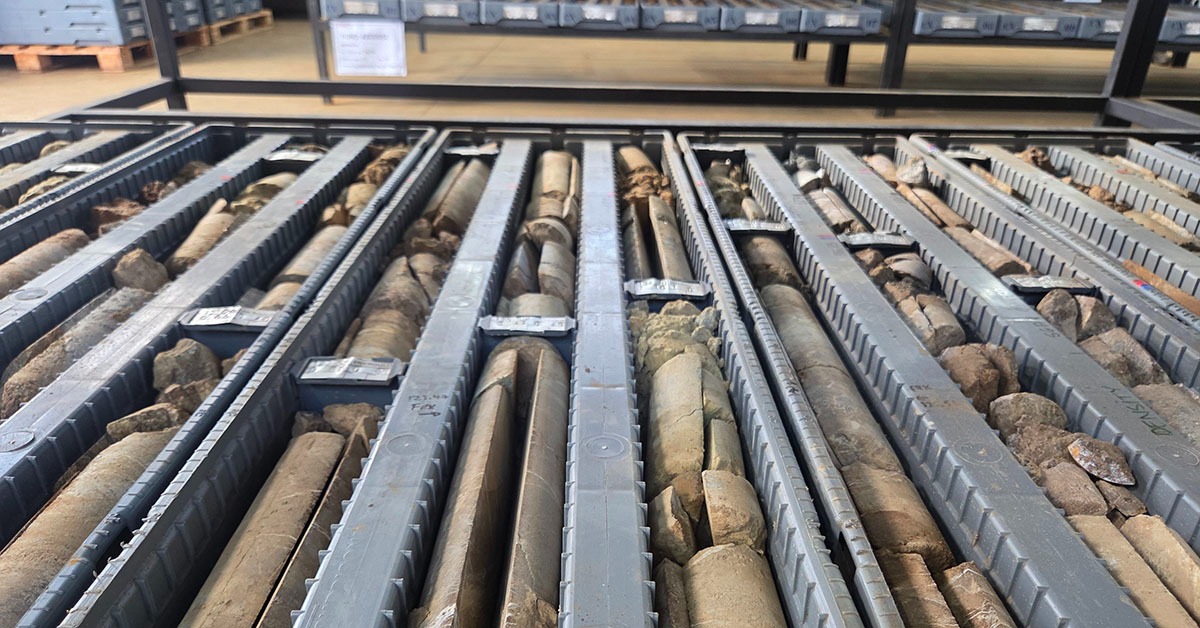
1764845420051.jpeg

Worker in the Araxá Project drill core shedAraxá Project drill core shed

St George intends to start production at the Araxá Project in 2027. As such, it should begin the environmental licensing process for the project next year. According to Amaral, the company is still discussing whether to submit a single application, covering the preliminary, installation and operating licences, or a two-stage application, first requesting the preliminary licence and then the installation and operating licences together.

The executive downplays the risks of delays such as those faced by rare earth mining companies in southern Minas Gerais. According to the director, the company has been pursuing a strategy of early dialogue with environmental agencies and local authorities from the outset and, in addition, is operating in a different context, as there are mines around the world that operate with the same type of material and the project area has been mined in the past."
 
Last edited:

cosors

👀
And:


1764846008819.png

"
1764845877871.jpeg

Araxá City Hall demands investments from mining companies during event on rare earth exploration​

  • 01-12-2025
On Monday (1st), Araxá hosted a meeting promoted by mining company St. George to present the progress of the niobium and rare earth exploration project in the municipality during the year. The event, held at the Grande Hotel Termas de Araxá, brought together Governor Romeu Zema, the Mayor of Araxá, Robson Magela, local and regional authorities, company executives, the press and community representatives.

The meeting took place amid the announcement that St. George had raised R$ 254 million to boost the project in Araxá. The initiative involves one of the largest rare earth reserves ever identified in South America, with an estimated 40 million tonnes of high-concentration ore. These elements, together with niobium, are considered essential for strategic sectors such as batteries, semiconductors, electric motors and cutting-edge technologies.

St. George's Director of ESG (Environmental, Social and Governance) and Technical Development, Tiago Amaral, points out that the objective was to promote an open conversation with the community, presenting results, clarifying doubts and highlighting the partnerships that enabled progress throughout the year.

He explained that 2025 marked the completion of the project's purchase, the start of drilling and research operations – which confirmed a world-class reserve – and the advancement of social investments, including the implementation of a Technology Centre in partnership with Cefet. Amaral emphasised that Araxá stands out globally for the quality of the ore found there and that the processing plant is expected to start operating between 2027 and 2028, with the development stages being conducted in partnership with the Government of Minas Gerais and the City Council.

During his participation, Mayor Robson Magela highlighted the importance of the arrival of the new mining company for the economic development of the city and reinforced the need for companies that exploit local resources to increase their investments and contributions to the population.

In his speech, the mayor advocated for more investment in the city by companies that already exploit the municipality's mineral resources. Robson noted that the amounts allocated by these companies operating in the city to municipal funds are merely tax breaks, without any extraordinary investments.

"It is very good to know that a company as strong as St. George is coming to Araxá. But I leave here an appeal on behalf of the population: that what we have seen for years does not happen, with companies that are already in the city taking our wealth and leaving crumbs. Araxá is tired of this. When a company of this size arrives, it weighs on our health, our education, our safety. We need real compensation, and that is what we expect from St. George,"
he said.

Robson also reinforced the request for St. George to generate local jobs, invest in commerce, and share with the community part of the benefits resulting from mineral exploration.

Governor Romeu Zema pointed out that Minas Gerais is experiencing a ‘new era of responsible mining,’ with a focus on technology, waste reuse, and safety. He emphasised that the state has been working to eliminate upstream dams and reduce risks, consolidating a more modern and sustainable model for the sector.

With the confirmation of reserves and the advancement of investments, Araxá is positioning itself as one of the main centres of global interest in strategic minerals, expanding its role in the technological and industrial landscape. The City Council emphasises that it will continue to closely monitor the development of the project, ensuring that the interests of the population are prioritised and that the economic benefits resulting from mineral activity directly reach the residents of the municipality."
 
Top Bottom