

Bravo
Meow Meow 🐾
From the crapper…. Why is Brainchip recently a Nr. 1 topic with AI created stuff?

Nuclear Detection in the Palm of Your Hand - NeuromorphicCore.ai | NeuromorphicCore.AI
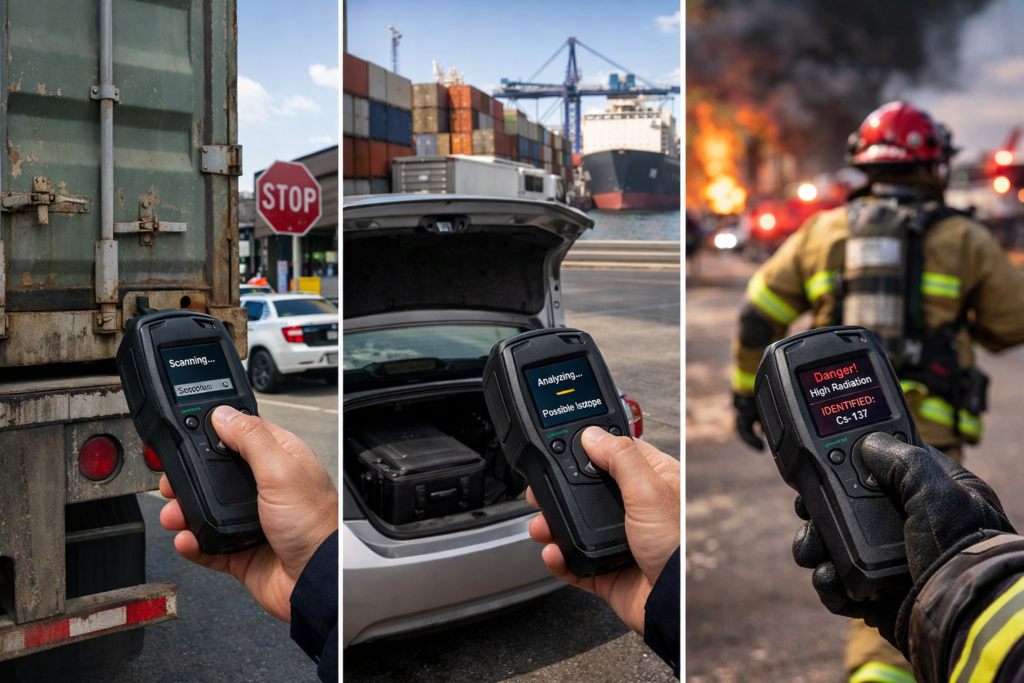
𝗡𝘂𝗰𝗹𝗲𝗮𝗿 𝗗𝗲𝘁𝗲𝗰𝘁𝗶𝗼𝗻 𝗶𝗻 𝘁𝗵𝗲 𝗣𝗮𝗹𝗺 𝗼𝗳 𝗬𝗼𝘂𝗿 𝗛𝗮𝗻𝗱 ☢️🧠 How researchers at Sandia National Laboratories used brain-inspired chips to identify radioactive isotopes using less energy than a single blink of a status LED. 🔬 The Breakthrough Handheld radiation detectors often run into what engineers call...www.linkedin.com
Nuclear Detection in the Palm of Your Hand - NeuromorphicCore.ai
See how Sandia National Laboratories used Intel Loihi 2 and BrainChip Akida to identify nuclear isotopes using 70,000x less energy than conventional processors—proving that brain-inspired "spiking" algorithms like LCA outperform standard AI in messy, real-world security environments.neuromorphiccore.ai
View attachment 96617
Re the nuclear-detection paper comparing Akida, SpiNNaker and Loihi 2 there were comments that Akida delivered the fastest inference but lower accuracy due to the 4-bit quantisation constraint.
This raises the question which generation of Akida was actually tested?
I imagine most academic work still uses the first widely available Akida hardware (AKD 1000), which typically runs models in INT4 precision to maximise power efficiency. As far as I understand it, it's great for speed and edge deployment, but a lower precision naturally introduces quantisation error that can impact accuracy.
What’s interesting is that later iterations of the Akida architecture support higher precision and mixed-precision approaches (e.g. INT8). Presumably moving from 4-bit to 8-bit precision could entail a significant recovery of accuracy.In other words, if the same benchmark were run using higher-precision modes or newer Akida generations, you might see Akida maintain its inference-speed advantage while narrowing or (hopefully) even eliminating the accuracy gap with Loihi 2??
If so, it would be very interesting to see how the results change under those conditions.
Nuclear Detection in the Palm of Your Hand - NeuromorphicCore.ai
See how Sandia National Laboratories used Intel Loihi 2 and BrainChip Akida to identify nuclear isotopes using 70,000x less energy than conventional processors—proving that brain-inspired "spiking" algorithms like LCA outperform standard AI in messy, real-world security environments.
neuromorphiccore.ai