smoothsailing18
Regular
Asking Ai it's thoughts on the linkden post and that's a snippit of its response

After some alphabet soup, I past participles.My wife kicked me in the vernaculars once - I sympathise
I couldn’t find that snippet you posted in the LinkedIn article. Can you chuck a link up.
He said…
Ericsson and Intel collaborate to accelerate the path to commercial AI-native 6G | Intel
Announced at #MWC26, Ericsson and Intel are extending a decades-long collaboration to accelerate the path to commercial AI-native 6G. Designed to help the industry move from 6G research to commercial reality, the effort spans AI-driven RAN, packet core and edge use cases across compute...www.linkedin.com
FF
Possible use cases as posited by Google Ai:
“Based on GBrain's core business in neurotechnology and BrainChip's current technical roadmap, their collaboration likely focuses on the following uses of Akidatechnology:
1. Ultra-Low-Power Seizure & Event Detection
GBrain develops graphene-based neural implants (Phin Array) for monitoring brain activity in patients with epilepsy.
BrainChip
The Akida Use Case: Akida's event-based architecture is designed to remain in an "always-on" state while consuming micro-watts of power.
Benefit: GBrain can use Akida to process neural spikes directly on the implant, identifying the onset of a seizure in real-time without the latency or power drain of transmitting raw data to an external device.
BrainChip +3
2. On-Device Personalization (Learning)
A key differentiator of the Akida processor is its ability to perform on-chip learning.
BrainChip
The Akida Use Case: Every patient's neural signatures are unique.
Benefit: GBrain can leverage Akida to "learn" a specific patient's normal brain patterns versus pathological activity on the fly. This allows the medical implant to adapt its detection algorithms to the individual user without requiring cloud-based retraining.
BrainChip
3. Smart Brain Stimulation (Phin Stim)
GBrain's Phin Stim is a wireless stimulator used to treat motor diseases.
AFR
The Akida Use Case: Akida 2.0 and the newer TENNs (Temporal Event-based Neural Networks) are optimized for processing time-series data like EEG or ECoG.
Benefit: By integrating Akida, the Phin Stim can become a "closed-loop" system. Akida identifies the precise moment stimulation is needed (inference) and triggers the electrode immediately, maximizing therapeutic effect while saving battery life.
BrainChip +3
4. AKD1500 & AKD2500 Integration
BrainChip recently initiated the AKD2500 custom silicon projectin February 2026.
**promotion blocked**.com.au
The Akida Use Case: Enablement partners like GBrain typically get early access to these next-gen platforms via the AI Enablement Package.
Benefit: This provides GBrain with the most advanced 12nm neuromorphic IP to minimize the physical footprint of their implants, making them less invasive for patients

We also know that Ericsson were playing with Akida late 2023 for 6GEricsson, Intel, 6 G.
Technical Synergy and Neuromorphic AI in 6G
The evolution toward 6G requires "Networks for AI," where the infrastructure itself is programmable and capable of real-time sensing.[1] Neuromorphic computing, as detailed in academic literature, offers a path toward the "extreme low power" requirements of 6G sensing nodes.[10] BrainChip’s technology enables on-chip learning independent of the cloud, which aligns with the Ericsson-Intel goal of reducing latency and improving data security at the network edge
 thestockexchange.com.au
Ericcson were working with Intel Labs but they were and still are in research.Ericsson, Intel, 6 G.
Technical Synergy and Neuromorphic AI in 6G
The evolution toward 6G requires "Networks for AI," where the infrastructure itself is programmable and capable of real-time sensing.[1] Neuromorphic computing, as detailed in academic literature, offers a path toward the "extreme low power" requirements of 6G sensing nodes.[10] BrainChip’s technology enables on-chip learning independent of the cloud, which aligns with the Ericsson-Intel goal of reducing latency and improving data security at the network edge
Ericcson were working with Intel Labs but they were and still are in research.
This article is dated 17th April 2024 so it getting old but everything Neuromorphic seems snail pace.
- "Using neuromorphic computing technology from Intel Labs, Ericsson Research is developing custom telecommunications AI models to optimize telecom architecture.
- Ericsson Research developed a radio receiver prototype for Intel’s Loihi 2 neuromorphic AI accelerator based on neuromorphic spiking neural networks, which reduced the data communication by 75 to 99% for energy efficient radio access networks (RANs).
- As a member of Intel’s Neuromorphic Research Community, Ericsson Research is searching for new AI technologies that provide energy efficiency and low latency inference in telecom systems."
As we know Intel is in research and Ericcson may well have bench marked them against Intel's closest rival Brainchip.

Feb 26, 2026 9:00 AM Eastern Standard Time
BrainChip Named Official Technology Sponsor for Raytheon’s “Operation Touchdown” Autonomous Vehicle Competition
Sponsorship provides university teams with low-power AKD1000 neuromorphic AI hardware to solve complex collaborative UAV/UGV challenges
LAGUNA HILLS, Calif.--(BUSINESS WIRE)--BrainChip Holdings Ltd. (ASX: BRN, OTCQX: BRCHF, ADR: BCHPY), the world’s first commercial producer of ultra-low-power, fully digital, event-based neuromorphic AI, today announced its role as the official Technology Sponsor for the 2025-2026 Raytheon Autonomous Vehicle Competition (AVC).
The Raytheon AVC, themed “Operation Touchdown,” challenges undergraduate engineering teams from across four United States-based regions—South, Puerto Rico, West Coast, and East Coast—to design and integrate a collaborative system of systems involving at least one Unmanned Aerial Vehicle (UAV) and one Unmanned Ground Vehicle (UGV). Teams must demonstrate fully autonomous navigation, target identification, and collaborative behaviors, including the signature challenge of autonomously landing a UAV on a moving UGV.
As the competition's core technology provider, BrainChip is requiring participating teams to integrate its advanced neuromorphic semiconductor technology into their systems. Teams will have exclusive access to the Akida™ AKD1000, a low-power Edge AI acceleration processor built on the Akida 1.0 neural network inference processor.
“Supporting STEM education and fostering innovation is at the core of BrainChip’s mission,” said Sean Hehir, CEO of BrainChip. “This competition represents the future of autonomous systems—where power-constrained devices must make intelligent decisions in real-time. We are proud to see our Akida technology driving the cognitive capabilities of the UAVs and UGVs in this year’s challenge.”
To ensure student success, BrainChip is providing the AKD1000 hardware at cost, delivering neuromorphic boards to each university competition team. Furthermore, BrainChip is committing up to 40 hours of virtual engineering support per competition, along with recorded webinars and integration guides, to assist teams in mastering on-chip learning and real-time adaptation to field conditions.
“The Raytheon Autonomous Vehicle Competition is designed to push the boundaries of what university students can achieve in autonomous systems,” said Jesse Lee, Raytheon Autonomous Vehicle Competition Lead. “By incorporating BrainChip’s neuromorphic processors, we are equipping the next generation of engineers with the cutting-edge AI capabilities required to solve real-world defense and disaster response challenges.”
The contest’s United States-based locations and dates:
- South: The University of Texas at Arlington, Texas, April 16-17
- East: George Mason University, Washington, D.C., April 22-24
- West: Santa Barbara City College, California, June 5-6
- Puerto Rico: TBD
About BrainChip Holdings Ltd (ASX: BRN, OTCQX: BRCHF, ADR: BCHPY):
BrainChip is the worldwide leader in Edge AI on-chip processing and learning. The company’s first-to-market, fully digital, event-based AI processor, Akida™, uses neuromorphic principles to mimic the human brain, analyzing only essential sensor inputs with unmatched efficiency and energy economy. Explore more at www.brainchip.com.
About Raytheon:
Raytheon, an RTX business, is a leading provider of defense solutions to help the U.S. government, our allies, and partners defend their national sovereignty. For more than 100 years, Raytheon has developed new technologies in integrated air and missile defense, advanced sensors, and autonomous systems.
Contacts
Media Contact:
Madeline Coe
prforbrainchip@bospar.com
224-433-9056
Investor Contact:
Trevor Franz
ir@brainchip.com
Do they really mean “at cost” rather than “at no cost”?
“To ensure student success, BrainChip is providing the AKD1000 hardware at cost, delivering neuromorphic boards to each university competition team.”

BrainChip Named Official Technology Sponsor for Raytheon’s “Operation Touchdown” Autonomous Vehicle Competition | BrainChip
What happens when you give university students neuromorphic AI and tell them to land a drone on a moving vehicle autonomously? That's exactly the challenge at the heart of the Raytheon Autonomous Vehicle Competition: "Operation Touchdown" and BrainChip is proud to be the Official Technology...
View attachment 95467
View attachment 95468

Your sounding more and more like? EverydayI can’t find any mention of BrainChip in either the post itself or in the link it points to.
Bringing BrainChip into this without any source is, at best, speculation based on wishful thinking … and at worst, an attempt to mislead people.
Unless someone can provide a direct reference …official announcement, filing, press release, or an explicit mention by the author…, this should be treated as pure guesswork.
My opinion only

Your sounding more and more like? Everyday


When there is gaps between information or quick results from a company its quite normal for posters to fill the blanks often by guessing, dot joining and over analysing small things. Ambiguous signals get amplified etc.Still positive in matters of tech progress… but not about the share price…
And now I understand why some of the best and most informative posters here eventually disappeared. What used to be a discussion about facts has, for some, turned into a speculation machine: people constantly read things into harmless statements … without any solid evidence.
And so far, many of those “100% Akida / the deal is fixed” claims have simply been wrong.
Being positive because someone tests or mentions our technology is absolutely fine. But immediately turning that into “licenses, contracts, or an upcoming partnership” is just wishful thinking.
If someone sees objectivity as negativity, I can’t help them .. I’d rather stick to what’s actually verifiable.
Oddly enough, hardly anyone reacts to posts like mine…
And sure, I also post a lot of nonsense sometimes … but that’s only because I’m bored and I want to trigger the usual people who only react to that kind of stuff. There’s otherwise nothing truly price-relevant to talk about right now. So enjoy continuing to attack me if you want. (Not you personally…in general… but you too haha)
Ps I’m waiting still for the 20cents lol
 neuromorphiccore.ai
Not sure about any conection to us, no mention but arent we friends with some of these guys...
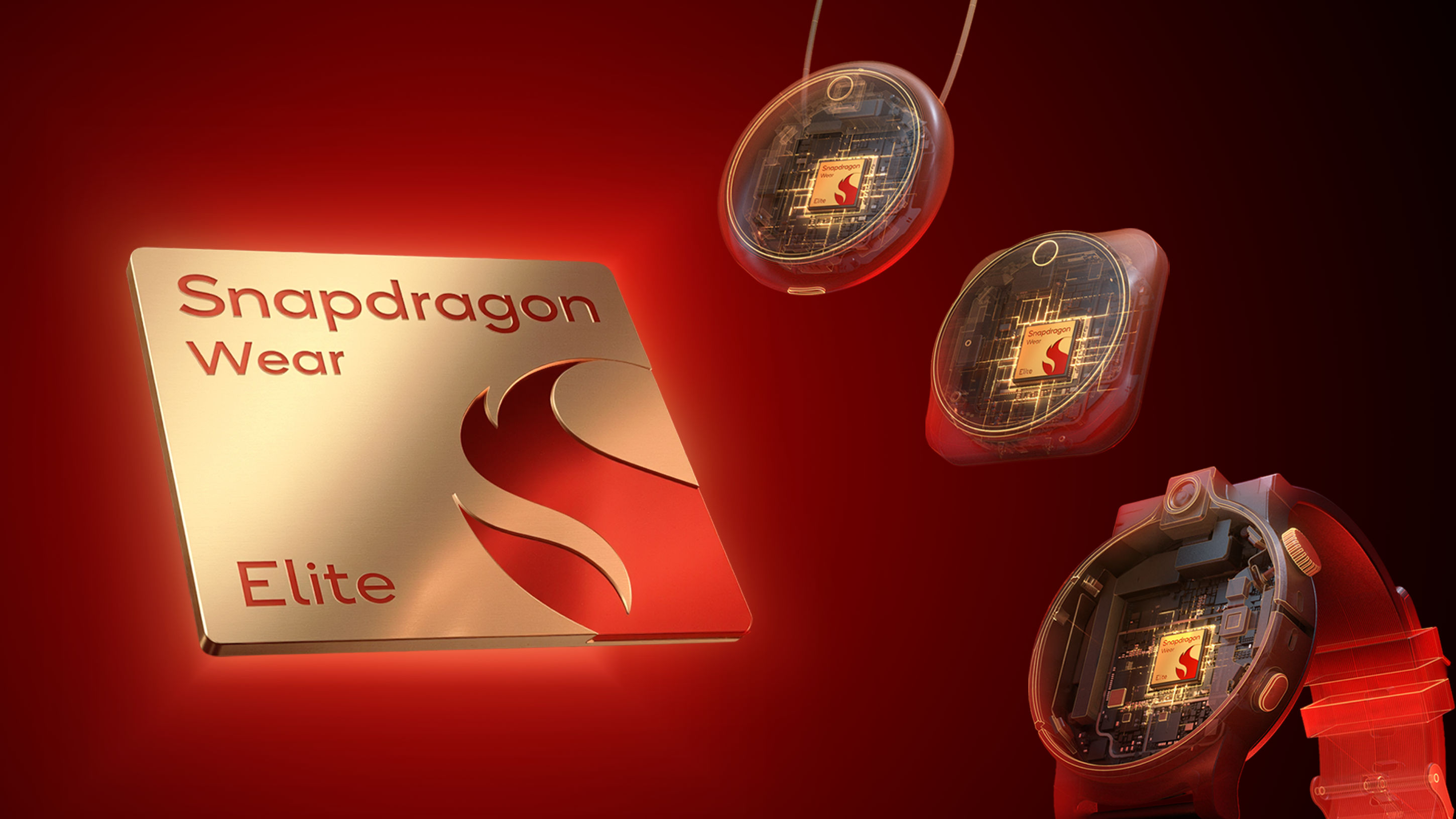
Qualcomm Powers the Rise of Personal AI with New Snapdragon Wear Elite Platform | Qualcomm
Snapdragon Wear Elite powers personal AI at the edge, enabling highly personalized experiences across multiple wearable form factors, including watches, pins, and pendants. Featuring the industry’s first NPU‑powered wearable platform, it delivers high‑performance on‑device AI processing...www.qualcomm.com
 www.prophesee.ai
Some posters just can't shut the fxxx up when there is nothing to say!
They absolutely have to say something, anything, it's like their whole world revolve around the BRN forums.
Off course, it's not against the rules, so knock yourself out!
I will not post from now on unless we hear something of real importance, IBM persons posting on LI don't count, but something associated with $$$ to BRN.
Good luck everybody.


