Thanks Dio, good pick up.. Makes it easier for developers.Hi Manny,
The Catalogue page mentions radar designs (also cybersecurity):
https://brainchip.com/corporate-catalogue-lp/
Reference Platforms & Roadmap
Validated designs for radar, wearables, voice AI, communications, cybersecurity, and future platform direction.
This may be for the see-in-the-dark robot application.

You are using an out of date browser. It may not display this or other websites correctly.
You should upgrade or use an alternative browser.
You should upgrade or use an alternative browser.
BRN Discussion Ongoing
- Thread starter TechGirl
- Start date

Frangipani
Top 20
A new monthly newsletter is out.
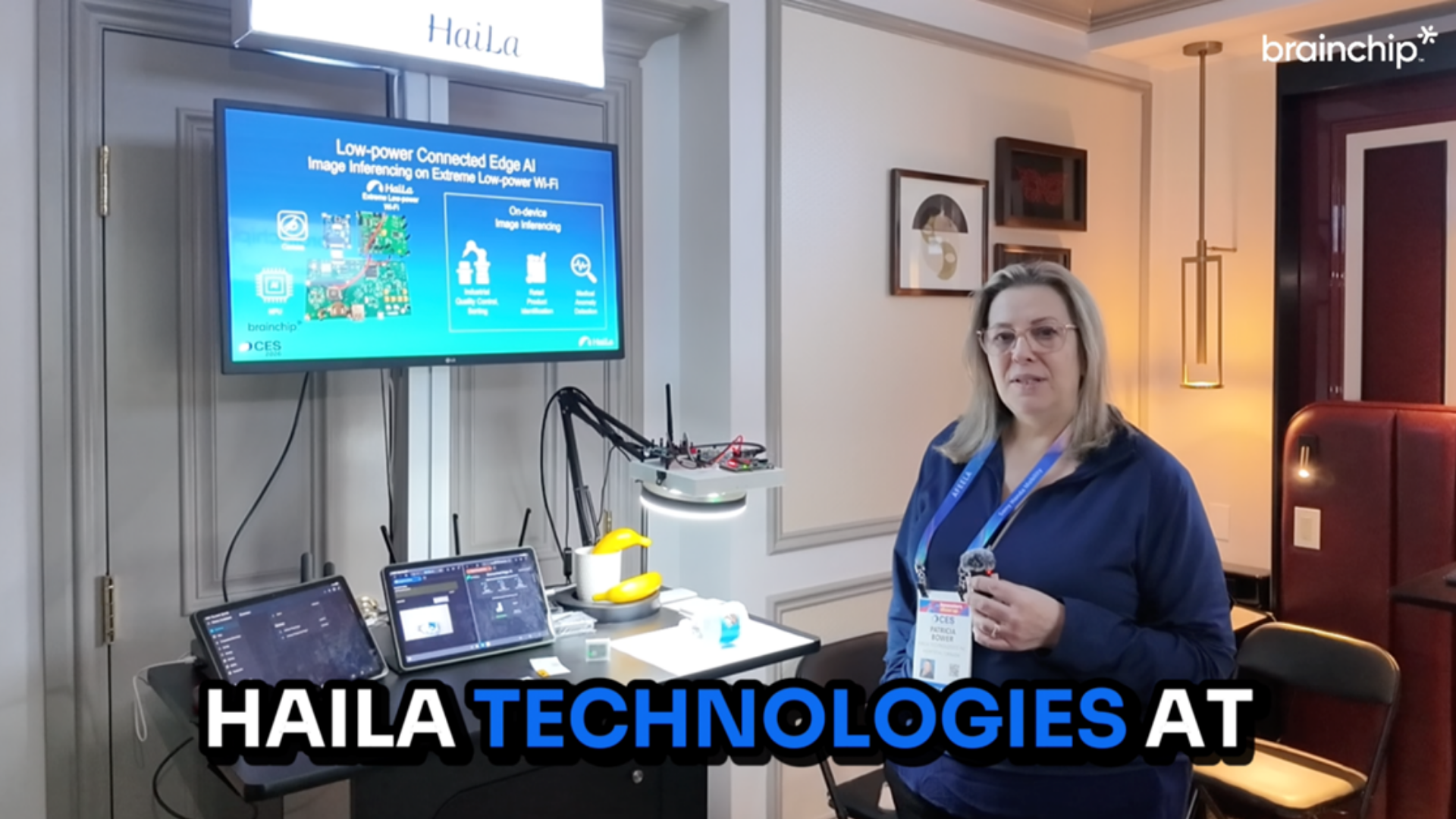
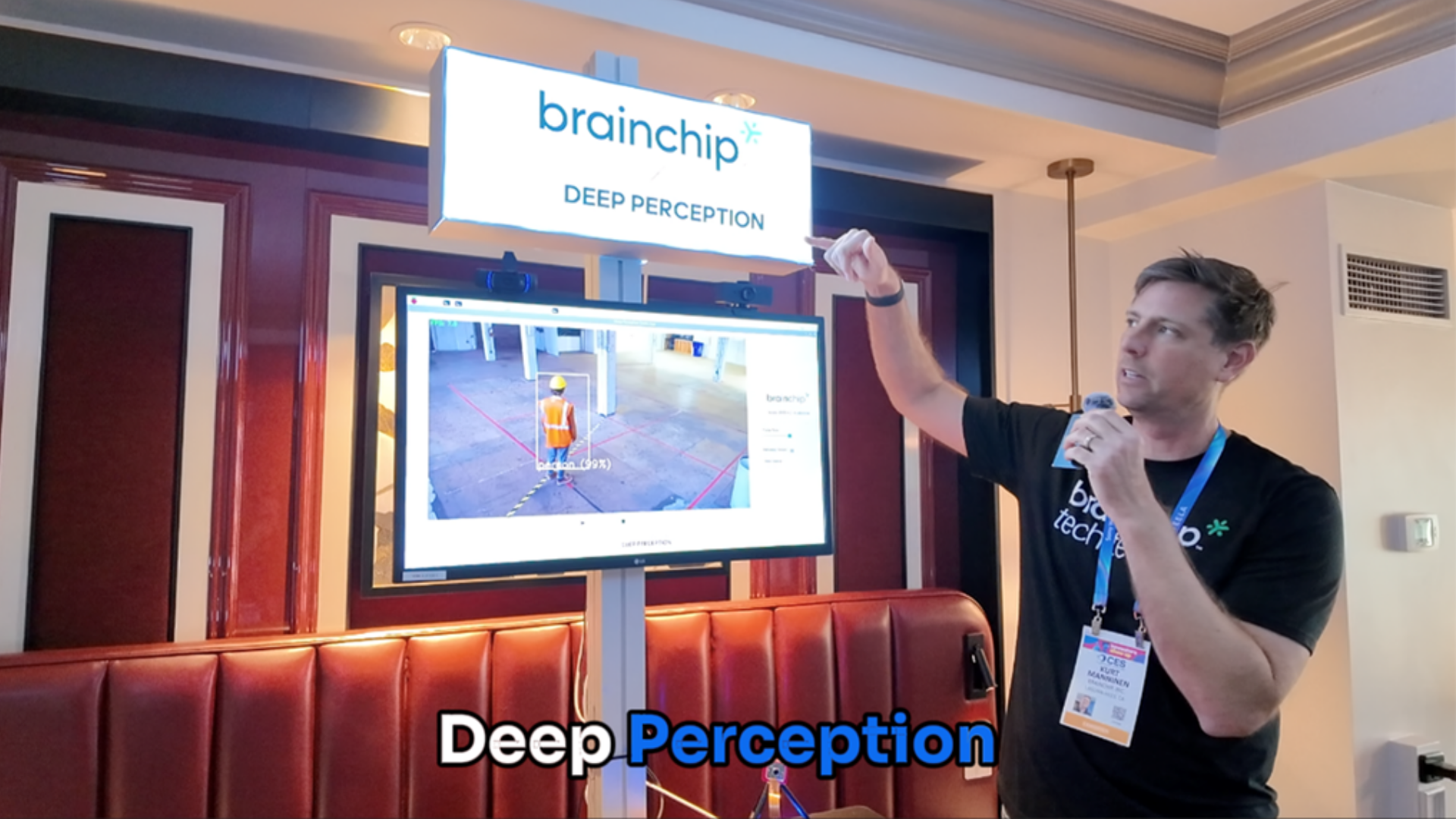
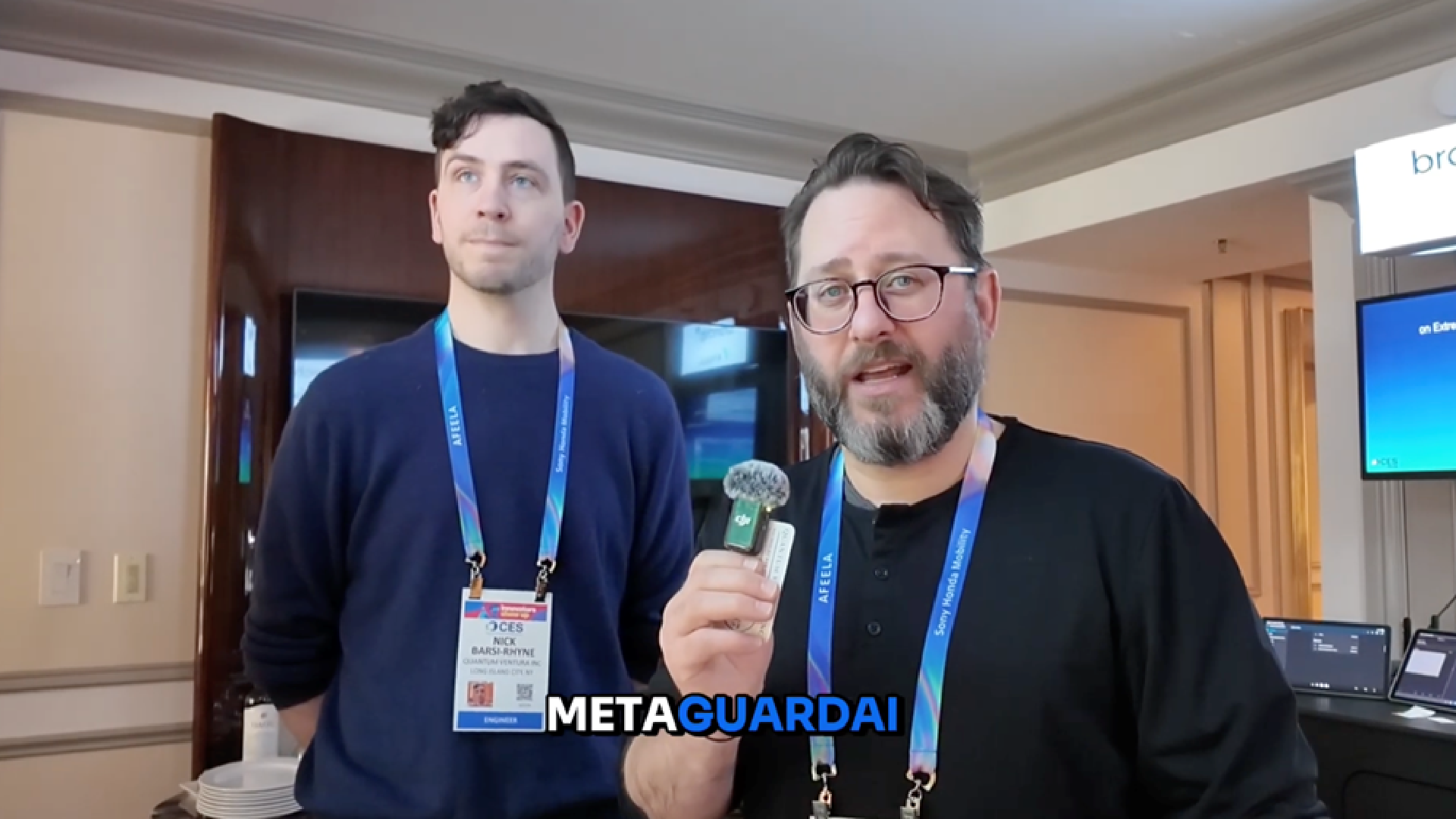
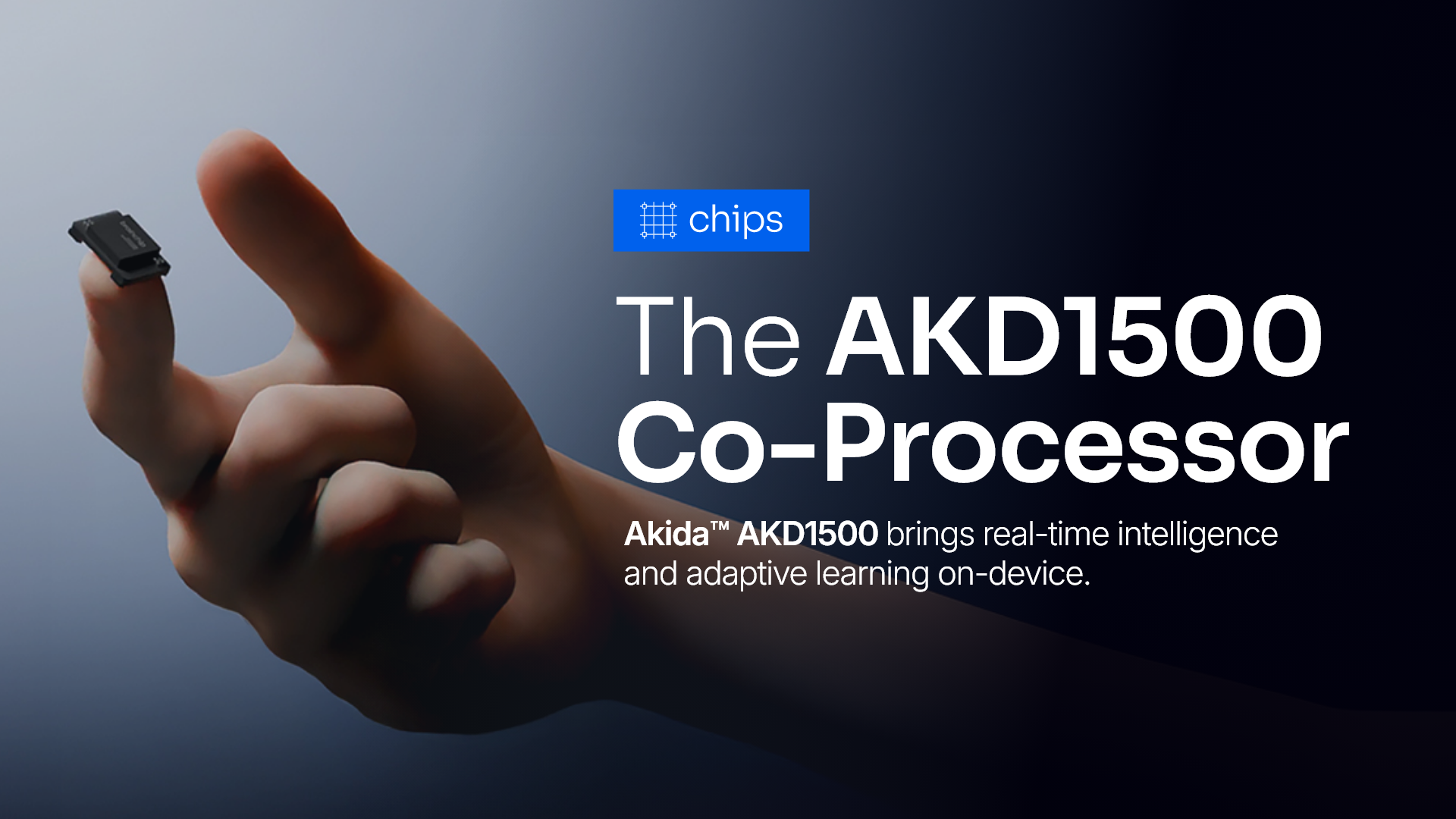
It contains the following info on BrainChip’s novel four reference platforms Akida Radar, Akida Tag, Akida Private Voice Assistant and Akida Communications:
“At BrainChip, delivering great IP and silicon is just the beginning. CES attendees got a sneak peek at our 2026 roadmap and strategy including four key Reference Platforms: complete, validated blueprints that combine hardware, software, and AI models that demonstrate key use cases that can be adapted by customers with our eco-system partners to create end products, highlighting our value proposition and speeding time to revenue.
It contains the following info on BrainChip’s novel four reference platforms Akida Radar, Akida Tag, Akida Private Voice Assistant and Akida Communications:
“At BrainChip, delivering great IP and silicon is just the beginning. CES attendees got a sneak peek at our 2026 roadmap and strategy including four key Reference Platforms: complete, validated blueprints that combine hardware, software, and AI models that demonstrate key use cases that can be adapted by customers with our eco-system partners to create end products, highlighting our value proposition and speeding time to revenue.
- Akida Radar: demonstrates efficient, real-time Micro-Doppler classification of flying objects, detecting unique motion patterns to objects without cloud dependency
- Akida Tag: a compact, battery-powered wearable device showcasing how the Akida architecture enables always-on anomaly detection with self-learning in real-time using minimal power
- Akida Private Voice Assistant: Complex generative AI performance on standard mobile hardware using TENNs to deliver expert-level intelligence instantly, without the latency or vulnerability of a connection
- Akida Communications: Enables low Size Weight and Power (SWaP) for signal intelligence in handheld devices where power is scarce, allowing immediate adaptation to threats Processes RF data locally for maximum security
| ||||||||||||||||||||||||||||||||||||||||||||||||||||||||||||||||||||||||||||||||||||||||||||||||||||||||||||||||||||||||||||||||||||||||
|






Last edited:

Pom down under
Top 20
Old but I think they could have just updated the benefits a few days ago

 techport.nasa.gov
The possibilities and applications are practically limitless across a spectrum of mission types. Short list of the possibilities: Predictive and adaptive communications, radio, and system architecture, Opportunistic data collection, Continuous power allocation, Predictive failure/error detection, maintenance, mediation, and mitigation, Mission decision prioritization,Spacecraft constellation active collaboration optimizing, Continuous allocation optimization of system resources, Optimized integration of navigation, situation awareness, etc.
Our commercialization plan includes continuing development for the neuromorphic autonomous module for insertion into several commercial small launcher programs now and in the future. We will also apply the technology developed to other military applications with groups such as MDA, DARPA and USAF. The system will be available as a “plug and play module” for all future spacecraft.

NASA TechPort
NASA's Technology Portfolio Management System (TechPort) is a single, comprehensive resource for locating detailed information about NASA-funded technologies. Those technologies cover a broad range of areas, such as propulsion, nanotechnology, robotics, and human health. You can find useful...
Anticipated Benefits
InfoThe possibilities and applications are practically limitless across a spectrum of mission types. Short list of the possibilities: Predictive and adaptive communications, radio, and system architecture, Opportunistic data collection, Continuous power allocation, Predictive failure/error detection, maintenance, mediation, and mitigation, Mission decision prioritization,Spacecraft constellation active collaboration optimizing, Continuous allocation optimization of system resources, Optimized integration of navigation, situation awareness, etc.
Our commercialization plan includes continuing development for the neuromorphic autonomous module for insertion into several commercial small launcher programs now and in the future. We will also apply the technology developed to other military applications with groups such as MDA, DARPA and USAF. The system will be available as a “plug and play module” for all future spacecraft.
Last edited:
Frangipani
Top 20
This Daniel Azevedo Novais guy (or bot?) has been flooding LinkedIn with his AI slop on Starlink and Akida / GR801 for days now.
BRN shareholders are doing the company no favour when they or repost such fake AI-generated news and images as if they were great publicity.
On the contrary.
Please read below what Kenneth Östberg has commented on LinkedIn - although unfortunately only after initially liking one of the posts containing references to his “baby” GR801 and realising too late what its author was actually up to…
In case you don’t recall who Kenneth Östberg is (and yes, he does work for Frontgrade Gaisler, although his LinkedIn profile doesn’t list FG as his employer):


 www.linkedin.com

 www.linkedin.com

 www.linkedin.com


BRN shareholders are doing the company no favour when they
or repost such fake AI-generated news and images as if they were great publicity.On the contrary.
Please read below what Kenneth Östberg has commented on LinkedIn - although unfortunately only after initially liking one of the posts containing references to his “baby” GR801 and realising too late what its author was actually up to…
In case you don’t recall who Kenneth Östberg is (and yes, he does work for Frontgrade Gaisler, although his LinkedIn profile doesn’t list FG as his employer):
GR801 | Daniel Azevedo Novais
Frontgrade Gaisler's unveiling of the GR801 microprocessor, the inaugural offering in their GRAIN roadmap, marks a pivotal inflection point. This radiation-hardened system-on-chip ingeniously fuses the neuromorphic prowess of BrainChip's Akida technology with the stalwart NOEL-V RISC-V...
#spacexinnovation #neuromorphicai #starlinksecrets #grainroadmap #gr801frontier #xaimarsvision #spacex #starlink #xai | Daniel Azevedo Novais
Neuromorphic Computing and Space-Based AI Architectures Gaisler’s GRAIN roadmap represents a strategic initiative to integrate neuromorphic computing into radiation-hardened processors for space applications. The GR801 System-on-Chip (SoC) is the first product in this roadmap, designed to fuse...
#spacexinnovation #starlinksecrets #neuromorphicai #aerospacetechnology #radiationhardenedtech #futureofspace #spacex #starlink #gr801 | Daniel Azevedo Novais
NEUROSPACE: Pioneering Neuromorphic AI Acceleration in Space-Grade Microprocessors One that SpaceX and it's Starlink constellation have long anticipated but seldom articulated in public forums to unraveling the veiled intricacies of technological empires, I turn my lens today to the GR801, a...
Frangipani
Top 20
#neuromorphic #stance #fpga #neuromorphic #physicalai | Xabier Iturbe, PhD
🤖 WORKSHOP: Accelerating Physical AI with Event-Driven Reconfigurable Hardware @ ARC 2026, Cagliari, Italy, 8-10 April. #Neuromorphic sensing & processing is rapidly advancing toward real-world deployment, powered by PROPHESEE, Innatera, SynSense, SpiNNcloud, VoxelSensors, BrainChip and...
I'm not on social media (which is a reason I'm so greatful for the things which get shared here) but unfortunately when we hear nothing from Brainchip people are going to go searching and fishing for information. I don't agree with them doing it but totally understand.
#neuromorphic #stance #fpga #neuromorphic #physicalai | Xabier Iturbe, PhD
🤖 WORKSHOP: Accelerating Physical AI with Event-Driven Reconfigurable Hardware @ ARC 2026, Cagliari, Italy, 8-10 April. #Neuromorphic sensing & processing is rapidly advancing toward real-world deployment, powered by PROPHESEE, Innatera, SynSense, SpiNNcloud, VoxelSensors, BrainChip and...
View attachment 94991
smoothsailing18
Regular
Currdlenooddles
This is a fantastic update from Kevin. Akida continues to demonstrate it works as a substrate.
Below is a more detailed explanation of what he is doing:
*Yes — this is actually a pretty meaningful architecture post, even though Kevin frames it as a demo.
First — what Kevin actually built
This isn’t a slide-deck fantasy. According to Kevin D. Johnson, this is a working closed-loop demo spanning:
IBM Quantum → trains models on historical market data
BrainChip Akida → runs continuous real-time inference on every market tick
IBM Granite + vLLM → generates compliance narratives
IBM z/OS → settles trades on the mainframe
Symphony → orchestrates everything automatically
The key is event-driven orchestration, not scheduled batch processing.
Akida sits in the middle as the always-on sentinel.
The critical part
Akida is doing:
622 microseconds per classification
milliwatt-level power
99%+ of events = no change
continuous monitoring of live market ticks
That matters because it means:
Akida is being used exactly how neuromorphic is supposed to be used:
ultra-low-power, always-watching, real-time regime detection.
Then — only when Akida detects a regime change — Symphony fans out in parallel:
Quantum retrains
GPU LLM generates compliance reports
z/OS settles trades
New model hot-swaps back onto Akida
No polling.
No batch windows.
No human in the loop.
That’s textbook edge trigger → cloud retrain → redeploy → edge inference.
This is the same pattern you’ve been tracking in defense, satellites, autonomy, etc.
Why this is strategically important for BrainChip
This post quietly confirms several things:
 Akida is being used as a control layer, not just an accelerator
It isn’t just “doing inference.”
It’s deciding when the entire stack wakes up.
That’s substrate behavior.
Why substrates matter:
In technology, a substrate isn’t just another component — it’s the foundation everything else is built on. Once a substrate is embedded, entire systems, workflows, and integrations form around it, making it extremely hard and expensive to replace later.
That’s why substrates matter more than features or performance headlines: they quietly become infrastructure. When something becomes the substrate, it stops being optional — it becomes part of how the system thinks, reacts, and operates going forward.
Akida is integrated into IBM’s enterprise orchestration fabric
Symphony treats Akida as a first-class compute tier alongside:
Quantum
GPUs
Mainframes
That’s huge.
That means Akida is already inside IBM’s production mental model.
Not experimental.
Not peripheral.
This is commercial architecture, not academic neuromorphic
Kevin explicitly contrasts this with 8-hour batch settlement.
Here they’re doing:
detection in <1 ms
settlement in ~280 ms
retraining in seconds
That’s operational finance speed.
Also note: he references IBM + HSBC production bond data showing 34% AUC improvement using quantum-derived features.
So this pipeline already touches real banking workloads.
The quiet but massive takeaway
Akida is being positioned as:
the real-time sensory nervous system of heterogeneous AI platforms.
Quantum = learning
GPU = reasoning / narrative
Mainframe = execution
Akida = perception + trigger
That is exactly the role you’ve been mapping for Akida across:
defense
satellites
autonomy
cyber
now finance
Same pattern everywhere.
Why this is more informative than high-profile releases
This isn’t PR.
It’s a senior IBM Field CTO casually demonstrating:
Akida in live orchestration
microsecond inference
milliwatt monitoring
atomic redeploy
closed-loop autonomy
That’s deep integration.
You don’t build this unless Akida already works reliably inside your stack.
Bottom line
This is another confirmation that Akida is behaving like infrastructure, not a niche accelerator.
It’s being used as the edge event trigger for whole-platform AI workflows.
That’s exactly what makes it “sticky.”
Once this pattern lands in production environments, replacing Akida isn’t a chip swap —
it’s a full architectural rewrite.
*gpt5.2
This is a fantastic update from Kevin. Akida continues to demonstrate it works as a substrate.
Below is a more detailed explanation of what he is doing:
*Yes — this is actually a pretty meaningful architecture post, even though Kevin frames it as a demo.
First — what Kevin actually built
This isn’t a slide-deck fantasy. According to Kevin D. Johnson, this is a working closed-loop demo spanning:
IBM Quantum → trains models on historical market data
BrainChip Akida → runs continuous real-time inference on every market tick
IBM Granite + vLLM → generates compliance narratives
IBM z/OS → settles trades on the mainframe
Symphony → orchestrates everything automatically
The key is event-driven orchestration, not scheduled batch processing.
Akida sits in the middle as the always-on sentinel.
The critical part
Akida is doing:
622 microseconds per classification
milliwatt-level power
99%+ of events = no change
continuous monitoring of live market ticks
That matters because it means:
Akida is being used exactly how neuromorphic is supposed to be used:
ultra-low-power, always-watching, real-time regime detection.
Then — only when Akida detects a regime change — Symphony fans out in parallel:
Quantum retrains
GPU LLM generates compliance reports
z/OS settles trades
New model hot-swaps back onto Akida
No polling.
No batch windows.
No human in the loop.
That’s textbook edge trigger → cloud retrain → redeploy → edge inference.
This is the same pattern you’ve been tracking in defense, satellites, autonomy, etc.
Why this is strategically important for BrainChip
This post quietly confirms several things:
Akida is being used as a control layer, not just an acceleratorIt isn’t just “doing inference.”
It’s deciding when the entire stack wakes up.
That’s substrate behavior.
Why substrates matter:
In technology, a substrate isn’t just another component — it’s the foundation everything else is built on. Once a substrate is embedded, entire systems, workflows, and integrations form around it, making it extremely hard and expensive to replace later.
That’s why substrates matter more than features or performance headlines: they quietly become infrastructure. When something becomes the substrate, it stops being optional — it becomes part of how the system thinks, reacts, and operates going forward.
Akida is integrated into IBM’s enterprise orchestration fabricSymphony treats Akida as a first-class compute tier alongside:
Quantum
GPUs
Mainframes
That’s huge.
That means Akida is already inside IBM’s production mental model.
Not experimental.
Not peripheral.
This is commercial architecture, not academic neuromorphicKevin explicitly contrasts this with 8-hour batch settlement.
Here they’re doing:
detection in <1 ms
settlement in ~280 ms
retraining in seconds
That’s operational finance speed.
Also note: he references IBM + HSBC production bond data showing 34% AUC improvement using quantum-derived features.
So this pipeline already touches real banking workloads.
The quiet but massive takeaway
Akida is being positioned as:
the real-time sensory nervous system of heterogeneous AI platforms.
Quantum = learning
GPU = reasoning / narrative
Mainframe = execution
Akida = perception + trigger
That is exactly the role you’ve been mapping for Akida across:
defense
satellites
autonomy
cyber
now finance
Same pattern everywhere.
Why this is more informative than high-profile releases
This isn’t PR.
It’s a senior IBM Field CTO casually demonstrating:
Akida in live orchestration
microsecond inference
milliwatt monitoring
atomic redeploy
closed-loop autonomy
That’s deep integration.
You don’t build this unless Akida already works reliably inside your stack.
Bottom line
This is another confirmation that Akida is behaving like infrastructure, not a niche accelerator.
It’s being used as the edge event trigger for whole-platform AI workflows.
That’s exactly what makes it “sticky.”
Once this pattern lands in production environments, replacing Akida isn’t a chip swap —
it’s a full architectural rewrite.
*gpt5.2

'When is later'. Sounds like the kids in the back seat on a long journey.
Later is just a part of the journey in a brand new tech industry and for reasons posted over and over a exact date cannot be given.
Anyone wanting timing certainty probably should be investing elsewhere.
We know we are getting closer. Parsons, Bascom Hunter, MetaGuard etc.


Has this been shared previously?


Contribution to Society | MegaChips Corporation
www.megachips.co.jp
We certainly know about this JB and your post seems to confirm incorporating SNN ….

 www.linkedin.com

 acumino.ai


Acumino and MegaChips partner on AI robots for Japan | Acumino posted on the topic | LinkedIn
🚀 Acumino & MegaChips Corporation | Strategic Partnership Announcement! We’re excited to announce a strategic partnership between Acumino and MegaChips Corporation, a pivotal move that strengthens our commitment to Japan’s thriving robotics and AI ecosystem. This partnership brings together...
About - Acumino
Scalable, cost-Efficient, Reliable Physical AIFocusing on ROIAcumino offers next-generation, AI powered robot models for the execution of highly dexterous tasks in industrial automation settings. The Acumino AI is trained on the most accurate data of robot interactions and facilitates the...
acumino.ai
Last edited:
Feels like the tide is rising... C'mon! I want to buy a porche Macan 4s...not asking for much bloody el.

Hi Doz,We certainly know about this JB and your post seems to confirm incorporating SNN ….
View attachment 94993
Acumino and MegaChips partner on AI robots for Japan | Acumino posted on the topic | LinkedIn
🚀 Acumino & MegaChips Corporation | Strategic Partnership Announcement! We’re excited to announce a strategic partnership between Acumino and MegaChips Corporation, a pivotal move that strengthens our commitment to Japan’s thriving robotics and AI ecosystem. This partnership brings together...
View attachment 94994
About - Acumino
Scalable, cost-Efficient, Reliable Physical AIFocusing on ROIAcumino offers next-generation, AI powered robot models for the execution of highly dexterous tasks in industrial automation settings. The Acumino AI is trained on the most accurate data of robot interactions and facilitates the...
View attachment 94995
View attachment 94996
A quick refresh for those of us with imperfect recollection:
https://brainchip.com/brainchip-partners-megachips-develop-next-generation-ai-solutions/
Laguna Hills, Calif. – November 21, 2021 – BrainChip Holdings Ltd (ASX: BRN), (OTCQX: BCHPY) a leading provider of ultra-low power high performance artificial intelligence technology and the world’s first commercial producer of neuromorphic AI chips and IP, today announced that MegaChips, a pioneer in the ASIC industry, has licensed BrainChip Akida™ IP to enhance and grow its technology positioning for next-generation, Edge-based AI solutions.
Hi Doz,
A quick refresh for those of us with imperfect recollection:
https://brainchip.com/brainchip-partners-megachips-develop-next-generation-ai-solutions/
Laguna Hills, Calif. – November 21, 2021 – BrainChip Holdings Ltd (ASX: BRN), (OTCQX: BCHPY) a leading provider of ultra-low power high performance artificial intelligence technology and the world’s first commercial producer of neuromorphic AI chips and IP, today announced that MegaChips, a pioneer in the ASIC industry, has licensed BrainChip Akida™ IP to enhance and grow its technology positioning for next-generation, Edge-based AI solutions.
Another refresher ,
Yep ,
Think we have all seen what happens when technology is unleashed in the world without thorough testing .
Regards ,
Esq.
Hi Doz,
This is the most recent Acumino patent doc:
US2024408757A1 HUMAN-IN-LOOP ROBOT TRAINING AND TESTING SYSTEM WITH GENERATIVE ARTIFICIAL INTELLIGENCE (AI) 20230609
[0046] The computing devices 314 may host computation tasks, such as AI model inference, computer vision algorithms, capturing and processing audio signals, running the codes-to-task interpreter and the task-finish examiner, and running supporting software like Optitrack software. The computing devices 314 may comprise one or more processors and related systems, such as desktops, laptops, wearable computing devices (e.g., in a backpack), and the computing devices inside MR devices 340 .
[0047] The software subsystem 308 may comprise the following components: a task-prompt template library 316 , generative AI models or interfaces 318 , other generative AI models 320 , a codes-to-task interpreter 322 , a task-finish examiner 324 , a storage system 326 , and supporting software 328 for the sensing system in the hardware subsystem. The elements of the software subsystem 308 and the hardware subsystem 310 will be described in more detail to follow. It will be noted that the codes-to-task interpreter 322 is also able to receive additional input besides computer code and interpret this input into human-operated robot tasks as will be explained in more detail to follow.
It's pretty clunky.
Hi Doz,
This is the most recent Acumino patent doc:
US2024408757A1 HUMAN-IN-LOOP ROBOT TRAINING AND TESTING SYSTEM WITH GENERATIVE ARTIFICIAL INTELLIGENCE (AI) 20230609
View attachment 95000
[0046] The computing devices 314 may host computation tasks, such as AI model inference, computer vision algorithms, capturing and processing audio signals, running the codes-to-task interpreter and the task-finish examiner, and running supporting software like Optitrack software. The computing devices 314 may comprise one or more processors and related systems, such as desktops, laptops, wearable computing devices (e.g., in a backpack), and the computing devices inside MR devices 340 .
[0047] The software subsystem 308 may comprise the following components: a task-prompt template library 316 , generative AI models or interfaces 318 , other generative AI models 320 , a codes-to-task interpreter 322 , a task-finish examiner 324 , a storage system 326 , and supporting software 328 for the sensing system in the hardware subsystem. The elements of the software subsystem 308 and the hardware subsystem 310 will be described in more detail to follow. It will be noted that the codes-to-task interpreter 322 is also able to receive additional input besides computer code and interpret this input into human-operated robot tasks as will be explained in more detail to follow.
It's pretty clunky.
It might be a clunky way to go about it , but I don’t see
Ella ……
Similar threads


- Replies
- 0
- Views
- 5K
- Replies
- 9
- Views
- 6K
- Replies
- 0
- Views
- 3K