
CHIPS
Regular
Intel got another views:
1. "They still talking about Akida. Should we commercialize Loihi?"
2. "They still talking about Akida. Should we buy BrainChip?"
Oh no no nooooo ... We are not for sale!!!


Intel got another views:
1. "They still talking about Akida. Should we commercialize Loihi?"
2. "They still talking about Akida. Should we buy BrainChip?"

Uni researchers in the United Arab Emirates (from New York University Abu Dhabi and Khalifa University, Abu Dhabi) have experimented with Akida for neuromorphic AI-based robotics - the field our CTO Dr. Tony Lewis is an expert in:
View attachment 60342
View attachment 60343
View attachment 60344
Rachmad Vidya Wicaksana Putra and Muhammad Shafique, two of the New York University (NYU) Abu Dhabi eBrain Lab researchers, whose above paper on experimenting with Akida for neuromorphic AI-based robotics was published almost exactly a year ago, appear to be extremely enamoured with our neuromorphic processor! They co-authored another paper on AKD1000 with their colleague Pasindu Wickramasinghe that was published yesterday and that also got accepted at the International Joint Conference on Neural Networks (IJCNN), June 30th - July 5th, 2025 in Rome, Italy.
“Neuromorphic Processors
1) Overview: The energy efficiency potentials offered by
SNNs can be maximized by employing neuromorphic hard- ware processors [22]. In the literature, several processors have been proposed, and they can be categorized as research and commodity processors. Research processors refer to neuro- morphic chips that are designed only for research and not commercially available, hence access to these processors is limited. Several examples in this category are SpiNNaker, NeuroGrid, IBM’s TrueNorth, and Intel’s Loihi [4].
Meanwhile, commodity processors refer to neuromorphic chips that
are available commercially, such as BrainChip’s Akida [7] and SynSense’s DYNAP-CNN [8]. In this work, we consider the Akida processor as it supports on-chip learning for SNN fine-tuning, which is beneficial for adaptive edge AI systems [7].
(…)
E. Further Discussion
It is important to compare neuromorphic-based solutions against the state-of-the-art ANN-based solutions, which typically employ conventional hardware platforms, such as CPUs, GPUs, and specialized accelerators (e.g., FPGA or ASIC). To ensure a fair comparison, we select object recognition as the application and YOLOv2 as the network, while considering performance efficiency (FPS/W) as the comparison metric. Summary of the comparison is provided in Table I, and it clearly shows that our Akida-based neuromorphic solution achieves the highest performance efficiency. This is due to the sparse spike-driven computation that is fully exploited by neuromorphic processor, thus delivering highly power/energy-efficient SNN processing. Moreover, our Akida-based neuromorphic solution also offers an on-chip learning capability, which gives it further advantages over the other solutions. This comparison highlights the immense potentials of neuromor- phic computing for enabling efficient edge AI systems.
VI. CONCLUSION
We propose a novel design methodology to enable efficient SNN processing on commodity neuromorphic processors. It is evaluated using a real-world edge AI system implementation with the Akida processor. The experimental results demonstrate that, our methodology leads the system to achieve high performance and high energy efficiency across different applications. It achieves low latency of inference (i.e., less than 50ms for image classification, less than 200ms for real- time object detection in video streaming, and less than 1ms for keyword recognition) and low latency of on-chip learning (i.e., less than 2ms for keyword recognition), while consuming less than 250mW of power. In this manner, our design methodology potentially enables ultra-low power/energy design of edge AI systems for diverse application use-cases.”
View attachment 81147
View attachment 81148 View attachment 81149 View attachment 81150 View attachment 81151 View attachment 81152 View attachment 81154 View attachment 81155
 (for the first paper above in collaboration with two other Abu Dhabi-based researchers from Khalifa University), this new paper - as the title suggests - is more foundational and mentions Akida only once when listing examples of available neuromorphic hardware. It also addresses “key challenges and open research questions”.
 neuromorphiccore.ai


Hailo-10H: Second-Generation AI Accelerator Now Available | Hailo posted on the topic | LinkedIn
We are very excited to announce the commercial availability of the Hailo-10H! Our second-generation AI accelerator - featuring powerful generative AI capabilities, enabling seamless execution of large language models (LLMs), vision-language models (VLMs), and other generative AI models entirely...www.linkedin.com
How does this compare to Akida?
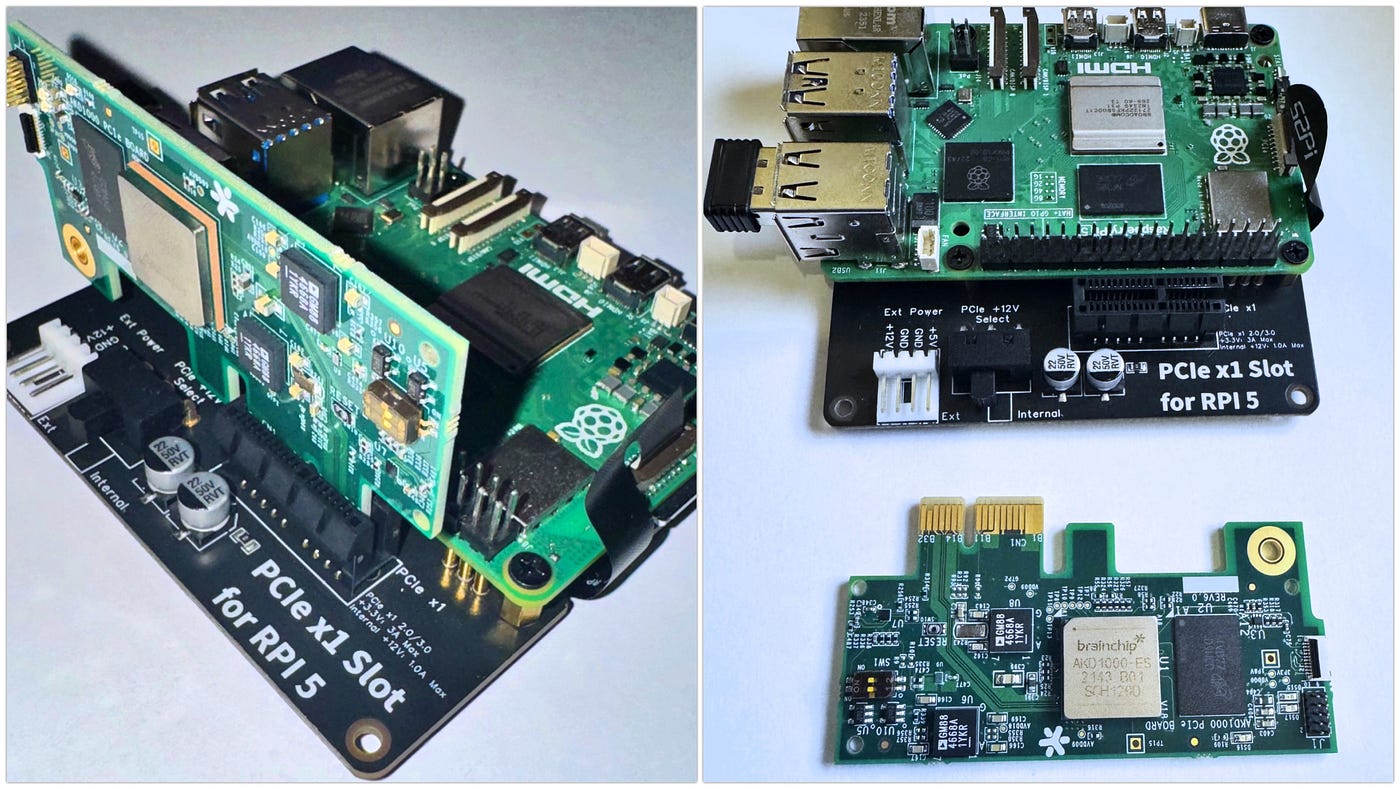
Alican Kiraz has meanwhile received the AKD1000 Mini PCIe Board he had ordered to adapt SNN and GNN (= graph neural network) models for use in robotic arm and autonomous drone projects.
I’m not sure why he calls this an “AKD1000 PCIeM.2 module”, though, as this is evidently not the AKD1000 M.2 form factor that came out in January.
Saying that, we wouldn’t mind him purchasing both form factors, would we?
View attachment 88841
Google’s translation from Turkish to English:
“Hello friends!, I've received my BrainChipAkida AKD1000 PCIe neuromorphic chip, which I purchased to adapt SNN and GNN models for use in my Robotic Arm and Autonomous Drone projects.
As you know, today's AI projects require high-parameter Transformer-based models and GPUs to reduce the latency between real-time perception and decision-making. However, achieving this with a milliwatt power budget poses a critical engineering challenge for these systems.
To this end, I integrated the BrainChipAkida AKD1000 PCIeM.2 module into the RaspberryPi5's PCIeGen2x1 lane with a Waveshare PCIe x1, creating a fully edge-driven, event-driven Spiking Neural Network accelerator. This reduces average power consumption by 10x compared to traditional models and accelerates perception-to-decision latency by 5x.
In my research plan, I hope to develop excellent examples of hybrid GNN and SNN architectures using Causal Reasoning in energy-constrained edge applications. Friends pursuing related academic research can easily connect with me on LinkedIn.



Or:“The GPS has failed, an engine fault has also been reported, but the propellers have not decelerated and location signals are still being transmitted — therefore, the fault may lie with the sensor supervisor.”
“GPS failure occurred, communication is down, and I am experiencing deviations in altitude and trajectory. I must immediately identify a safe emergency landing zone!”


Here is another post by Istanbul-based Alican Kiraz, Head of Cyber Defense Center @Trendyol Group, which links to a Medium article written by him titled “Hybrid SNN Models and Architectures for Causal Reasoning in Next-Generation Military UAVs” that gives us a little theoretical background regarding the PoC he is envisaging, for which he will be utilising his newly purchased Akida Mini PCIe Board:

TR | Hybrid SNN Models and Architectures for Causal Reasoning in Next-Generation Military UAVs | Alican Kiraz
TR & EN | Selamlar dostlar 🙏 uzun süredir yapay zeka karar-destek sistemleri üzerine kafa yorarken, Hibrit SNN & Causal Reasoning yapay zeka mimari ve yaklaşımıyla Askeri UAV'lerin nasıl evrilebileceği üzerine yeni makalemde teknik ve teorik düzeyde beyin fırtınası yaptım. Özellikle; -...
View attachment 88909 2yDM?
(English version)
EN | Hybrid SNN Models and Architectures for Causal Reasoning in Next-Generation Military UAVs
Alican Kiraz
Follow
7 min read
·
1 hour ago
I created it with Midjourney
Although the initial emergence and areas of interest for Unmanned Aerial Vehicles (UAVs) were diverse, their most prominent and widespread use today is undoubtedly in military applications. With the rise of Artificial Intelligence systems and technologies over the past five years, this interest has undergone a significant transformation. Platforms such as the Anduril YFQ-44 and Shield AI MQ-35 V-BAT are now capable of executing missions autonomously, being tasked and coordinated by decision-support AI systems.
Artificial Intelligence is increasingly employed in critical missions such as Intelligence, Surveillance, and Reconnaissance (ISR), autonomous navigation, and target identification. However, the deployment of such AI solutions on the field presents significant challenges — both in terms of mission effectiveness and operational security, as well as resource constraints. These limitations often lead to hesitation and caution in real-world use.
You can access the Turkish version of my article here:
TR | Hybrid SNN Models and Architectures for Causal Reasoning in Next-Generation Military UAVs
İnsansız Hava Araçlarının ilk çıkış ve ilgi noktaları farklı olsada şuan dünyada en çok kullanıldıkları ve ses…
alican-kiraz1.medium.com
One of the most critical challenges lies in the high computational and energy demands of conventional Artificial Neural Networks (ANNs) and Convolutional Neural Networks (CNNs), which are widely used in computer vision and autonomous navigation. Additionally, transformer-based Large Language Models (LLMs) operating in an embedded, agentic architecture for decision support further exacerbate these requirements. These model architectures typically necessitate high-performance GPUs or ruggedized onboard supercomputers integrated into the UAV system.
As you may recall, in my previous article, I examined Russia’s Geran-2 drone, which operates with an onboard Nvidia Jetson Orin module. You may also want to revisit that article for further insights.
TR | Nvidia Jetson Orin-Powered AI Kamikaze Drones: Beating GPS Jamming on the Battlefield
Shahed-136’nın MS serisi versiyonları, İran ve Rusya arasındaki askeri iş birliğinin çıktısı olarak görülüyor. Bu…
alican-kiraz1.medium.com
EN | Nvidia Jetson Orin-Powered AI Kamikaze Drones: Beating GPS Jamming on the Battlefield
The MS series variants of the Shahed-136 are seen as a product of military cooperation between Iran and Russia. The…
alican-kiraz1.medium.com
The integration of Hybrid Spiking Neural Network (SNN) and Causal Reasoning (CR) architectures offers significant advantages in terms of reduced energy consumption, lower latency for real-time decision-making, and increased system reliability. Let us now conceptualize such a system — CR-SNN — built upon a hybrid architecture combining SNN and CR.
This hybrid system leverages the biologically inspired, event-driven nature of SNNs to achieve energy efficiency and computational speed, especially when deployed on neuromorphic hardware platforms. Meanwhile, the Causal Reasoning (CR) component — grounded in Judea Pearl’s causal inference framework, including Structural Causal Models (SCMs) and do-calculus — enables UAVs to develop enhanced situational awareness in complex scenarios. It empowers autonomous systems to perform tasks such as target tracking more effectively and to produce more generalizable and interpretable outputs, even in novel situations not encountered during training.
Moreover, although current AI-based systems can exhibit high accuracy in controlled environments, they tend to lose output quality and reliability when exposed to the complexities of real-world civilian or battlefield environments. In such conditions, the probability of incorrect responses increases significantly. Especially under dynamic circumstances or in the presence of adversarial attacks targeting the UAV, reactive maneuvers become increasingly challenging.
For instance, distinguishing between civilians and combatants in dense urban environments or detecting camouflaged targets remains a considerable challenge for current AI models. Furthermore, the inability of deep learning models — often considered “black boxes” — to provide transparent reasoning for their decisions undermines the trustworthiness and accountability of weaponized UAVs in military operations.
In addition, processing high-bandwidth sensor data in real-time — such as high-resolution visible & thermal imagery or Synthetic Aperture Radar (SAR) outputs — imposes substantial computational burdens on existing architectures, increasing latency and slowing down decision-making.
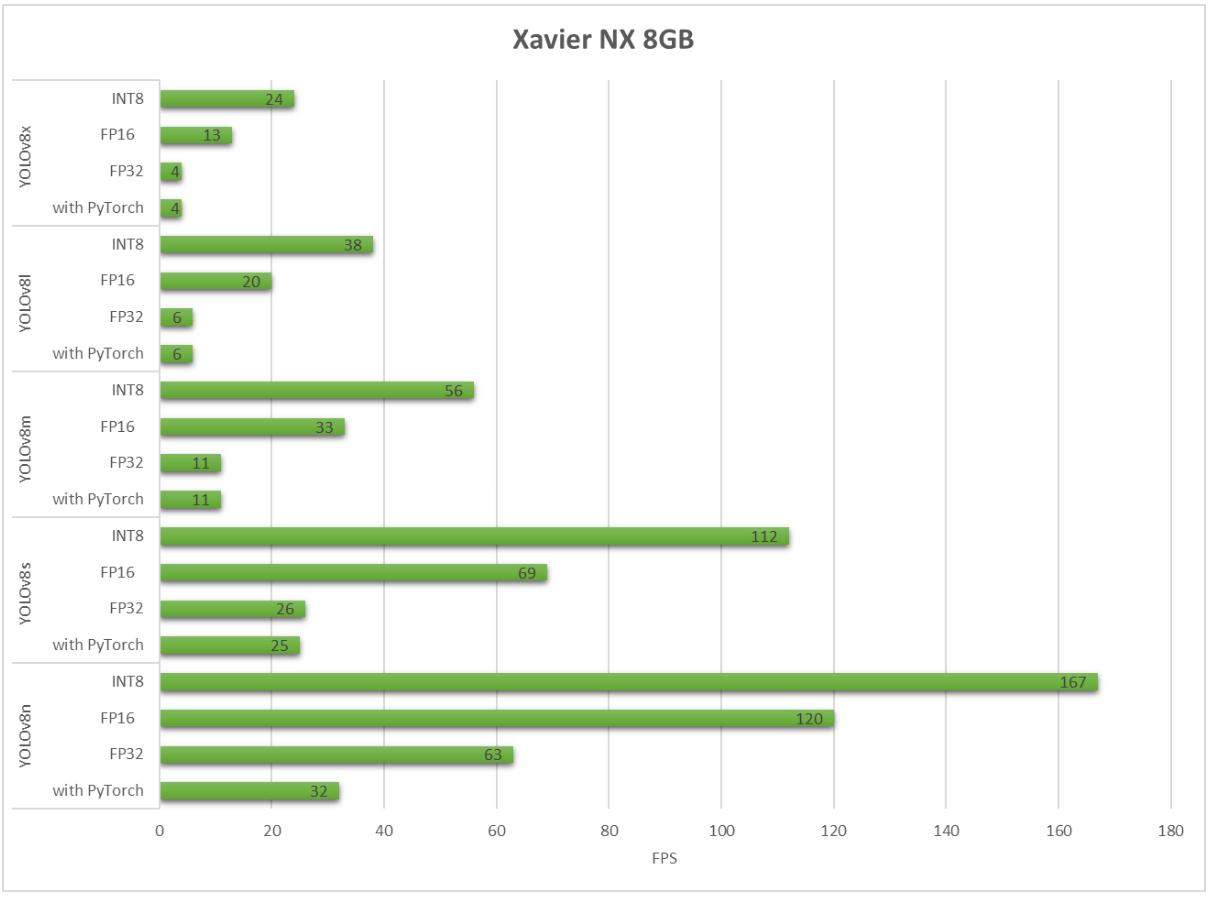
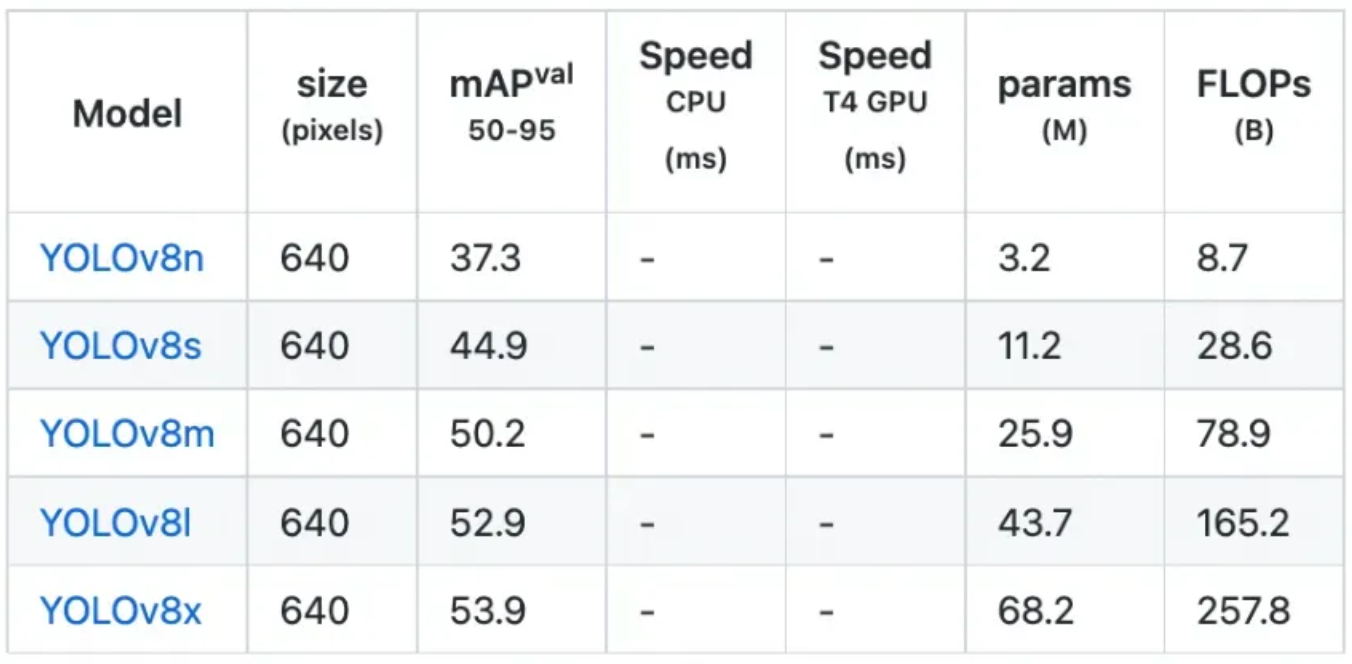
Even on popular edge computing platforms like the NVIDIA Jetson Orin Nano, optimized models such as YOLOv8n typically operate at around 10 frames per second (FPS), which falls short of the 30 FPS threshold required for real-time navigation. Additionally, the need for active thermal management and an average power consumption of around 20 watts pose significant challenges concerning weight, energy constraints, and thermal design requirements on UAV platforms.
Source: https://www.seeedstudio.com/blog/20...eYa20KsdYMhX0iJB8GfkWnDoTWWnMlo74zgTLxHoOA3_A
Source: https://dataphoenix.info/a-guide-to-the-yolo-family-of-computer-vision-models/
Furthermore, transmitting data to the C4 (Command, Control, Communication, and Computers) center for decision-support purposes and relaying mission directives back to the UAV can introduce end-to-end latencies exceeding 150 milliseconds. Such delays risk causing the UAV to miss its optimal decision-making window, especially in time-sensitive scenarios.
Beyond performance metrics, next-generation military UAVs are expected to fulfill a range of advanced capabilities. These include: achieving higher levels of autonomy, maintaining superior situational awareness in complex and uncertain environments, making faster and more accurate decisions, extending operational range and flight endurance, and participating in joint missions in coordination with manned combat aircraft. Meeting these requirements is critical for future air combat effectiveness.
To address these demands, we must go beyond current AI architectures. There is a pressing need for solutions that are more efficient, faster, more reliable, and fundamentally smarter. Specifically, we require AI systems — both in software and hardware — that combine low power consumption, low latency, and high performance, while also possessing the ability to comprehend and act upon complex causal relationships within dynamic operational contexts.
Source: https://exoswan.com/is-neuromorphic-computing-the-future-of-ai
At this point, the combination of approaches such as Spiking Neural Networks (SNNs) and Causal Reasoning (CR) presents a promising pathway to overcome these challenges. These hybrid SNN-CR models hold significant potential to deliver strategic advantages for next-generation military UAVs.
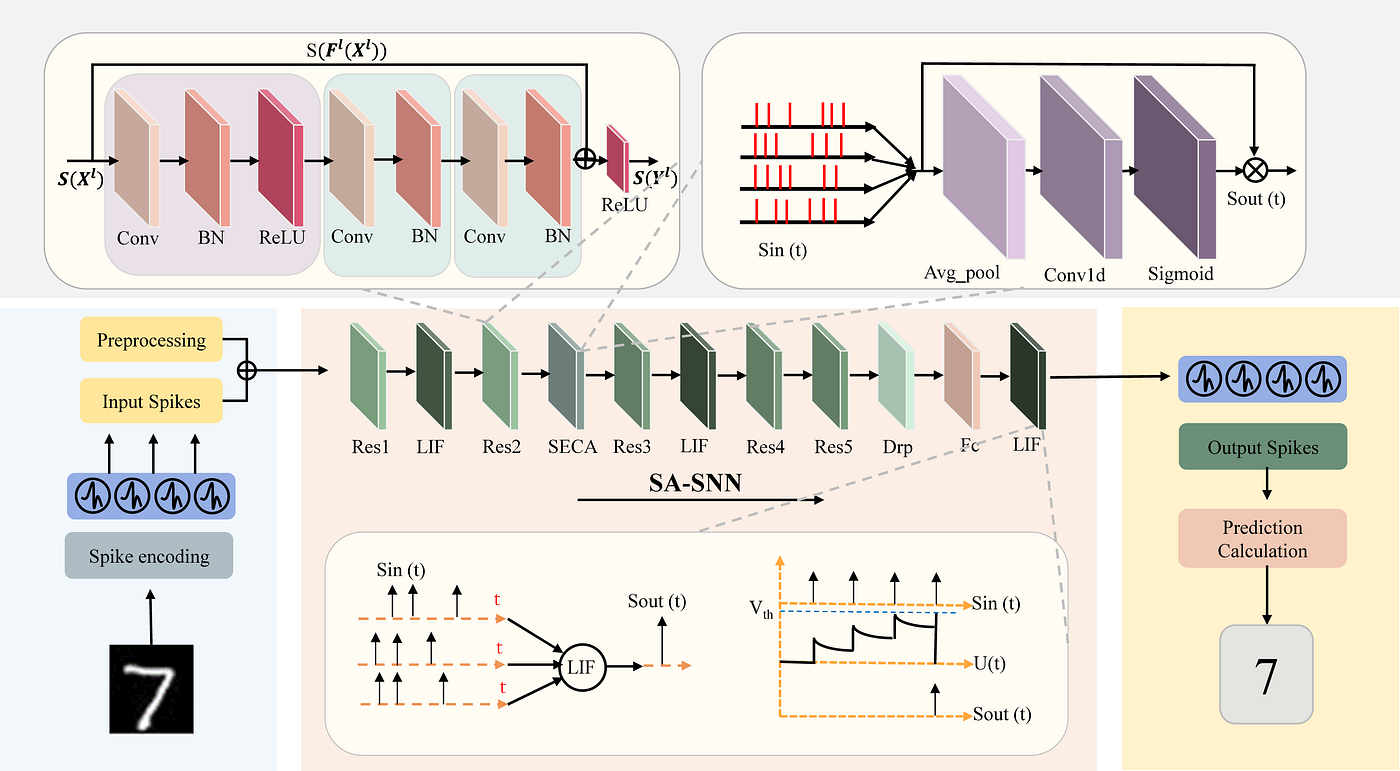
Thanks to the temporally encoded and sparsely activated communication mechanisms of SNNs — modeled after biological neural systems — these networks exhibit significantly lower energy consumption compared to traditional Artificial Neural Networks (ANNs), while also enabling faster inference times under real-time operational constraints.
Source: https://peerj.com/articles/cs-2549/
In a study conducted by researchers at ETH Zurich, it was demonstrated that SNNs consumed six times less energy than a CNN when performing an obstacle avoidance task. Moreover, the SNN model operated with an average inference latency of just 2.4 milliseconds, showcasing its suitability for highly dynamic scenarios.
For further details, see:
https://www.sciencedirect.com/science/article/pii/S0925231223010081
Another critical aspect is Causal Reasoning (CR). When integrated — particularly through the framework proposed by Judea Pearl — CR enables AI systems to reason not only through learned correlations, but also through underlying causal relationships. This allows the model to perform robustly and generalize more effectively in environments that deviate from the training data distribution or when faced with unforeseen conditions.
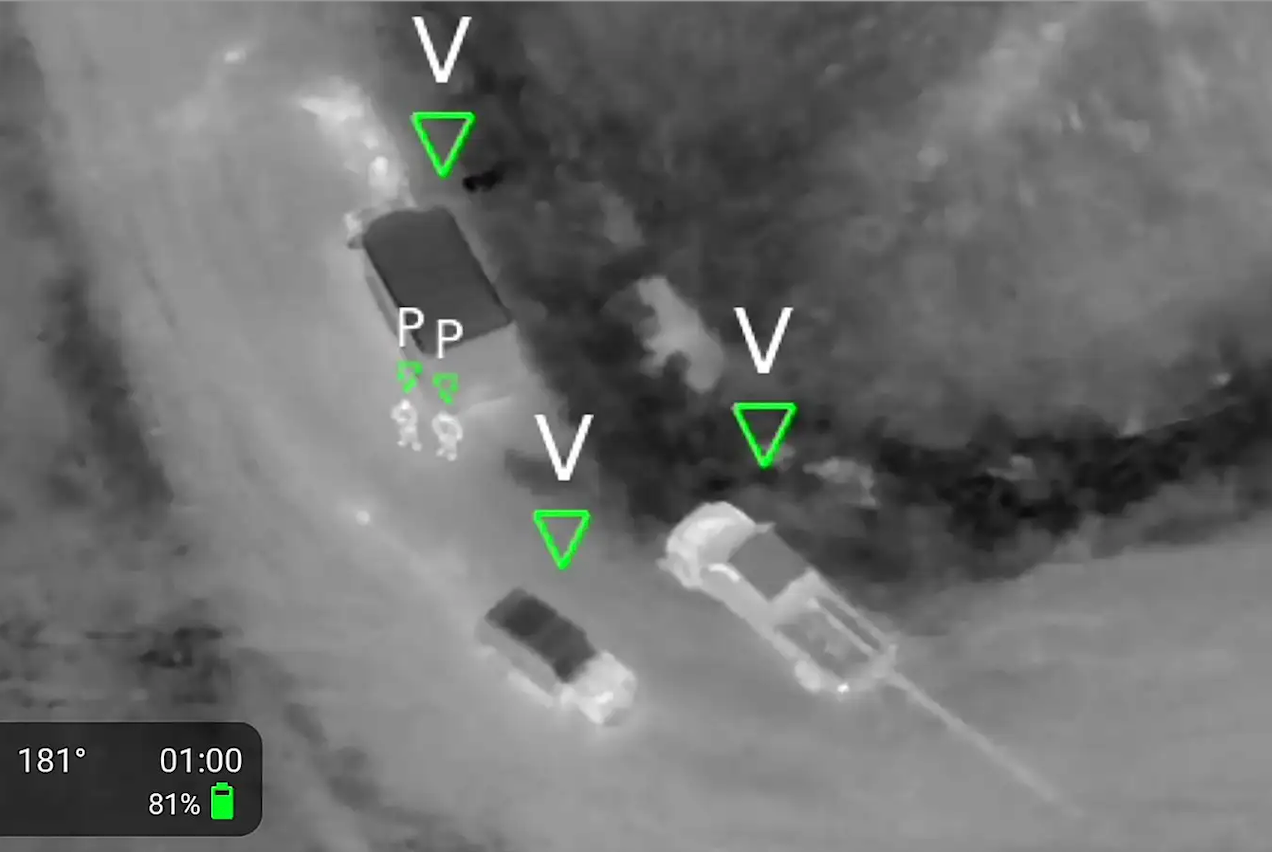
To illustrate with a practical case: in a mission involving the detection of a human group as a potential target, conventional models may focus on features such as camouflage color, presence of vehicles, or group size. In contrast, a causally-informed model could prioritize more nuanced and domain-relevant cues — such as body height, shadows, camouflage patterns, military-style marching formations, or spacing intervals — along with distinct features like carried weapons, by leveraging appropriate sensor modalities and reasoning mechanisms.
Image Source: https://www.newscientist.com/
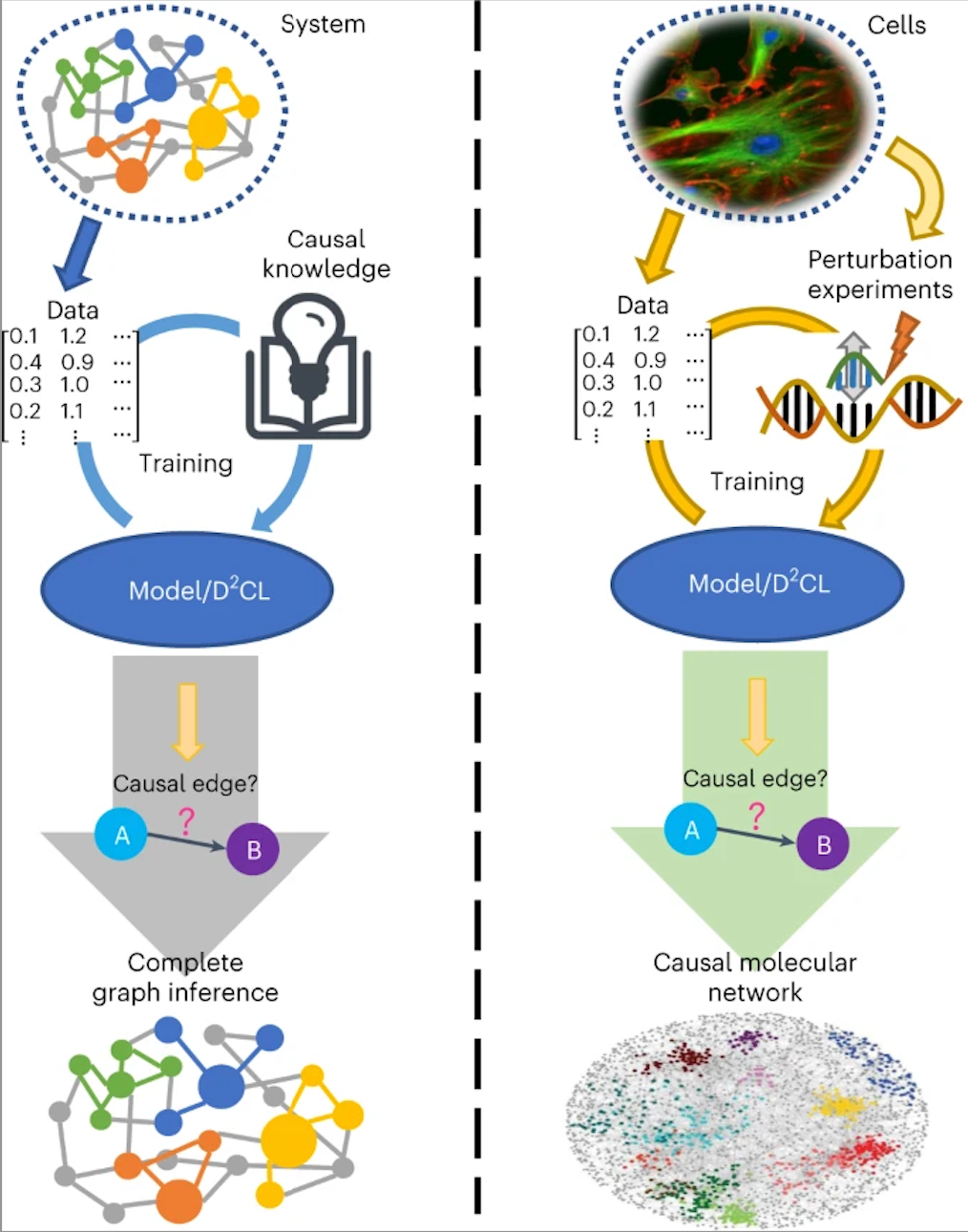
The component I wish to emphasize most — and which I have long researched for integration into this powerful architecture — is Causal Reasoning (CR). CR refers to the process by which an AI system understands and analyzes causal relationships between events, then uses this understanding to make decisions or support decision-making based on those causal inferences.
What distinguishes CR from conventional approaches? Traditional machine learning and large language models (LLMs) primarily rely on statistical correlations or correlation-based inference. By integrating CR, we aim to enable the model to reason through causality — essentially allowing the system to ask itself “why” and to answer that question autonomously. This line of reasoning is grounded in the foundational work of Judea Pearl, who introduced a formal framework for causality. Pearl’s model is built upon concepts such as Structural Causal Models (SCMs), causal graphs, and do-calculus.
So, what can CR contribute to a UAV system? For instance, it can be highly effective in diagnosing system failures. Imagine a scenario where a UAV encounters multiple issues such as GPS malfunction, engine anomalies, or communication loss. A causal model can represent these as nodes in a causal graph, with the edges denoting the causal links between them. This enables the system to perform counterfactual or interventional reasoning, such as:
Or:
Such inferential capabilities are powerful, aren’t they?
Source: https://www.nature.com/articles/s42256-023-00744-z
I hope this overview has been insightful. In the next section, we will delve into the technical details and adaptation strategies. Additionally, now that the neuromorphic chip — BrainChip Akida — has arrived, I will be working towards establishing a proof of concept (PoC) based on the proposed architecture.
See you soon!
Drones
Military
AI
Neural Networks
Military Drones
Written by Alican Kiraz
1.4K followers
·411 following
Head of Cyber Defense Center @Trendyol | CSIE | CSAE | CCISO | CASP+ | OSCP | eCIR | CPENT | eWPTXv2 | eCDFP | eCTHPv2 | OSWP | CEH Master | Pentest+ | CySA+
Follow
No doubt Frontgrade Gaisler will be spruiking GR801 - their first neuromorphic AI solution for space, powered by Akida - during their upcoming Asia Tour through India, Singapore and Japan:

#gaisler2025asiatour #spacetech | Frontgrade Gaisler
We are touring across Asia this year! Frontgrade Gaisler is glad to engage directly with partners, agencies, and customers across India, Singapore, and Japan. You can find us here: 🇮🇳 India July 21-22: Ahmedabad July 23: Bangalore 🇸🇬 Singapore July 25 🇯🇵 Japan July 28 - August 1: SPEXA –...
 joint venture between ST Engineering, DSO National Laboratories and NTU (Nanyang Technological University).




 9to5google.com

 brainchip.com
This bloke is a professor at Carnegie Mellon and founded spin-off, Efficient Computer, which claims 100 * energy efficiency.
Brandon LuciaBrandon Lucia • 3rd+Premium • 3rd+Professor at Carnegie Mellon University, Co-Founder & CEO at Efficient ComputerProfessor at Carnegie Mellon University, Co-Founder & CEO at Efficient Computer2mo • 2 months ago • Visible to anyone on or off LinkedIn
Follow
I recently spoke to Embedded Insiders about how Efficient Computer is shaping the future of computing - for AI/ML, but also much more. We discuss the criticality of energy efficiency and the absolute need for general-purpose architectures, as opposed to over-specialized hardware. Generality keeps programmers happy, supports innovation, and actually, somewhat surprisingly, *increases* end-to-end efficiency (ask me about Amdahl's Law!)
We also talked about the future of the computing workforce and the next generation of computer engineers. Implicit in that discussion was the idea that major initiatives like the National Science Foundation are so crucial to shaping future scientists, startup endeavors like Efficient, and generally to creating trillions in economic value.
If you're interested in the energy-efficient future of computing, hit me up. We are doing something unique at Efficient Computer and I'd love to tell you more. Thanks again to Embedded Insiders for the great discussion!
This is their patent:
US2025190189A1 ENERGY-MINIMAL DATAFLOW ARCHITECTURE WITH PROGRAMMABLE ON-CHIP NETWORK 20220922
View attachment 88977
Disclosed herein is a co-designed compiler and CGRA architecture that achieves both high programmability and extreme energy efficiency. The architecture includes a rich set of control-flow operators that support arbitrary control flow and memory access on the CGRA fabric. The architecture is able to realize both energy and area savings over prior art implementations by offloading most control operations into a programmable on-chip network where they can re-use existing network switches.
US army has rights to the invention.
The patent dates from 2022 so its development overlapped with the Buainchip University pilot at Carnegie:
BrainChip Launches University AI Accelerator to Empower Innovators
BrainChip launches University AI Accelerator Program, empowering next-generation innovators with access to Akida neuromorphic technology and tools.
Laguna Hills, Calif. – August 16, 2022 – BrainChip Holdings Ltd (ASX: BRN, OTCQX: BRCHF, ADR: BCHPY), the world’s first commercial producer of neuromorphic AI IP, is bringing its neuromorphic technology into higher education institutions via the BrainChip University AI Accelerator Program, which shares technical knowledge, promotes leading-edge discoveries and positions students to be next-generation technology innovators.
The Program successfully completed a pilot session at Carnegie Mellon University this past spring semester and will be officially launching with Arizona State University in September. There are five universities and institutes of technology expected to participate in the program during its inaugural academic year. Each program session will include a demonstration and education of a working environment for BrainChip’s AKD1000 on a Linux-based system, combining lecture-based teaching methods with hands-on experiential exploration.
The invention is above my paygrade, but it seems to be like removing traffic lights and allowing the program steps to weave their way through the process using inherent collision-avoidance code. Because it does use code, I would guess its slower than Akida/TENNs.


Well with an intel shareprice of $21 usd they do need to pull a rabbit out of their hats and I think Brn holds plenty of hidden rabbits.Oh no no nooooo ... We are not for sale!!!
 ?.
?.
interesting question... well Qualcomm was $3.99 in Jan 1999 and went to $75.50 in January 2020 so if you /that by 10 .39 to $7.50 its not undoable.... lol also this is usdHas it been historically possible for a share price to go from 20 cent to $ 8.00 in one year

AI OverviewHas it been historically possible for a share price to go from 20 cent to $ 8.00 in one year

 m.youtube.com

LinkedIn Login, Sign in | LinkedIn
Login to LinkedIn to keep in touch with people you know, share ideas, and build your career.www.linkedin.com
Extremely interesting comment by Alf Kuchenbuch in response to a post by STEMIX.TECH, a newly-founded Romanian “deep-tech and innovation-focused company specializing in AI-centric hardware and software products” that has plans to launch an AI-powered kids’ toy.
STEMIX.TECH
stemix.tech
They seem to have been in contact for a while, given the reply by STEMIX.TECH?!
Of course, as a start-up founded in 2024, they are not in our target group of companies that would be able to afford signing an IP license with us.
But their vision of “becoming a leading provider of LLM edge devices” sounds as if Akida 2.0 would be a much better fit than any AKD1000/1500 chips?
So is this possibly a case of a collaboration involving a potential software license of TENNs only?! After all, you don’t necessarily need Akida for running TENNs!
View attachment 66457
View attachment 66458
View attachment 66462
View attachment 66459
Until February, both STEMIX.TECH co-founders Alf Kuchenbuch addressed in his comment used to be with CyberSwarm, another AI start-up from Romania that has previously been discussed here on TSE. One as Project Manager, the other one as CTO. So both of them are already familiar with neuromorphic technology, although CyberSwarm uses analog architecture rather than digital.
View attachment 66485
View attachment 66486
View attachment 66487
View attachment 66488
Looks as if they recently met up with Alf Kuchenbuch at Hardware Pioneers Max in London:
View attachment 66490
Here is some more info on the AI toy they are planning on launching:
View attachment 66491
So STEMIX.TECH’s AI toy will definitely have a connection to the cloud, as “parents can access a web portal to view all questions, answers, and interactions their child has with the toy.”
Some parents will like this idea, but I personally think it opens up a can of privacy and data protection issues.
 , in which our VP of Sales, EMEA had mentioned “validating our approach with Akida2 with TENNs, which we will start rolling out for evaluation in summer 2025”:


