

You are using an out of date browser. It may not display this or other websites correctly.
You should upgrade or use an alternative browser.
You should upgrade or use an alternative browser.
BRN Discussion Ongoing
- Thread starter TechGirl
- Start date
Has anyone established a direct link between BRN and QComm, other than the Merc association?
To give you some indication of how popular Qualcomm's automotive system is appearing to be, customers for its Digital Chassis include Sony Honda Mobility, Mercedes-Benz, General Motors, Cadillac, and Stellantis, a group that includes Peugeot, Fiat, Citroen, Jeep, Dodge, Maserati, and Chrysler among others. Qualcomm also says it has received support for the new platform from BMW, Hyundai Motor Group, Nio, and Volvo.
At a time when automakers are still struggling with semiconductor shortages, these manufacturers clearly hope to benefit from the supposed inherent simplicity offered by the Digital Chassis.
Efficient Car “Brains”
Duggal told WIRED how the platform drastically lowers the number of electronic control units (ECUs) used to form the “brain” of a car. “In the past, you would have a dozen different ECUs that were responsible for everything from displays to parking, to driver monitoring, to the audio and speakers,” says Duggal. “All of that is getting integrated into a common platform. We are now seeing next-generation EE architectures get reduced down to less than five main subsystems—cockpit for the in-car experience, telematics for in-car and cloud connectivity, driver assistance and automated driving systems, in-car networking, and zonal controllers being the main ones.”

TheDrooben
Pretty Pretty Pretty Pretty Good

Media Alert: BrainChip Illustrates AIoT Readiness at the Edge Impulse ML Series
BrainChip Holdings Ltd , the world’s first commercial producer of ultra-low power, fully digital, event-based, neuromorphic AI IP, joins the Edge Impulse ML Series as a Platinum Partner to showcase...

cosors
👀
both.)Media Alert: BrainChip Illustrates AIoT Readiness at the Edge Impulse ML Series
BrainChip Holdings Ltd , the world’s first commercial producer of ultra-low power, fully digital, event-based, neuromorphic AI IP, joins the Edge Impulse ML Series as a Platinum Partner to showcase...www.marketscreener.com

Steve10
Regular
Renesas' new ARM Cortex-M85 AI chip should sell for more than $30 for volume.
View attachment 32617
The Renesas RA4 series sell for approx. $5 for volume.
The Renesas RA6 series sell for approx. $20 for volume.
The Renesas AI MPU chips with ARM Cortex-M55 sell for approx. $30 per chip.
The above are prices from Mouser electronics, a global distributor of semiconductors & electronics with over $4B in annual revenue.
Most likely Mouser Electronics will have at least 50-100% mark up so a chip they sell for $30 was most likely sold for $15-20 by Renesas.
BRN revenue should be $15-20 x 2-3% royalty = 30-60c per chip via Renesas. LDN a few years ago mentioned about $20 per chip.
Other suppliers of chips with BRN IP should have similar pricing.
Many products from all the big names with pricing at Mouser Electronics.
New products by manufacturer
New products by category
New products by week
Had a look at Mouser Electronics' financials & the mark up is 51.2%. The new Renesas AI M85 chip Mouser sells for $30 will be sold for about $20 by Renesas x 2-3% BRN IP royalty = 40-60c per chip. Looks like LDN was spot on with $20 per chip cost.
Renesas has recently mentioned in a Digi-Key Electronics interview that adoption of their RA family of MCU's has grown very fast to 100M units per year. It's Renesas' fastest growing MCU product line. They are going to launch more hardware products with AI acceleration which will be the Akida IP. (7min in video)
So the new M85 based chip with BRN IP will most likely start off with a few million chips & increase to a few tens of millions chips in a few years.
Voice, vision & real time analytics will be the main applications for the AI MCU chips. Predictive maintenance appears to be a big market. Mentions predictive maintenance for washing machines, dryers & air conditioners. About 300M units to be sold in 2023.
STMicroelectronics also pursuing same applications as shown in their recent washing machine video. Texas Instruments also doing the same so most likely all the others are also doing the same.
300M units in 2023 x 5% smart FY23 = 15M chips x 50c BRN royalty = $7.5M revenue
315M units in 2024 x 10% smart FY24 = 31.5M chips x 50c BRN royalty = $16.75M revenue
330M units in 2025 x 20% smart FY25 = 66M chips x 50c BRN royalty = $33M revenue
345M units in 2026 x 30% smart FY26 = 103.5M chips x 50c BRN royalty = $51.75M revenue
The above is for MCU's with BRN IP for washing machine, dryers & air conditioners applications for preventative maintenance only.
There will be numerous other applications as well. Renesas mention that opportunities are limitless. (11 min 45sec in video)
Last edited:

Learning
Learning to the Top 🕵♂️
It's just my selective reading again.Media Alert: BrainChip Illustrates AIoT Readiness at the Edge Impulse ML Series
BrainChip Holdings Ltd , the world’s first commercial producer of ultra-low power, fully digital, event-based, neuromorphic AI IP, joins the Edge Impulse ML Series as a Platinum Partner to showcase...

"BrainChip will highlight the readiness of the industry to deliver edge AI and the path to its imminent transition."
And this from the Website.
"Akida, The Global industry standard for Edge AI"
And now "imminent transition".
Brainchip is confident! Hence, powerful wording recently.
I am confident!
Learning 🏖
Fact Finder
Top 20
May 3, 2022The plot continues to thicken
View attachment 32632

Second-generation neuromorphic AI IP boosts efficiency | Sean Manion
As neuromorphic computing comes online, things with AI (and AIoT) will pick up speed. As neuroscience begins informing more complex neuromorphic computing, the rate of acceleration itself will pick up. Key quote: "The second-generation of Akida now includes Temporal Event Based Neural Nets...www.linkedin.com
View attachment 32633
View attachment 32634
View attachment 32637
View attachment 32638
View attachment 32635
View attachment 32636
Nokia Bell Labs and Equideum Partner to aggregate, optimize and analyze health data

GlobalData Technology
The announcement focuses on edge computing to handle large volumes of data locally and to ensure privacy for individuals.


Nokia Bell Labs and Equideum Health partner to empower individuals to own and benefit from their own personal health data. The collaboration will leverage data generated from smartphones, wearables, video feeds, and home health devices. Analysis of the data will also be fundamental in aiding clinicians, pharmaceutical companies and researchers to rapidly gain insights from the data as well as shorten clinical trial timelines.
In April 2022 Nokia Bell Labs andEquideum Health announced a partnership focused on empowering individuals to own and benefit from their own personal health data. The collaboration will leverage the rapidly expanding datasets generated from wearables and other edge devices, including the growing set of in-home medical devices. The central premise is that while health data is increasing exponentially, no one has figured out a way to collect it, centralize it and use it for near real-time meaningful insights. Edge computing, AI, ML, and blockchain technologies are now available to accomplish this by collecting and analyzing diverse data types from a wide variety of devices (e.g., from wearables, sensors, smartphones, and video feeds). The partners also expect to empower a flood of innovation, without companies worrying about sharing proprietary information or individuals worrying about sharing their personal information without knowing who has access to it. Beneficiaries of this vision will include consumers, healthcare providers, pharmaceutical companies, researchers, institutions, medical device manufacturers and potentially a slew of start-ups excited about access to reams of high quality, verifiable health data.
The announcement focuses on edge computing to handle large volumes of data locally (e.g. with compute and storage on the device itself, or with data sent to local/regional data centers or potentially home or enterprise access points) and to ensure privacy for individuals that consent to provide their data. However the use of AI and machine learning algorithms at the edge will also be instrumental for real-time analysis of these large volumes of decentralized and aggregated health data. The analytics will be fundamental in aiding clinicians, pharmaceutical companies and researchers to rapidly gain insights from the data as well as shorten clinical trial timelines.
Nokia will also be contributing its Nokia Data Marketplace (NDM), a SaaS offering implemented within a public Ethereum blockchain architecture to support self-sovereign identity, data, and privacy preservation. Equideum will use NDM as a fundamental element of its new Equideum Exchange which allows individuals to monetize their personal health data, and also enables enterprises that are part of Equideum’s person-centered Data Integrity and Learning Networks (DILNs), to benefit from the new data economy.
The first of two projects on the partners’ roadmap includes Nokia Bell Labs’ earable prototype, a smart device worn in the ear that uses signal processing and on-device ML for cognitive augmentation. The earable will be integrated as a representative edge device within Equideum Health’s planned direct to consumer offering. The second project will be an implementation of a collaborative ML environment that preserves the privacy of user data and of the AI/ML models during training and inference.Nokia and Equideum have specific plans for their partnership, but theirs is a wide-ranging vision to do what many in the public and private sector have theorized about for years – to collect vast volumes of decentralized health data from explicitly consenting individuals, aggregate this data on a regional or global basis, and apply analytics to the data to gain insights and improve health outcomes, while simultaneously allowing diverse constituencies to monetize the data. Nokia has more plans for this kind of data gathering/monetizing than its partnership with Equideum. It hopes to replicate the data sharing and analysis model in other verticals including government, airlines, other healthcare initiatives, and telecommunications.
Both partners are concerned about how to convince consumers that they can safely provide their personal data and benefit from it. They have not clarified exactly what the consumer will “get” from their contribution. In theory they might literally get paid; they will likely get analysis of their own aggregated healthcare data, which is now likely fragmented into digital or non-digital notes in diverse doctors’ offices or collected by separate smartphone apps but not shared with the consumer in detail. They will contribute to the improvement of their own and others’ health outcomes, and help companies provide better health products and services. Clearly this messaging needs to be better expressed by the partners.
Technology vendors and operators should be analyzing what their role should be in this “new” data economy and how they can monetize the high volumes of data that can be collected, centralized and analyzed in key verticals. They already take part by providing technologies such as wearables, edge computing, AI, ML and blockchain, 5G, and related orchestration and service initiatives. While operators already play a role they need to strategize to see if they can get a larger seat at the table when it comes to data monetization, especially if a fair share of the data is coming from their own smartphones, wearables, and connected home medical devices, and is carried on its networks

With all this exceptional news, the only thing holding us back is revenue. Excited for the next couple of quarterlies and the AGM. This thing is ready to go and I am ready to watch the excitement once it starts taking off. The two Industries I am most excited about is automotive and health.
Steve10
Regular
OxiWear device uses Nordic nRF52840 SoC
Nordic-powered ear-worn pulse oximeter enables continuous oxygen monitoring
https://www.nordicsemi.com/News/News-Archive/?category=17c74e7e-dbbe-457e-a229-9ce484816e6a
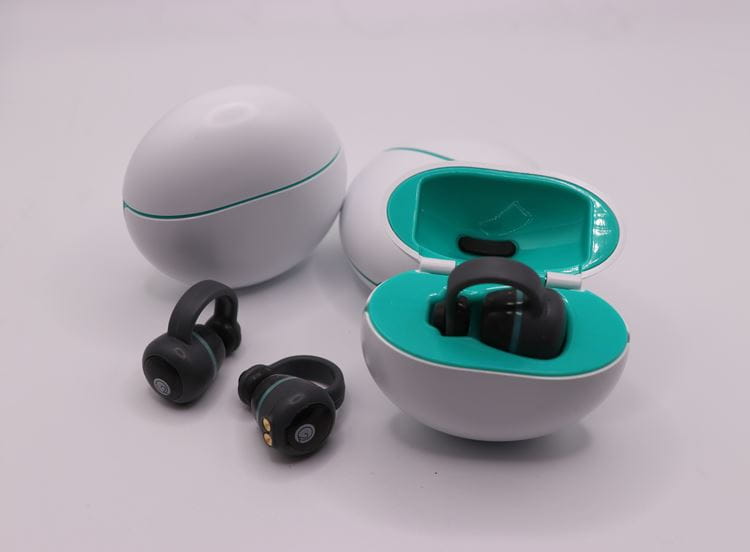
OxiWear device uses Nordic nRF52840 SoC to process and relay sensor data via low power Bluetooth LE wireless connectivity
U.S.-based health tech startup OxiWear has launched its wireless, non-intrusive, ear-worn pulse oximeter for medical-grade, continuous oxygen monitoring and low oxygen alerts.
The ‘OxiWear’ device is designed to support the more than 10 percent of the global population at risk of hypoxia - a potentially life-threatening disease where tissues in the human body do not receive enough oxygen. Hypoxia is caused by environmental factors, high altitude living and recreation, or chronic medical conditions. The disease can result in various organs, including the brain and heart, to not function properly.
Accurate oxygen level monitoring
Worn on the ear, OxiWear provides an unobtrusive way to accurately monitor a user’s oxygen levels in real time, while offering an alert mechanism if levels drop dangerously low. By using the device, individuals can better manage asymptomatic hypoxia, helping to avoid hospitalizations and unnecessary medical testing.
“We have taken proven pulse oximetry technology and designed it into a miniaturized form factor,” says George Beckstein, Chief Technology Officer, OxiWear. “OxiWear is the only wireless ear-worn pulse oximeter on the market designed for continuous monitoring, which is ideal during physical activity when the user’s hands might otherwise be preoccupied.”
The nRF52840 SoC performs as the primary processor for running OxiWear’s complex DSP algorithms, while also performing a number of housekeeping duties like firmware updates, power management, and storing historical data to Flash
George Beckstein, OxiWear
The OxiWear device features an integrated optical sensor for photoplethysmography (non-invasive technology that uses a light source and a photodetector at the skin’s surface to measure the volumetric variations of blood circulation), and an accelerometer for motion detection and cancellation. These sensors are overseen by the Wafer Level Chip Scale Package (WLCSP) version of Nordic Semiconductor’s nRF52840 SoC, using its powerful 64 MHz, 32-bit Arm® Cortex® M4 processor with floating point unit (FPU).
In addition, the nRF52840 SoC-enabled Bluetooth® LE connectivity allows real-time health data to be relayed wirelessly from the device to the user’s smartphone, from where an accompanying app displays the blood oxygen (SpO2) and heart rate information. The app also collects environmental data that may affect the oxygen intake of an individual, and allows users to list their emergency contacts who will receive a text message alert with the user’s location and vital information during any hypoxic events.
Running complex algorithms
“The Nordic nRF52840 SoC performs as the primary processor for running OxiWear’s complex DSP [Digital Signal Processing] algorithms, while also performing a number of housekeeping duties like firmware updates, power management, and storing historical data to Flash,” adds Beckstein.
OxiWear also employed Nordic’s Power Profiler Kit II (PPK2) to identify parts of the design that were increasing power consumption, allowing the battery life to be optimized and extended. PPK2 enables easy and affordable power measurement during wireless product development providing a simple method for hardware and software engineers to measure average and dynamic power consumption in embedded solutions. The OxiWear device is powered by a rechargeable Li-ion coin cell battery. Even when worn continuously, the device can operate for up to 18 hours, thanks in part to the low power capabilities of the nRF52840 SoC.
“It would be an understatement to say that minimizing power consumption was a high priority during product development – it was absolutely critical,” says Beckstein. “The nRF52840 SoC’s built-in DC/DC regulators eliminated the need for separate regulator ICs while reducing power consumption. The generous amount of Flash and RAM allowed us to run the Bluetooth ‘stack’ and complex DSP algorithms simultaneously, with memory to spare for in-field updates. The hardware-accelerated DSP instructions helped us perform advanced real time sensor data processing while minimizing time spent with the processor awake and, consequently, lowering power consumption.”
OxiWear also opted to use a Nordic solution due to the company’s “industry-leading” support for a tech startup, according to Beckstein. “The technical information Nordic provides is comprehensive and well organized. The reference designs provide excellent starting points for a project, while Nordic’s DevZone forum provides an immense repository of public information.”
ChatGPT mentioned Nordic's nRF52 & BRN.
Steve10
Regular
It's just my selective reading again.
"BrainChip will highlight the readiness of the industry to deliver edge AI and the path to its imminent transition."
And this from the Website.
View attachment 32640
"Akida, The Global industry standard for Edge AI"
And now "imminent transition".
Brainchip is confident! Hence, powerful wording recently.
I am confident!
Learning 🏖
That's what Sean intended for Akida. To be the standard for edge AI similar to bluetooth tech.


Shadow59
Regular
It's always coldest before the dawn!

supersonic001
Regular
BrainChip Illustrates AIoT Readiness at the Edge Impulse ML Series | BrainChip
BrainChip Illustrates AIoT Readiness at the Edge Impulse ML Series https://lnkd.in/gQeC2brV #ai #ml #artificialintelligence
Fact Finder
Top 20
Who knew Ubiquitous Computing is an area of study:May 3, 2022
Nokia Bell Labs and Equideum Partner to aggregate, optimize and analyze health data
GlobalData Technology
The announcement focuses on edge computing to handle large volumes of data locally and to ensure privacy for individuals.
Nokia Bell Labs and Equideum Health partner to empower individuals to own and benefit from their own personal health data. The collaboration will leverage data generated from smartphones, wearables, video feeds, and home health devices. Analysis of the data will also be fundamental in aiding clinicians, pharmaceutical companies and researchers to rapidly gain insights from the data as well as shorten clinical trial timelines.
In April 2022 Nokia Bell Labs andEquideum Health announced a partnership focused on empowering individuals to own and benefit from their own personal health data. The collaboration will leverage the rapidly expanding datasets generated from wearables and other edge devices, including the growing set of in-home medical devices. The central premise is that while health data is increasing exponentially, no one has figured out a way to collect it, centralize it and use it for near real-time meaningful insights. Edge computing, AI, ML, and blockchain technologies are now available to accomplish this by collecting and analyzing diverse data types from a wide variety of devices (e.g., from wearables, sensors, smartphones, and video feeds). The partners also expect to empower a flood of innovation, without companies worrying about sharing proprietary information or individuals worrying about sharing their personal information without knowing who has access to it. Beneficiaries of this vision will include consumers, healthcare providers, pharmaceutical companies, researchers, institutions, medical device manufacturers and potentially a slew of start-ups excited about access to reams of high quality, verifiable health data.
The announcement focuses on edge computing to handle large volumes of data locally (e.g. with compute and storage on the device itself, or with data sent to local/regional data centers or potentially home or enterprise access points) and to ensure privacy for individuals that consent to provide their data. However the use of AI and machine learning algorithms at the edge will also be instrumental for real-time analysis of these large volumes of decentralized and aggregated health data. The analytics will be fundamental in aiding clinicians, pharmaceutical companies and researchers to rapidly gain insights from the data as well as shorten clinical trial timelines.
Nokia will also be contributing its Nokia Data Marketplace (NDM), a SaaS offering implemented within a public Ethereum blockchain architecture to support self-sovereign identity, data, and privacy preservation. Equideum will use NDM as a fundamental element of its new Equideum Exchange which allows individuals to monetize their personal health data, and also enables enterprises that are part of Equideum’s person-centered Data Integrity and Learning Networks (DILNs), to benefit from the new data economy.
The first of two projects on the partners’ roadmap includes Nokia Bell Labs’ earable prototype, a smart device worn in the ear that uses signal processing and on-device ML for cognitive augmentation. The earable will be integrated as a representative edge device within Equideum Health’s planned direct to consumer offering. The second project will be an implementation of a collaborative ML environment that preserves the privacy of user data and of the AI/ML models during training and inference.Nokia and Equideum have specific plans for their partnership, but theirs is a wide-ranging vision to do what many in the public and private sector have theorized about for years – to collect vast volumes of decentralized health data from explicitly consenting individuals, aggregate this data on a regional or global basis, and apply analytics to the data to gain insights and improve health outcomes, while simultaneously allowing diverse constituencies to monetize the data. Nokia has more plans for this kind of data gathering/monetizing than its partnership with Equideum. It hopes to replicate the data sharing and analysis model in other verticals including government, airlines, other healthcare initiatives, and telecommunications.
Both partners are concerned about how to convince consumers that they can safely provide their personal data and benefit from it. They have not clarified exactly what the consumer will “get” from their contribution. In theory they might literally get paid; they will likely get analysis of their own aggregated healthcare data, which is now likely fragmented into digital or non-digital notes in diverse doctors’ offices or collected by separate smartphone apps but not shared with the consumer in detail. They will contribute to the improvement of their own and others’ health outcomes, and help companies provide better health products and services. Clearly this messaging needs to be better expressed by the partners.
Technology vendors and operators should be analyzing what their role should be in this “new” data economy and how they can monetize the high volumes of data that can be collected, centralized and analyzed in key verticals. They already take part by providing technologies such as wearables, edge computing, AI, ML and blockchain, 5G, and related orchestration and service initiatives. While operators already play a role they need to strategize to see if they can get a larger seat at the table when it comes to data monetization, especially if a fair share of the data is coming from their own smartphones, wearables, and connected home medical devices, and is carried on its networks
Fahim Kawsar
Bell Labs and University of Glasgow
Verified email at nokia-bell-labs.com - Homepage
Ubiquitous ComputingMobile SystemsInternet of ThingsWearable Computing
And he is not the only one who finds it interesting:
My opinion only DYOR
FF
AKIDA BALLISTA

ndefries
Regular
ChatGPT mentioned Nordic's nRF52 & BRN.
And we know that Nordic and our strategic partners EdgeImpulse have also been teaming up for a few years now
As the babyboomers reach more delicate ages (not looking at you FF) preventative health monitoring is going to be huge. I know I will want to invest in devices that measure, monitor and report on health issues that i can't notice.
can you imagine these devices that enhance your senses as they are failing and recommending changes to medication and dietary intake based on nutrient levels being monitored in real time. i Just hope it is Akida being the sensor fusion!
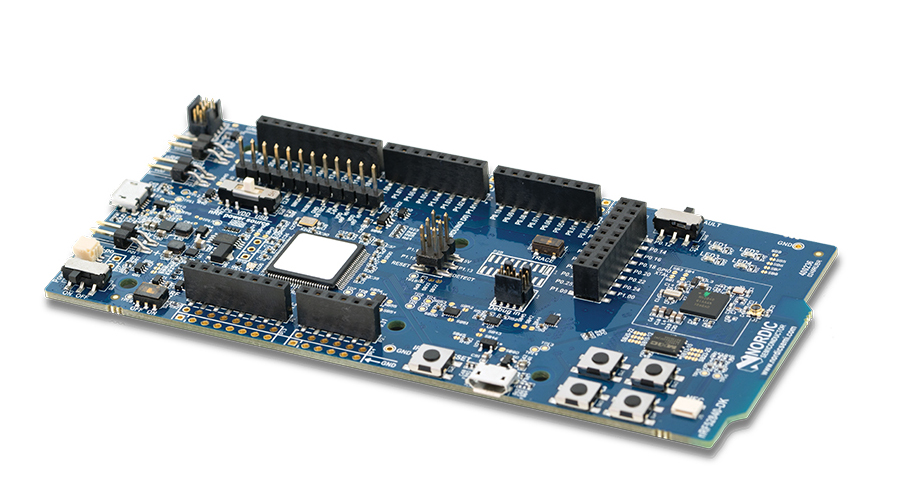
Nordic Semiconductor makes AI and machine learning easily accessible on resource-constrained wireless IoT chips for the very first time
In a newly announced partnership with leading U.S. TinyML specialist, Edge Impulse, Nordic’s nRF52 and nRF53 Series Bluetooth customers will be the first to able to add AI and machine learning features to their applications.
In a newly announced partnership with leading U.S. TinyML specialist, Edge Impulse, Nordic’s nRF52 and nRF53 Series Bluetooth customers will be the first to able to add AI and machine learning features to their applications. This will enable such applications to model and understand their operating environments and make intelligent decisions based on that
Nordic Semiconductor today announces that further to entering into a partnership with Edge Impulse, a leading provider of what’s termed ‘tiny machine learning’ or ‘TinyML’ tools designed to run on resource constrained semiconductor devices, that all its nRF52 and nRF53 Series Bluetooth® Low Energy (LE) chips will now be able to benefit from easy-to-use AI and machine learning features as standard. This is a first for the Bluetooth semiconductor industry.
“What AI and machine learning on resource-constrained chips does – which Nordic will now collectively refer to as TinyML – is take the application potential of wireless IoT technologies such as Bluetooth to a whole new level in terms of environmental awareness and autonomous decision making,” comments Kjetil Holstad, Nordic’s Director of Product Management.
Last edited:
Getupthere
Regular
"Something tells me the timing of everything firing up is at the same time as LDA to finalising their selling.It's just my selective reading again.
"BrainChip will highlight the readiness of the industry to deliver edge AI and the path to its imminent transition."
And this from the Website.
View attachment 32640
"Akida, The Global industry standard for Edge AI"
And now "imminent transition".
Brainchip is confident! Hence, powerful wording recently.
I am confident!
Learning 🏖
Our time is now.
Let’s go BRN!
The plot continues to thicken
View attachment 32632
Second-generation neuromorphic AI IP boosts efficiency | Sean Manion
As neuromorphic computing comes online, things with AI (and AIoT) will pick up speed. As neuroscience begins informing more complex neuromorphic computing, the rate of acceleration itself will pick up. Key quote: "The second-generation of Akida now includes Temporal Event Based Neural Nets...
View attachment 32633
View attachment 32634
View attachment 32637
View attachment 32638
View attachment 32635
View attachment 32636
May 3, 2022
Nokia Bell Labs and Equideum Partner to aggregate, optimize and analyze health data
GlobalData Technology
The announcement focuses on edge computing to handle large volumes of data locally and to ensure privacy for individuals.
Nokia Bell Labs and Equideum Health partner to empower individuals to own and benefit from their own personal health data. The collaboration will leverage data generated from smartphones, wearables, video feeds, and home health devices. Analysis of the data will also be fundamental in aiding clinicians, pharmaceutical companies and researchers to rapidly gain insights from the data as well as shorten clinical trial timelines.
In April 2022 Nokia Bell Labs andEquideum Health announced a partnership focused on empowering individuals to own and benefit from their own personal health data. The collaboration will leverage the rapidly expanding datasets generated from wearables and other edge devices, including the growing set of in-home medical devices. The central premise is that while health data is increasing exponentially, no one has figured out a way to collect it, centralize it and use it for near real-time meaningful insights. Edge computing, AI, ML, and blockchain technologies are now available to accomplish this by collecting and analyzing diverse data types from a wide variety of devices (e.g., from wearables, sensors, smartphones, and video feeds). The partners also expect to empower a flood of innovation, without companies worrying about sharing proprietary information or individuals worrying about sharing their personal information without knowing who has access to it. Beneficiaries of this vision will include consumers, healthcare providers, pharmaceutical companies, researchers, institutions, medical device manufacturers and potentially a slew of start-ups excited about access to reams of high quality, verifiable health data.
The announcement focuses on edge computing to handle large volumes of data locally (e.g. with compute and storage on the device itself, or with data sent to local/regional data centers or potentially home or enterprise access points) and to ensure privacy for individuals that consent to provide their data. However the use of AI and machine learning algorithms at the edge will also be instrumental for real-time analysis of these large volumes of decentralized and aggregated health data. The analytics will be fundamental in aiding clinicians, pharmaceutical companies and researchers to rapidly gain insights from the data as well as shorten clinical trial timelines.
...
That would be the same Equidium Health that Heather "I would say get ready, but you can't be" Flannery founded.
Nokia Bell Labs and Equideum Health partner to empower individuals to own and benefit from their own personal health data. The collaboration will leverage data generated from smartphones, wearables, video feeds, and home health devices. Analysis of the data will also be fundamental in aiding clinicians, pharmaceutical companies and researchers to rapidly gain insights from the data as well as shorten clinical trial timelines.
In April 2022 Nokia Bell Labs and Equideum Health announced a partnership focused on empowering individuals to own and benefit from their own personal health data. The collaboration will leverage the rapidly expanding datasets generated from wearables and other edge devices, including the growing set of in-home medical devices. The central premise is that while health data is increasing exponentially, no one has figured out a way to collect it, centralize it and use it for near real-time meaningful insights. Edge computing, AI, ML, and blockchain technologies are now available to accomplish this by collecting and analyzing diverse data types from a wide variety of devices (e.g., from wearables, sensors, smartphones, and video feeds).
Similar threads

- Replies
- 3
- Views
- 12K
D

- Replies
- 0
- Views
- 5K
- Replies
- 9
- Views
- 6K
- Replies
- 0
- Views
- 3K