BRN Discussion Ongoing

7For7

Regular
🤭 Application for quotation of securities


07/0/12025 😣

IMG_1257.jpeg
 
  • Like
Reactions: 3 users

JDelekto

Regular
Rudy Pei, whom many of us will remember from his time at BrainChip and who now works at NVIDIA, made the following comment on Kevin Johnson’s latest LinkedIn post about 40 minutes ago:

"I feel like there's a potential for an event-driven Claw bot here if the edge-sensing pipeline and the text-query inference pipeline both read and write against the same Foundry operational memory.'

I asked ChatGPT what it makes of this comment and found the response quite interesting. It suggests the idea Rudy is hinting at is actually very sophisticated - potentially pointing toward sensor-driven AI agents, where event-driven sensing and higher-level inference share a common operational memory layer.

It also notes that the fact Rudy is publicly engaging with Akida-related work implies he still considers the architecture technically relevant.

ChatGPT content below - so all the usual warnings apply.
<----- snip ----->

The Clawbot to which he is referring to is an autonomous agent, specifically OpenClaw, an open source project that can act as an agent on your behalf, which can connect to one of the many LLM providers (or even work locally using Ollama).


We use Claude Code at work (Anthropic's product), and I've been using some open source alternatives, like Open Code and Pi Agent (which is OpenClaw's core engine) with Ollama at home.

These are some very cool AI tools and can be used to automate a lot of manual tasks. Unlike regular "chat" bots, these tools use LLM, but have coding behind them to make them a lot more powerful and functional.
 
  • Like
  • Fire
  • Love
Reactions: 6 users

Bravo

Meow Meow 🐾
EDGEAI lists MDS Intelligence as a client on its website!


1.
View attachment 96721


On its own website, MDS Intelligence lists RapidMetering as one of its core digital-transformation products.

The product is described as a remote water-metering solution designed to improve environments where analog meters are still in use, ntended to reduce or eliminate manual meter reading.

Technically, the system works by:
  • capturing images of analog meter dials using a camera
  • transmitting those images to a server
  • using AI / deep-learning analysis to convert the images into digital meter readings.
The system reportedly achieves over 99.5% recognition accuracy when interpreting meter readings.

An important detail is that RapidMetering today does not appear to rely on a custom AI chip. The AI processing seems to occur off the device, as the article describes the sequence as:
  • camera → transmit image → AI analysis → digital reading
If the architecture were edge AI, the sequence would normally look more like:
  • camera → local AI inference → send meter reading

I suppose moving the AI inference to the edge would offer several advantages inlcuding lower bandwidth, faster response times and reduced cloud compute costs.

For that reason, I think it is quite plausible that EDGEAI could be developing a chip intended to move this type of AI inference from the cloud to the edge.

The name “RapidMetering” used by MDS and the phrase “Rapid Meter” in the BrainChip announcement may therefore not be a coincidence.
Nor might the reference to an 8-year battery life, which appears consistent with the durability mentioned for the RapidMetering system.


2. Extract from MDS article dated 10 Jan 2025 (full article linked below)


View attachment 96723


3.
View attachment 96724


4.


EDGEAI Website


MDS Intelligence article dated 10 Jan 2025


In relation to the above post…

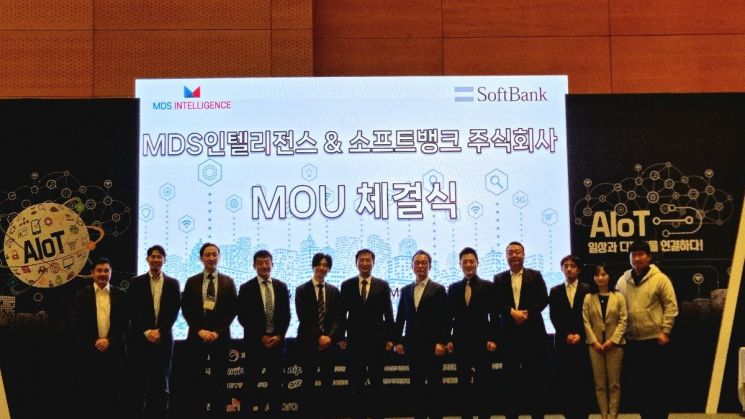
I just discovered that in October 2023, MDS Intelligence signed an MOU with SoftBank to expand AIoT and remote-metering solutions globally.

Under that agreement MDS planned to expand its AIoT technologies (including remote metering) to SoftBank’s customers in Japan and other international markets. The goal was to combine MDS’s AIoT solutions and remote-metering technologies with SoftBank’s IoT communications infrastructure.

I can't find any other recent public announcements confirming new joint projects beyond that 2023 MOU, however, the agreement itself was designed to enable the global expansion of MDS metering solutions, particularly in Japan, and leverage SoftBank’s IoT connectivity ecosystem.

Partnership agreements like this typically run for several years, so the collaboration likely still exists, even if there haven’t been any recent press releases.

What makes this interesting IMO is SoftBank’s broader IoT strategy in Japan, which could help explain why the BrainChip / EDGEAI announcement specifically referenced targeting the Japanese market.

Japan is an attractive first market because utilities and municipalities invest heavily in infrastructure, IoT networks are already widely deployed, and long-life devices (8–10 years/ thinking of the reference long-life battery devices of around eight years) are common in infrastructure deployments. SoftBank’s IoT ecosystem is particularly strong in this area.


Screenshot 2026-04-01 at 10.18.06 am.png


Screenshot 2026-04-01 at 10.24.03 am.png
 
  • Like
  • Fire
  • Love
Reactions: 14 users

buena suerte :-)

BOB Bank of Brainchip
In relation to the above post…

I just discovered that in October 2023, MDS Intelligence signed an MOU with SoftBank to expand AIoT and remote-metering solutions globally.

Under that agreement MDS planned to expand its AIoT technologies (including remote metering) to SoftBank’s customers in Japan and other international markets. The goal was to combine MDS’s AIoT solutions and remote-metering technologies with SoftBank’s IoT communications infrastructure.

I can't find any other recent public announcements confirming new joint projects beyond that 2023 MOU, however, the agreement itself was designed to enable the global expansion of MDS metering solutions, particularly in Japan, and leverage SoftBank’s IoT connectivity ecosystem.

Partnership agreements like this typically run for several years, so the collaboration likely still exists, even if there haven’t been any recent press releases.

What makes this interesting IMO is SoftBank’s broader IoT strategy in Japan, which could help explain why the BrainChip / EDGEAI announcement specifically referenced targeting the Japanese market.

Japan is an attractive first market because utilities and municipalities invest heavily in infrastructure, IoT networks are already widely deployed, and long-life devices (8–10 years/ thinking of the reference long-life battery devices of around eight years) are common in infrastructure deployments. SoftBank’s IoT ecosystem is particularly strong in this area.


View attachment 96734


View attachment 96735


Another great post Bravo....🙏

Feeling it!!

Bought more at 15c today :)

Cheers and Good Luck all

1775001482207.png
 
Last edited:
  • Like
  • Love
  • Fire
Reactions: 7 users

7For7

Regular
  • Fire
  • Like
Reactions: 2 users
Top Bottom