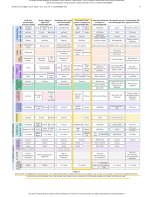
A recent journal paper by twelve Politecnico di Turino researchers was uploaded to their university website today: “
The inNuCE Research Infrastructure and the Neuromorphic MLOps for AIoT prototyping”.
Seven of the co-authors are from the Interuniversity Department of Regional and Urban Studies and Planning (DIST) and the remaining five are from the Department of Control and Computer Engineering (DAUIN).
The inNuCE Research Infrastructure (RI) hardware includes AKD1000.
“A complementary contribution proposed in this paper is the inNuCE Research Infrastructure (inNuCE RI), a two-pillar infrastructure that instantiates NMLOps in practice for neuromorphic AIoT prototyping. The name inNuCE is derived from the Latin in nuce (“in the shell”, “in embryo”), reflecting the mission to enable developers to create draft prototypes rapidly and then transition them to engineered products once feasibility is established. The first pillar is the Laboratory (inNuCE Lab), a physical facility housing event-based sensors, edge devices, and neuromorphic/digital boards for hands-on experimentation. Pillar two is the Heterogeneous Prototyping Platform (inNuCE HPP), a Platform-as-a-Service (PaaS) that virtualizes heterogeneous HW and enforces reproducibility via containerized toolchains (…).
VI. CONCLUSIONS
“
This paper presents the NMLOps process, an evolution of MLOps for the integration of neuromorphic technology in AIoT applications, and the inNuCE RI, a research infrastructure that operationalizes NMLOps on a cloud-native, heterogeneous prototyping platform that is tightly coupled with a physical laboratory. This enables end-to-end, reproducible prototyping and benchmarking across neuromorphic and digital substrates, as well as the validation of represen- tative on-edge AIoT applications such as HAR, Braille reading, navigation tracking, and constraint satisfaction problems. By consolidating toolchains, orchestrating heterogeneous HW with Kubernetes and Slurm, and enforcing rigorous versioning of data, models, and artifacts, inNuCE RI lowers adoption barriers and shortens the path from prototype to engineered system. The utilization of standard storage and versioning systems, in conjunction with the complete accessibility of data and tools within containerized environments, ensures the adherence of the service to the FAIR (Findable, Accessible, Interoperable, Reusable) principles. This facilitates the utilization of the platform for scientific studies, where the rigorous management of data is crucial. More broadly, virtual prototyping platforms such as inNuCE RI offer a low- cost, low-risk environment in which to explore designs and deployment options before committing to HW. Beyond neuromorphic workflows, the infrastructure also supports AIoT use cases that target standard and emerging digital technologies (CPU/GPU/TPU, MCU/TinyML, FPGAs, and other accelerators) through the same NMLOps procedures. This reduces development costs, shortens time-to-market, and broadens the scope of feasible heterogeneous AIoT use cases.
Our major achievement is turning NMLOps from a conceptual adaptation of MLOps into an operational practice, with browser workspaces, a multi-board execution backend, and harmonized evaluation, making cross-target compar- isons and iteration routine. In summary, a cloud-native, NMLOps-driven prototyping infrastructure is an effective catalyst for neuromorphic AIoT, as it preserves reproducibility, reduces risk and cost, and makes heterogeneous HW usable for real applications. Future work will evaluate and, where appropriate, implement federation with other complementary research infrastructures, as well as formalizing a broader NEP that embeds NMLOps into service-oriented workflows for multi-stakeholder system integration.”
(…)
(…)