BRN Discussion Ongoing

7für7

Top 20
Anthony Lewis celebrates this.


Some people disagree on this article in the comments

3 options:

1. They know it better
2. They bet on the wrong horse and are in panic
3. They have no idea what they taking about
 
  • Like
Reactions: 2 users

Guzzi62

Regular
Would have been nice to see BrainChip on stage there, considering wen are meant to be leading the pack and all we here about is Edge Ai from them. Missed opportunity IMO.
Showcasing what?

Last time I checked, BRN wasn't selling any wearable, were they??

Your post doesn't make any sense at all.

AKD is an important (hopefully) part of a wearable item but not the item itself, watch-glasses-some health monitoring or whatever.

So it's not BRN that will do the showcasing, is it?
 
  • Like
  • Fire
Reactions: 7 users
Showcasing what?

Last time I checked, BRN wasn't selling any wearable, were they??

Your post doesn't make any sense at all.

AKD is an important (hopefully) part of a wearable item but not the item itself, watch-glasses-some health monitoring or whatever.

So it's not BRN that will do the showcasing, is it?
It was wishful thinking Guzz if ya get your head around it. Meaning an announcement was the wish.
 

Attachments

  • Screenshot_20260109_131908_LinkedIn.jpg
    Screenshot_20260109_131908_LinkedIn.jpg
    374.5 KB · Views: 93
  • Like
  • Haha
  • Fire
Reactions: 5 users
Abit fun, alot used to predict the shareprice at Easter or Xmas,
Im break even at 23 cents so not far to go now
 
  • Like
  • Fire
Reactions: 3 users
I am thinking that Sean needs to get that deal through that he promised prior to the end of January or there will be a riot at the AGM I know it’s 4 months away but I am assuming that a lot of his credibility is riding on it.
It’s been nothing but empty words so far
 
  • Like
  • Fire
Reactions: 13 users

itsol4605

Regular
NVIDIA and a feeling of certain bewilderment

An interesting article!

 
  • Like
Reactions: 1 users

Guzzi62

Regular
I am thinking that Sean needs to get that deal through that he promised prior to the end of January or there will be a riot at the AGM I know it’s 4 months away but I am assuming that a lot of his credibility is riding on it.
It’s been nothing but empty words so far
I agree, those small orders are off-course nice but can't sustain the company unless they secure hundreds of them.

Just been on the crapper, there are much more negative posts than positive, people are getting impatient, really impatient, but there are too many down rampers and I had enough, will stay out of there for a while, got better things to do.

As you said, if they can't secure any good IP deals before the AGM, he is in for a shitty time in Australia.

The "watch us now" comment he made is sort of within a 3 months window, IMO.

I will assume he said that because they are close signing some sort of deal?

There seems to be huge interest at the CES show in Vegas, fully booked, I think I read somewhere?

Let's hope that behind the NDAs, it's looking good??
 
  • Like
  • Love
Reactions: 6 users

7für7

Top 20
Today is the last day of ces2026
I was reading a lot of great stuff in the media… from cars to VR devices to Smart Home, robots etc. what an era … I always dreamed about that when I watched science fiction movies as a child … and now? It’s almost here! No… the future is now!
The only thing we are missing is a skyrocketing share price….

COME ON BRAINCHIP!!!!!! WAKE UP!
 
  • Like
  • Thinking
  • Fire
Reactions: 4 users

Wags

Regular
I thought I read somewhere recently that there was the intention to do some talks/interviews from the suite at CES as has been done in the past. I also noticed in two of the photo's of the suite that has been going around, the mics and headphones set up.
Could it be that things are just too busy? or maybe recorded and released after CES, I can't remember when it occurred last year.
Would be nice to hear something, I had high hopes for CES this year with all the hype.
 
  • Like
  • Thinking
Reactions: 5 users
I am thinking that Sean needs to get that deal through that he promised prior to the end of January or there will be a riot at the AGM I know it’s 4 months away but I am assuming that a lot of his credibility is riding on it.
It’s been nothing but empty words so far
Watch us Now, it sounds like a Boss talking to his workers, Some Bosses you listen to every word and your motivated, When it comes to your money words can quieten noise for awhile, maybe come May he'll say something else to keep us engaged
 
  • Like
  • Thinking
Reactions: 2 users

manny100

Top 20
This has flown under my radar, but it confirms in black and white what we had suspected, that the Quantum Ventura CyberNeuro-RT is destined for other US government departments as well as the DoE, in addition to mentioning cybersecurity for edge and enterprise:

https://finance.yahoo.com/news/metaguard-ai-debuts-defense-grade-130000153.html

Business Wire

MetaGuard AI Debuts Defense-Grade Cybersecurity Platform at CES 2026 with Industry-First Full Source Code Access and BrainChip Neuromorphic Support​

Business Wire
Sat, January 3, 2026 at 12:00 AM GMT+11 3 min read

Department of Energy (DOE) and Missile Defense Agency (MDA)-Funded AI-driven Cyberthreat management Platform Offers Zeek and Corelight Compatibility with Neuromorphic Edge Computing; Live Demonstrations at BrainChip Venetian Exhibit Suite 29-116, January 6-9; Available via Software Licensing or Managed Services.

SAN JOSE, Calif., January 02, 2026--(BUSINESS WIRE)--MetaGuard AI, Inc., a wholly-owned subsidiary of Quantum Ventura Inc., will showcase CyberNeuroRT at the Consumer Electronics Show (CES) 2026, January 6-9 in Las Vegas. Attendees can experience live demonstrations of the Zeek and Corelight-compatible AI-driven real-time security platform.

CyberNeuroRT is the world’s first cybersecurity platform with a full source code licensing option for both enterprise deployments and neuromorphic edge versions, a unique combination in the cybersecurity market.

Developed through U.S. DOE (SBIR Phase 2) and MDA (SBIR Phase 1) federal funding, CyberNeuroRT brings defense-grade AI technology to commercial enterprises through flexible deployment options and unprecedented transparency. During the SBIR program, researchers from Penn State University’s Neuromorphic Computing Lab provided advanced neuromorphic ML models while cybersecurity specialists from the world’s largest Defense contractor provided a technical assessment of a custom CyberNeuroRT version in their air-gapped HPC environment.

"CES 2026 is the perfect venue to demonstrate how our Enterprise-scale ML models are adopted for ultra-efficient threat detection using BrainChip neuromorphic processors and how it transforms cybersecurity," said Srini Vasan, President & CEO at MetaGuard AI. "We invite attendees to visit us and see how CyberNeuroRT delivers in real-time."

"Bringing MetaGuard AI’s threat detection, CyberNeuroRT, solution to the efficient Akida platform shows how neuromorphic computing is reshaping cybersecurity from the edge to the enterprise," said Sean Hehir, CEO of BrainChip.

CyberNeuroRT serves enterprises requiring AI-powered threat detection with transparency, including existing Zeek and Corelight users, regulated industries needing algorithmic accountability, government contractors, industrial IoT operators, and mid-market companies through managed services or flexible cloud/on-prem licensing models.


QV is "a government backed pioneer in cybersecurity":

https://www.bing.com/search?q=what is quantum ventura corelight&qs=n&form=QBRE&sp=-1&lq=0&pq=what is quantum ventura corelight&sc=12-33&sk=&cvid=1BC79F4AB2B3432A90059E42AE78C35E

Quantum Ventura Corelight​

Quantum Ventura and Corelight are two entities that are integral to the quantum technology and cybersecurity sectors. Quantum Ventura is a government-backed pioneer in AI, cybersecurity, and secure tech innovations, with a focus on protecting businesses from cyberattacks. Their R&D in AI, imaging, and optics for federal and private sectors keeps their security milestones ahead of others. Quantum Ventura's CyberNeuro-RT (CNRT) technology is an AI/ML-driven, highly-scalable, real-time network defense & threat intelligence tool. Corelight, on the other hand, is a SaaS-based network detection and response solution that simplifies Tier 1 workflows and offers a range of products for network traffic monitoring and proactive data defense

The QV connexion could open many doors.


PS: Sean, I've been hanging out for an Akida cybersecurity USB for PCs since the days of Democritus University of Thrace (DUTH), or maybe just get it in all PCs, etc.
Hi Dio,
Discussion on TENNs and Provenance mainly provenance- looking for your comments.
It appears that Neural TENNs is bilingual in that it can serve both Neuromorphic and Traditional masters.
BrainChip TENNs Edge AI Powers Low-Power LLMs at the Edge https://share.google/GqoBk8kLL47aSEt3z
"

What Is TENNs, and Why Should You Care?​

TENNs (short for “Temporal Event-based Neural Networks”) is BrainChip’s new universal neural network formulation. It’s lightweight, power-efficient, and adaptable across a broad range of AI workloads—from audio denoising to keyword spotting, ASR, LLMs, and beyond. But here’s the magic: unlike traditional RNNs or transformers, TENNs can be trained using standard workflows on GPUs, then folded into an efficient recurrent form for ultra-low-power inference on BrainChip IP.

"The result? A chip that does the job of a cloud, on-device. And quietly."
My bold above.
Provenance
What is really interesting is the new Provenance paper basically describes software than can be used by traditional AI and Neuromorphic (although a little more work maybe here needed) as well.
"Although our experiments focus on the visual domain, the proposed approach is readily applicable to other modalities, including large language models (LLMs)." My bold.
BRN has tested the provenance software with great results. Getting it to testing and publishing means a patent would have been applied for.
Still a bit of work to do on it but it looks good.
Looks like it was developed with 2 strategies in mind:
1. Our Gen AI with LLMs.
2. Licensing possibilities to Traditional AI and other Neuromorphic suppliers
If strategy 2 works out its a potential 'gold mine'. My words, my opinion.
Some quotes from the paper.
"In particular, it ad dresses critical challenges in modern deep learning, including model opaqueness, hallucination, and the assignment of credit to data contributors, thereby improving transparency, robustness, and trustworthiness in neural models
". Says it all - my words
" In this paper, we introduce “Provenance Networks”, a new class of neural networks (NNs) designed to explicitly trace back predictions to the training data that supports them."
" Our results demonstrate that provenance networks have broad applicability and significant potential for addressing key challenges in modern AI systems—particularly mitigating hallucinations and enabling fair credit attribution to content creators."
" Although our experiments focus on the visual domain, the pro posed approach is readily applicable to other modalities, including large language models (LLMs)."
Basically we address some of the hardest problems in AI:
Hallucination
Solves the traditional Black box problem - we can now see how it arrived at its answer and when,
Credits assignment to training data,
Works on LLMs.
Its in the early work stage but we are likely closer to the 'holy grail' of AI Explainability than anyone else right now.
Of course being very early days its DYOR.
 
Last edited:
  • Like
  • Fire
  • Wow
Reactions: 13 users

Frangipani

Top 20
Well, BrainChip may not yet have gone public about said sponsored drone competition, but hey, no one should underestimate the sleuthing skills of us TSE forum members… 🕵️‍♀️ 🕵️‍♂️ 😄
(Unfortunately those investigative skills do not extend to predictions as to when we will finally see meaningful revenue and the BRN share price sustainably heading North…)

Should anyone be keen to find out more about the Raytheon Autonomous Vehicle Competition (AVC) prior to the public reveal by our company (at least I believe that is the contest our CMO was alluding to), let me refer you to two posts of mine I wrote last month:

Here’s the public confirmation:


1AD212C4-88BD-4F0B-A79E-C07D6A68E926.jpeg


I happened to find further info about the 2025/26 AVC earlier today, this time on the LinkedIn page of the Department of Electrical and Computer Engineering at The University of Texas at Dallas:


View attachment 93787

View attachment 93788

View attachment 93789


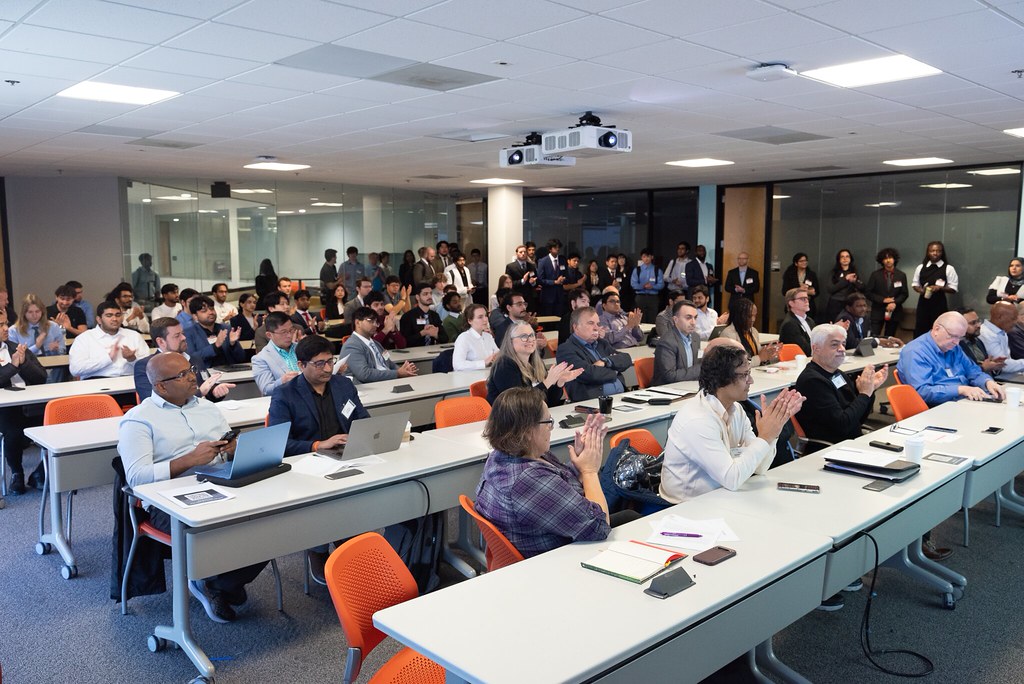
The UTD students’ corporate mentors from RTX are Marta Tatu, Data Scientist at Raytheon and Trey Williams, Technical Fellow, Software Engineering at Raytheon - they can be seen standing on the right in the following picture taken at the ECE UTDesign EXPO on 12 December:


View attachment 93790


The Eye on AI podcast with Steve Brightfield suggests that all competing uni teams were equipped with Akida hardware for the 2025/26 round of the AVC.
According to Aneesh Thakkar in my post tagged above, they were given AKD1000 M.2 Boards, which makes sense given that the UTD students’ poster mentions they also used a Raspberry Pi 5 with M2 HAT.


FYI: Craig S. Smith was referring to his Oura smart ring, a health tracking wearable by Finnish health technology company Oura Health Oy, founded in 2013.


The US Department of Defense / DOD (or as the Trump Administration now loves to call it, the Department of War / DOW) is actually Oura’s largest enterprise customer.

Earlier this year, an announcement about this partnership (which already commenced in 2019) and rumours about consumer data shared with Palantir (co-founded by tech billionaire Peter Thiel, who is one of Donald Trump’s longtime backers) sparked a backlash on social media - more and more users started voicing privacy concerns regarding their biometric data or expressed a general unhappiness with Oura’s connections to the military and/or the Trump Administration.

Read here, why “Oura’s Partnership with the Pentagon Is Ringing Alarm Bells for Customers” and how the company responded to the accusations:


On-device Edge AI to the rescue!

Riley Mckinney is a fresh Computer Science graduate and member of the University of Texas at Dallas (UTD) team that won 1st place in the intramural UTDesign Expo (Fall 2025) for their autonomous UAV/UGV navigation system, developed to compete in the Raytheon Autonomous Vehicle Competition (AVC) 2025/2026 dubbed “Operation Touchdown”. 👆🏻

On his LinkedIn page, he details his contributions to the project, in which he and his teammates used Akida for a computer vision obstacle-detection module:

“Created an Akida-based obstacle detection module (MobileNetV1 on neuromorphic hardware) with dual simulation/hardware modes, supporting live camera input and real-time inference on the Raspberry Pi.”


85C4CCD4-6BC1-48BD-8F84-D333337A8A5A.jpeg


27983882-EE15-488D-A884-5FB3432CC682.jpeg

11998DFE-7613-4817-AAF5-70BA45198EDF.jpeg


C49E7592-47A1-4116-AC42-7F1856EA4555.jpeg
 
Last edited:
  • Like
  • Fire
  • Love
Reactions: 18 users

TECH

Regular
I thought I read somewhere recently that there was the intention to do some talks/interviews from the suite at CES as has been done in the past. I also noticed in two of the photo's of the suite that has been going around, the mics and headphones set up.
Could it be that things are just too busy? or maybe recorded and released after CES, I can't remember when it occurred last year.
Would be nice to hear something, I had high hopes for CES this year with all the hype.
Hey Wags... give it a little time mate, things are perculating behind the scenes, I think that Dio has been on the money for quite some time with his cybersecurity prediction that our relationship with QV aka Meta Guard AI will be bearing fruit first, don't governments just spend and keep spending, or is that only in Australia :ROFLMAO::ROFLMAO:

Regards....Tech.
 
  • Like
  • Haha
  • Thinking
Reactions: 9 users
Great read here on the Dell website:


"In my recent blog, “The Future of AI is on the Edge,” I discussed a transformative combination of innovations that lie at the heart of Edge AI’s evolution. As a follow-up to that piece, here are my top five predictions for what we can all expect in 2026."

Under point no.3: "The technology foundation supporting this growth includes specialized AI accelerators, neuromorphic processors, and edge-optimized algorithms. These components enable real-time computer vision processing while maintaining energy efficiency requirements, critical for edge and distributed data center environments."

About the author: https://www.dell.com/en-us/blog/authors/daniel-cummins/
 
  • Fire
  • Like
  • Love
Reactions: 10 users

MrRomper

Regular
Article/Podcast in EE Times that talks about Neuromorphic Engineering. It is a relatively new startup, using analog technology and references Brainchip as a complimentary company. Brainchip is not mention further, although complimentary companies are.

1767956981178.png

1767957080574.png

https://www.eetimes.com/podcasts/green-always-on-sensing-with-neuronovas-sub-μwatt-chip/
Do we compliment other similar companies and are they considering using Brainchip?
 
  • Fire
Reactions: 1 users

Diogenese

Top 20
So why do we bother with RadHard?


Cosmic rays (or their collision particles) can flip digital bits.

Frontgrade's GR801 has to cope in a hostile environment unprotected by the earth's atmosphere.
 
Ummm....Uniwin Global blog from a day ago apparently....something we don't know...or Uniwin just throwing it out there :unsure:


Smarter, Faster, Safer Access Control with Modern Face Recognition​

Limitations of Traditional Access Control Systems

For many years, traditional access control systems have relied on credentials such as passwords, swipe cards, and PIN codes. These approaches have been common, but they now fall short against today’s security threats. Passwords get guessed or stolen through phishing tricks. Cards can be copied or taken. PINs might be seen by others or exposed. All this opens doors to unwanted intruders. One big issue with these older systems is the lack of biometric checks. This lets fake users slip through more easily. Also, centralized credential databases become high-value targets for attackers. If attackers break in, they can grab data from thousands of people. Big problems for daily work and a hit to the company’s image.

Limitations of Traditional Access Control Systems

Rise of Biometric and Smart Solutions

Biometric verification has stepped up as a strong option. It ties entry rights to personal traits like fingerprints, palm veins, or face shapes. Face recognition stands out here. It’s touch-free and people like it a lot. Smart systems mix biometric checks with clever AI tools. They deliver both safety and ease. So, fields from home buildings to hospitals and schools are shifting to intelligent biometric-based access control systems. Uniwin-Global delivers smart options for apartments or neighborhoods. These use SIP intercom tech. They blend face recognition with clear video calls, far-off door opening, and instant warnings. In short, they turn basic entry setups into sharp security tools.

Understanding Secure Face Recognition Technology

Core Principles of Secure Face Recognition

Safe face recognition tech examines unique face details right away to confirm who someone is. Newer setups use two-lens cameras. These come with infrared detectors and wide dynamic range (WDR) features. They grab clear face info even in dim or harsh light spots. Liveness checks are vital to stop fake tries. The setup confirms the person is real and alive. It spots small face shifts or heat signs. This blocks tricks with printed pictures, video clips, or 3D masks. Take the WR501 (5-inch attendance terminal), for instance. It pairs wide dynamic HD face cameras with liveness checks. Plus, it handles quick scans, spot-on results, and holds a big list of faces.

The Role of Akida IP in Biometric Processing

Akida IP is a neuromorphic processor designed to support event-driven, parallel AI workloads with extremely low power consumption. Data gets handled right on the gadget, not sent to far-off clouds. This cuts wait times and saves power. Local AI from Akida IP keeps private body data on the device. That boosts speed and guards secrets. It adjusts to different settings, such as shifting lights or extra sounds. So, it fits well in all sorts of real spots. This on-site smarts shines in edge setups where fast choices matter. Adding Akida IP to face entry systems changes how they run. At the same time, it protects user info from big data breaches.

Security Enhancements Over Traditional Systems

Anti-Spoofing and Liveness Detection Features

New face recognition tools from Uniwin-Global pack several ways to fight fakes. These cover spotting dead items like photo prints, video plays, and 3D covers. They also look at tiny moves, such as eye blinks or small twitches. And they link with heat sensors to sense warmth from a body. The WO802 8-Inch SIP Video Intercom & High-Capacity Face Recognition Terminal shows these strengths well. It delivers under 0.1s scan times with a 99.9% hit rate. It also has solid liveness checks.

Anti-Spoofing Features

Privacy Protection Through Edge Computing

Edge computing handles body data right at the device. No need to send it to distant servers. This cuts the chances of online attacks. It fits rules like GDPR, too. Uniwin-Global’s devices, like the WR502F (5-inch fingerprint attendance terminal), store up to 10,000 face templates on site. They work alone without always needing a server link. This cuts cloud risks. Yet, they keep up real-time work. In a busy office building, for example, this means doors open fast without data leaks during peak hours.

Uniwin-Global’s Advanced Access Control Solutions

Key Features of Uniwin-Global’s Face Recognition Systems

Uniwin-Global has a full line of smart entry products. They suit places with lots of people and tight safety needs. The WR701 (7-inch attendance terminal) runs on its own. No outside network or server required. It manages a 5,000-face list with over 99.99% accuracy. Checks take less than 1s. Its tough dual-lens camera uses LED and IR lights. This helps in dark or backlit areas, like a school hallway at dusk. Instant warnings and entry records tie into Uniwin-Global’s app platform. Managers can watch foot traffic and set user rights from afar. They use web or phone screens.

Integration with Smart System Solutions

Uniwin-Global’s devices handle links via MQTT/HTTP/WEBSOCKET protocols. This lets them talk smoothly with other tools, like IoT gadgets or building controls. Extra check layers add strength. The WR502F, for one, uses palm vein scans. This looks at hidden vein maps under the skin. It pairs with face checks for better proof. Security stays high, but users find it simple. In a corporate lobby, staff might scan their palm after a face check during rush hour, cutting average authentication time significantly in real-world deployment scenarios. Central screens let admins unlock doors from miles away. They handle users and updates, too. This scales well for home areas, office spaces, medical centers, and schools.

Multiple applications

Why Akida IP Powers the Future of Access Control

Benefits of Neuromorphic Processing in Access Systems

Neuromorphic processors such as Akida IP are reshaping the architecture of modern access control systems. They copy the brain’s side-by-side work. So, they allow quick choices with little power draw. They scale many doors without jams. And their spread-out design fights off hacks better. It saves energy, too. That’s great for spots on batteries or far out. In remote warehouses, say, it keeps doors secure for 24 hours on one charge, as seen in real installs.

Enhancing User Experience Without Compromising Security

How users feel matters in entry setups. Long waits or wrong checks can mess up the day. Face tools with Akida IP fix that. Checks happen in a flash, even in crowds. No cards to carry or codes to recall. The system gets smarter over time. It tunes accuracy from daily use.

Conclusion

Secure face recognition access control represents a clear shift away from vulnerable, credential-based security toward intelligent, biometric-driven systems. Uniwin-Global’s integrated solution demonstrates how neuromorphic processing and edge computing can enhance both security and user experience while meeting real-world operational and regulatory requirements. As organizations seek scalable, future-ready security infrastructures, Akida IP–powered face recognition systems offer a reliable and efficient path forward.


Uniwin-Global​

Founded in 2016, it is an emerging IoT smart device solution provider with extensive product and engineering experience. It is committed to integrating the product experience of IoT + professional services, providing customers with industry motherboards and intelligent system solutions, which can be used in smart commercial displays, self-service vending, AI access control, smart retail, industrial control, apartment intercom, villa intercom and other industry products.

 
  • Fire
  • Like
Reactions: 3 users
Top Bottom