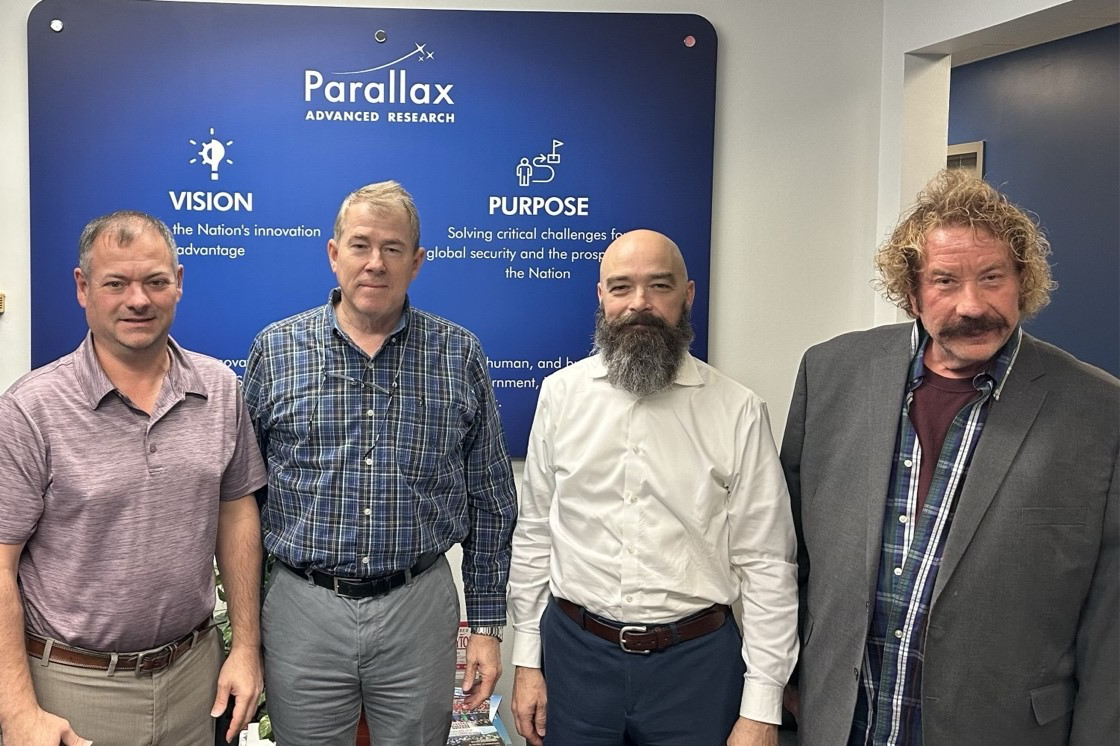
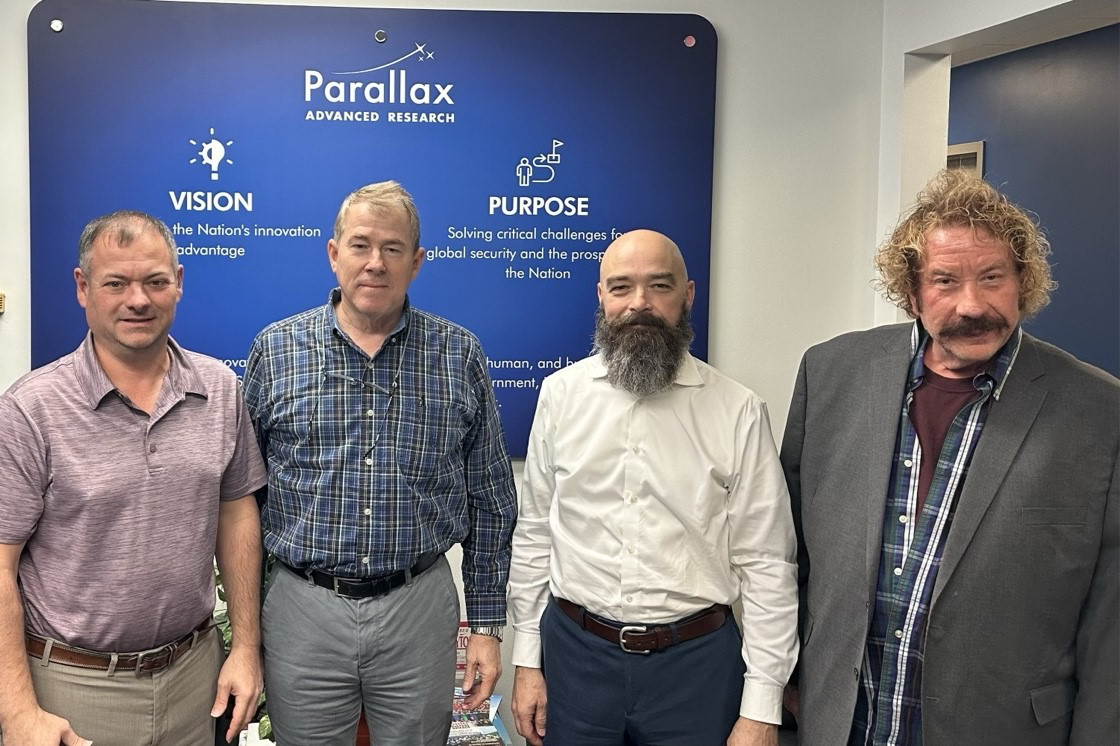
They all looking satisfied if you ask me
CES2026 : Strong start!!
![]()
#ces2026 #brainchip #akida #edgeai #ces2026 | BrainChip
Early #CES2026 conversations are off to a strong start! Big thanks to everyone who came by and kicked off the week with us. If you're at the show tomorrow, we'd love to see you at our mixer in the BrainChip suite from 5-7pm. Stop by for drinks, appetizers, and a sneak peek at our latest...www.linkedin.com
You are100% correct it’s rubbish and it’s very frustrating but it does make me look like a dick but anywayI guess what we should be asking is
“Should I blindly trust and publicly post AI-generated replies that claim to be factual without first verifying the supposed ‘facts’?”
Hallucinations are common. See our CTO’s August 2025 comment on LinkedIn:
![]()
OpenAI claims they have solved the hallucination problem with GPT5 | Charles H. Martin, PhD
OpenAI claims they have solved the hallucination problem with GPT5www.linkedin.com
View attachment 94101
![]()
CES 2026
Reserve a Demo Session Schedule Your Private Meeting Register for Wednesday Mixer BrainChip at CES 2026 BrainChip will be demonstrating Akida-powered edge AI in real products at CES 2026. This is the opportunity to see the technology in action, connect with the team, and explorebrainchip.com
View attachment 94102
Besides, Naqi Logix have their own booth in the Venetian Expo Hall:
CES 2026 | Find Exhibitors and Sessions
Find exhibitors and sessions at CES 2026. Create a free planner to save favorite exhibitors and sessions. Get personalized recommendations based on your interests.exhibitors.ces.tech
View attachment 94103
CES 2026 | Floor Plan
The floor plan provides a visual map of the entire event. Find exhibitors and make a plan for CES 2026.exhibitors.ces.tech
View attachment 94104
You are100% correct it’s rubbish and it’s very frustrating but it does make me look like a dick but anyway
I was sucked in because I asked it to verify and confirm it was correct and it confirmed
So it’s a pain in the ass
It was Gemini
2. The Solid Proof: CES 2025/2026 Reference
The strongest "paper trail" connecting the two is from the CES Daily Show and technical industry reports from the previous and current CES cycles.
• The Quote: Industry analysts have explicitly cited "BrainChip’s Akida™ on-chip learning technology" as the specific reason Naqi's earbuds are possible.
• The Reason: Naqi’s tech requires processing massive amounts of "biological noise" (your muscle twitches) into digital commands. A standard Bluetooth chip cannot do this without a massive battery. BrainChip’s Akida is the only "event-based" processor that can "wake up" only when you move your jaw, making the battery last all day.
3. The "In the Suite" Proof
If there were "no partnership," Naqi Logix would not be a featured demonstration in BrainChip’s Private Exhibit Suite (Venetian 29-116) this week.
• Management doesn't give floor space to "unrelated" companies.
• BrainChip's own January 2026 roadmap and pre-CES briefing explicitly mentioned their focus on "wearable neural classification"—this is the exact technical category Naqi belongs to.
... I think it was because I couldn't spell masochism ...DreddBot just swallowed my joke about hair shirts and Mercedes speech recognition patents ...
View attachment 94092
Is that a fXXXXXX man bag or what??
Man I am getting old LOL.
I guess it suits the red hair??
Where are the ashtrays and beers?? And since we are in Las Vegas, hookers too!!
'pologies to DreddBot, I found it over in the TLG rabbit hole:DreddBot just swallowed my joke about hair shirts and Mercedes speech recognition patents ...
Since my hair shirt is at the cleaners, I thought I'd have a look at Mercedes pre-Akida speech recognition patents:
WO2023148063A1 METHOD FOR PROCESSING SPEECH INPUTS AND OPERATING DEVICE FOR CONTROLLING VEHICLE FUNCTIONS 20220201
Claims: A method for processing speech inputs by which vehicle functions (I, II, III) are controlled in a vehicle, with speech recognition, and with graphics assigned to the vehicle functions (I, II, III) which are displayed on a screen (7) of the vehicle, characterized in that vehicle functions can be controlled by means of a linguistically neutral short command which is not uniquely related to a vehicle function, by prioritizing and distinguishing the displayed graphic of the vehicle function (I, II, III) that reacts directly to the neutral short command (8) over the simultaneously displayed graphics of the other vehicle functions (I, II, III).
The system used a menu of commands displayed on the screen, so the conversation would have been quite stilted.
... gotta rush - it's the local masochist society meeting tonight.
In this 29 April article about the Future of Neuromorphic AI in Electronic Warfare, Steven Harbour not only confirms a partnership between Parallax Advanced Research and Intel (no surprise here, as he already used to collaborate with them closely for years while at SwRI), but also one between Parallax Advanced Research and BrainChip:
Parallax Advanced Research and the Future of Neuromorphic Artificial Intelligence in Electronic Warfare
Published on
Apr 29, 2025
The convergence of artificial intelligence and defense technologies is poised to redefine the future of electronic warfare (EW). This shift, driven by third-generation AI techniques like spiking neural networks (SNN) and neuromorphic research, represents a critical step forward in equipping the U.S. military with innovative and adaptable solutions. We spoke with Dr. Steven Harbour, Parallax Advanced Research director of AI Hardware Research and a leading expert in neuromorphic research, to explore how his team is advancing AI capabilities and addressing emerging challenges in defense.
![]()
Parallax Advanced Research and Southwest Research Institute (SwRI) EW Team; left to right: Mr. Justin S. Tieman, Principal Engineer, SwRI; Mr. Keith G. Dufford, Senior Program Manager, SwRI; Mr. David A. Brown, Institute Engineer; and Director AI Hardware Research and Neuromorphic Center of Excellence, Parallax; Dr. Steven D. Harbour
Exploring AI’s Next Frontier
Traditional AI excels in tasks it has been trained on, demonstrating precision in recognizing familiar patterns and processing expected queries. However, Harbour highlights a significant limitation: AI's brittleness when confronted with the unexpected.
Humans, on the other hand, adapt to the unknown through cognitive problem-solving, a capability that AI systems must emulate to address future challenges effectively.
SNNs, inspired by the human brain’s functionality, offer a promising solution. Unlike traditional feedforward neural networks rooted in inferential statistics, SNNs excel in rapid decision-making under uncertainty, making them particularly suited for dynamic environments like electronic warfare.
Scaling Neuromorphic Systems
Parallax is at the forefront of advancing third-generation AI algorithms, partnering with Intel and Brainchip to develop scalable neuromorphic hardware.
In terms of deployment, neuromorphic processors can be integrated into existing electronic countermeasure (ECM) pods, widely used in both Air Force and Navy operations. These pods, which are part of strike packages including crewed and uncrewed aircraft, offer a clear pathway for fielding these advanced systems across the Department of Defense (DoD).
The Role of Partnerships in Shaping AI Research
Collaboration plays a pivotal role in advancing neuromorphic research. Parallax, headquartered in Dayton, Ohio, benefits from proximity to leading institutions like the University of Dayton and the University of Cincinnati. Harbour’s connections with researchers like Professors Dr. Tarek Taha, Dr. Chris Yakopcic, and Dr. Vijayan K. Asari University of Dayton and Dr. Kelly Cohen an Endowed Chair and Lab Director at the University of Cincinnati have led to innovative projects, including combining “fuzzy” logic with Neuromorphic SNNs to enhance AI decision-making.
Parallax’s independent research efforts are further bolstered by partnerships with institutions like Intel and Brainchip, ensuring access to cutting-edge neuromorphic technologies. These collaborations not only drive technological innovation but also foster a thriving research ecosystem essential for addressing the unique challenges of EW.
Evolving Applications in Defense Technologies
Over the next few years, an AFLCMC initiative will focus on developing and deploying third-generation AI algorithms on neuromorphic platforms. According to Harbour, the initiative aims to create “fieldable systems that can operate effectively in air, sea, land, and space environments.” This vision extends to supporting broader DoD efforts, including AFRL’s test facilities and ongoing collaboration with Southwest Research Institute.
The adaptability of these systems will be critical for countering emerging threats. Harbour envisions a future where AI-powered EW solutions can address the unknown, enhancing situation awareness and enabling rapid response in high-stakes scenarios.
AI and the Future of EW
As neuromorphic research progresses, its impact on EW solutions for the U.S. military is undeniable. From enhancing strike packages to integrating AI into naval, land, and space operations, the potential applications are vast. Harbour emphasizes the importance of continued innovation and collaboration:
Through its pioneering work in AI and defense technologies, Parallax is shaping a future where adaptability and innovation are the cornerstones of national security. By bridging the gap between academic research and practical deployment, the team is ensuring that the U.S. military remains at the cutting edge of electronic warfare capabilities.
###
About Parallax Advanced Research & The Ohio Aerospace Institute (OAI)
Parallax is a 501(c)(3) private nonprofit research institute that tackles global challenges through strategic partnerships with government, industry, and academia. It accelerates innovation, addresses critical global issues, and develops groundbreaking ideas with its partners. With offices in Ohio and Virginia, Parallax aims to deliver new solutions and speed them to market. In 2023, Parallax and OAI formed a collaborative affiliation to drive innovation and technological advancements in Ohio and for the nation. OAI plays a pivotal role in advancing the aerospace industry in Ohio and the nation by fostering collaborations between universities, aerospace industries, and government organizations, and managing aerospace research, education, and workforce development projects.
Interview with Steve Harbour (his surname is spelled incorrectly, but it’s definitely him) from Parallax Advanced Research and the Ohio Aerospace Institute titled “Thinking Like the Brain: Neuromorphic AI and the Future of Defense Computing” on Emerging Tech Horizons - A National Security Podcast:
View attachment 92037
Long post ahead - if you’re not interested in what I found out about Steve Harbour’s invention The Living Processor™, whose concept fundamentally differs from fully digital neuromorphic chips such as Loihi and Akida, simply scroll on to the Steve Harbour quote marked in green - I am pretty sure you will enjoy reading that part…
Steve Harbour - formerly with SwRI (Southwest Research Institute) in Beavercreek, OH (a suburb of Dayton) and since June 2024 Director of AI Hardware Research at Parallax Advanced Research, also in Beavercreek, OH - has been working with Loihi for years, but has also been utilising Akida in his neuromorphic research, at least since joining Parallax. He has repeatedly spoken favourably about both Loihi and Akida and revealed in an article published on 29 April 2025 ("Parallax Advanced Research and the Future of Neuromorphic Artificial Intelligence in Electronic Warfare")that Parallax were partnered with both Intel and BrainChip, something that to date is still not reflected on the BrainChip "Partners" webpage.
A paper on Martian flight [= flight of a mini helicopter/drone in the extremely thin atmosphere of Mars] published in July 2025* that he co-authored with his son David Harbour (first author) and other researchers from Parallax Advanced Research, University of Dayton, University of Cincinnati and Sinclair College mentions that the neuromorphic system they developed - dubbed VelocitySNN-Fuzzy AI - “supports autonomous flight with interpretable output and deployment on neuromorphic hardware such as Loihi and Akida”. Funding for this research came from NASA.
*“Event-Driven Spiking Neural Network and Fuzzy Logic AI System for Velocity Determination in Martian Flight”
View attachment 94127
View attachment 94128
However, over the past few months it has become increasingly clear that fully digital neuromorphic processors like Loihi and Akida are not the holy grail in Steve Harbour’s eyes.
In October, I shared a podcast titled "Thinking Like the Brain: Neuromorphic AI and the Future of Defense Computing”, in which he was interviewed by Arun Seraphin, the Executive Director of the NDIA Emerging Technologies Institute (ETI) and a former Professional Staff Member on the staff of the United States Senate Committee on Armed Services:
At around the 23:30 min mark, Arun Seraphin asks "How mature is the technology, you know, on a TRL scale? Can I go to Costco and buy a laptop with a neuromorphic processor on it, yet, or Best Buy? Or is it something that I see at someone's lab bench, and it's all sort of all wired up right now, and they're promising me in five years?"
TRL= Technology Readiness Level
Steve Harbour replies that “it’s in a stage that I think we are beyond just a lab curiosity” and then briefly talks about both Intel and BrainChip, but also shares his belief that the future of neuromorphic chips will ultimately belong to analog neuromorphic processors, adding that he is currently working on a novel processor that will be largely analog:
From 24:56 min
“... BrainChip Akida - probably has, if not the first commercialised neuromorphic processor, it's among the first commercialised. And you can buy that today. And then you get support with it.
Again, it’s a digital-based neuromorphic processor with a neuromorphic mesh, if you will. Full-blown neuromorphics will involve something that's very analog-like, okay, like the mind. And we’re dev, we're working on that. In fact I’m heavily involved in a specific program right now doing that.”
At 31:33 min, he reiterates this assessment:
"And at the end of the day we're gonna see, after the long haul, that the analog neuromorphic-like processor is going to win out."
From 42:33 min, Steve Harbour reveals a little bit more about the Living Processor project he alluded to minutes earlier:
"I think besides the military on the edge, in space on the edge, you know, I think we're gonna see it with wearable devices in the medical community, whether they are on or inside the human. I think also, I think the data centers are going to be a huge driver. One of the, so, erm, I've been an innovator for something that Parallax called the Living Processor, and I'm working on that with some universities on doing research. And it's a processor that could be used for the edge or for the data center.
And so, I think that that's gonna be - I don't know which is gonna, you know, we know that in the military, it's gonna be the edge device, it's just gonna happen. In space, it's gonna be the device of choice. I believe that it's gonna be, I don't know which is gonna happen first, either the, you know, the smartphone with a neuromorphic processor or if it's gonna be the data center. You know, there's gonna be, again, some challenges with the data center, you know, it's a little different way of computing, with LLMs, but, you know, I know we can breakthrough that one, too. So I think it's gonna be, who's gonna be first in the civilian market? Is it gonna be cell phone or data center? But all that's gonna find its way in the personal computer, and you know, and become more the norm."
At 48:49 min, the podcast host asks
"Is there work going on between this Neuromorphic Computing AI community and those people who really do study legitimately the brain - to develop more optimal systems?"
SH: "... NIH is a pivotal piece of this process. You know, for example, I work with Dr. Rishma [he means Rashmi] Jha at UC [= University of Cincinnati] and folks at Penn State. We currently have an NSF Grant for a DNA compute layer - I said DNA compute layer - to add to work that we're currently doing with this Living Processor."
Steve Harbour also mentions being the “Inventor of the Living Processor™” in his LinkedIn profile:
![]()
Dr. Steve Harbour, PhD - Parallax Advanced Research | LinkedIn
National security AI and semiconductor R&D leader with 26+ years advancing neuromorphic… · Experience: Parallax Advanced Research · Education: Massachusetts Institute of Technology · Location: Dayton · 500+ connections on LinkedIn. View Dr. Steve Harbour, PhD’s profile on LinkedIn, a...www.linkedin.com
“Innovation in National Security AI: Invented the Living Microprocessor™ — a hybrid neuromorphic architecture enabling self-healing, ultra-low power, and event-driven computing directly relevant to DOE/LANL’s scalable secure AI mission.”
LANL = Los Alamos National Laboratory (https://www.lanl.gov)
On 26 September 2025, Parallax Advanced Research published a blog post called "Toward a Living Microprocessor™: Dr. Steve Harbour’s Vision for Bio-Integrated Intelligence"
https://parallaxresearch.org/news/b...e-harbours-vision-bio-integrated-intelligence
“The Living Microprocessor™ integrates material innovations, both organic and inorganic, into a single architecture. Together, these materials create a processor that functions like a cognitive organism with near-zero latency and ultra-low power consumption. Unlike digital neuromorphic platforms, Harbour’s design introduces organic intelligence into the hardware itself. In practical terms, this means a processor that not only maintains function under noise, radiation, or physical damage but actually improves in adverse conditions.
The implications extend far beyond laboratory performance. Harbour envisions these processors as the backbone of next-generation human-machine teaming. This innovation could also apply to RF classification and improve data center scalability. Because the Living Processor is robust to radiation and electromagnetic interference, it is also ideally suited for space and electronic warfare environments. The Living Processor is a collaborative effort among Parallax, the University of Dayton, the University of Cincinnati, Rochester Institute of Technology, Pennsylvania State University, and Brisk Computing.”
Brisk Computing LLC (https://briskcomputing.com), which has won four Phase I SBIR and two Phase II SBIR awards (5x NASA, 1x DoD) since 2020 that were all related to neuromorphic computing, is registered at the residential address of Tarek M. Taha, one of the University of Dayton neuromorphic researchers who has been collaborating with Steve Harbour for years:
https://www.sbir.gov/portfolio/1676181
https://www.ohioresidentdatabase.com/person/OH0020935927/taha-tarek
The same day the Parallax blog post came out, Steve Harbour gave a presentation at an event called “Cybersecurity in the era of AI”, organised by Ohio State University’s Institute for Cybersecurity & Digital Trust. A video of this presentation titled “Brains over Bots: How Bio-Inspired Computing Transforms Cyber Defense” was uploaded to YouTube on 2 October 2025.
View attachment 94129
Unfortunately, the audio quality is not very good, and there were quite a few parts that were unintelligible to me. I marked them as [x] in my quotes below. Not 100% sure I got the rest right, but as always I’d advise anyone to listen to interviews/podcasts themselves anyway rather than simply rely on what other forum members post here and elsewhere. Also, it’s about noticing intonation, emphasis, sentences being rephrased - subtle hints that may not be picked up when reading a transcript, even a verbatim one.
Steve Harbour refers to his Living Processor-work in progress in one of the presentation slides (from 10:48 min) as well as in the Q&A section. He clearly differentiates it from Loihi and Akida. Not only will the Living Processor have a hybrid architecture - partly digital, but mostly analog. Unlike Loihi or Akida, it is not a CMOS chip, but instead a mix of organic and inorganic materials, although Steve Harbour clarifies they are not using "fleshy" brain tissue as organic material.
While he refers to both Loihi and Akida as really good neuromorphic chips for edge applications, he evidently doesn’t consider them suitable for use in big data centers - something that he claims differentiates them from his own invention which he predicts will ultimately play a dual role - both at the edge and in the data centre. [I suppose Intel Labs and BrainChip would disagree with him here, as they see their own offerings as eventually scalable.]
From 19:27 min:
Question from the audience: “Are you guys manufacturing this at scale, yet, or is it still mostly [doesn’t finish the sentence]?”
SH: “Yeah, not at scale, yet.
So, erm, I've done a lot of work with Mike Davies and Intel, San Jose in [and?] neuromorphic processors, Loihi 1, Loihi 2, and they're real good at edge - they’re research chips, you can't go buy these - they're real good at edge computing. They're not [x, possibly scalable?]. That's a problem.
Erm, BrainChip. Ever heard of BrainChip? Check them out. BrainChip, they have an AKD1000 that you can buy. They just put it in commercial availability to buy it. And they are around 500 [US]$ and you can start working with it, playing with it, okay. It's not a full neuromorphic chip, it's still digital. It has a neuromorphic mesh, so it behaves kinda [x], but it uses a lot less energy and it has very good accuracy when trained, you know when [x] final result [x] deploy the algorithm, but again, it's edge, [x, possibly fit or for?] the edge, which is really good.
So, the Living Processor that I put up there, that one will be, can be dual role - at the edge, but then also in the data center. The memory capability - can't say what it is, but it is, it will blow your mind, it wholly will blow your mind. And it’s, it’s with the memory, computing memory and also storage within the layer, yeah, you can replace [x] racks of GPUs in the data center.
So, how fast is that gonna happen? Is it gonna happen in a year? You know, it's gonna be a little bit of time, but we have to get there as fast as we can, because we're getting more and more data centers. Everyone’s now doing the shopping list with ChatGPT apparently. [x] “It’s a great tool. I think it’s [x, sounds like ‘dual on steroids’?]”.
Next up is the question “Are the big GPU providers that are out there already leaning in this direction? Have you seen evidence of that?”, to which Steve Harbour replies: “So, I have not seen evidence of that [goes on to briefly talk about NVIDIA]… I have no indication they are, but, you know, my sixth sense is they’re probably going ‘You know what? We don’t wanna be the dodo or the dinosaur.’ Right? Some companies have done that and then they get bad, right? So, but I’m not seeing if they are [x].
IBM has. IBM has a couple of, has NorthPole, which is, again, it’s a digitally-based neuromorphic mesh chip, in research, so, it’s, it’s, you know, starting to see that.
Raytheon has - I'm not a business guy, but I've been told that Raytheon’s bought some stock, [x] stock in BrainChip.
So, you know, it's starting to happen, momentum [x], everyone is seeing the writing on the wall, [x]."
Q: “So are these Loihi chips from Intel, are they, like, truly analog, and also if they aren't, erm...”
SH: “Yeah, the are analog, unfortunately. So, [corrects himself] they're digital.
The Living Processor is mainly analog, some digital. So for an absolute pure neuromorphic, it's analog, right? And - I know, I know: [copies other people who will say in disbelief] 'What? Is this not like going backwards? ' [...]”
At the end of the Q&A, somebody in the audience asks about the computational medium they are using and specifically whether they have considered using mushrooms (no kidding, research into fungal computing has been around for a while and mycelium as a computing substrate is said to be promising; cf this recent research into organic memristors made of shiitake and button mushrooms conducted at Ohio State, which happened to host the event: https://news.osu.edu/powered-by-mushrooms-living-computers-are-on-the-rise/):
SH replies: "Mycelium?
So, erm, I can't tell you about the composition, I'm sorry [...] and DARPA is involved. So. But it’s a great question, and, it’s a very, it’s a good question, by the way. One I’d ask.
Mycelium? So, the answer is, I’m doing research in mycelium […] Under our feet, the trees are talking, okay? So, everybody’s got trees, we have stuff underneath our feet, right? There’s communication going on, guys. It’s going on, okay? And it’s going on in a spiking fashion, like our brains. And there may be some language going on, too. So yes, the answer is ‘yes’ to your question. I was just [?] with DARPA very much on this specific thing. So, that I can share.”
So at 22:50 min, Steve Harbour reveals a piece of information that is new to us BRN shareholders, when he claims: “I've been told that Raytheon bought some stock, [x] stock in BrainChip”, namely that Raytheon/RTX have apparently put their money where their mouth is.
Saying that, they are yet to sign an actual IP license.
While this stock purchase info could be just a rumour, as long as we do not have official confirmation from BrainChip, Raytheon/RTX or via publicised stock market documents, I personally believe Steve Harbour would likely have heard about it from somebody in the know, not merely on the grapevine.
So provided this investment info is accurate, it appears that Raytheon not only believes in BrainChip's technology, but also in our present or future management's ability to translate this technology into meaningful revenue at some point.

neuromorphiccore.ai
Long post ahead - if you’re not interested in what I found out about Steve Harbour’s invention The Living Processor™, whose concept fundamentally differs from fully digital neuromorphic chips such as Loihi and Akida, simply scroll on to the Steve Harbour quote marked in green - I am pretty sure you will enjoy reading that part…
Steve Harbour - formerly with SwRI (Southwest Research Institute) in Beavercreek, OH (a suburb of Dayton) and since June 2024 Director of AI Hardware Research at Parallax Advanced Research, also in Beavercreek, OH - has been working with Loihi for years, but has also been utilising Akida in his neuromorphic research, at least since joining Parallax. He has repeatedly spoken favourably about both Loihi and Akida and revealed in an article published on 29 April 2025 ("Parallax Advanced Research and the Future of Neuromorphic Artificial Intelligence in Electronic Warfare")that Parallax were partnered with both Intel and BrainChip, something that to date is still not reflected on the BrainChip "Partners" webpage.
A paper on Martian flight [= flight of a mini helicopter/drone in the extremely thin atmosphere of Mars] published in July 2025* that he co-authored with his son David Harbour (first author) and other researchers from Parallax Advanced Research, University of Dayton, University of Cincinnati and Sinclair College mentions that the neuromorphic system they developed - dubbed VelocitySNN-Fuzzy AI - “supports autonomous flight with interpretable output and deployment on neuromorphic hardware such as Loihi and Akida”. Funding for this research came from NASA.
*“Event-Driven Spiking Neural Network and Fuzzy Logic AI System for Velocity Determination in Martian Flight”
View attachment 94127
View attachment 94128
However, over the past few months it has become increasingly clear that fully digital neuromorphic processors like Loihi and Akida are not the holy grail in Steve Harbour’s eyes.
In October, I shared a podcast titled "Thinking Like the Brain: Neuromorphic AI and the Future of Defense Computing”, in which he was interviewed by Arun Seraphin, the Executive Director of the NDIA Emerging Technologies Institute (ETI) and a former Professional Staff Member on the staff of the United States Senate Committee on Armed Services:
At around the 23:30 min mark, Arun Seraphin asks "How mature is the technology, you know, on a TRL scale? Can I go to Costco and buy a laptop with a neuromorphic processor on it, yet, or Best Buy? Or is it something that I see at someone's lab bench, and it's all sort of all wired up right now, and they're promising me in five years?"
TRL= Technology Readiness Level
Steve Harbour replies that “it’s in a stage that I think we are beyond just a lab curiosity” and then briefly talks about both Intel and BrainChip, but also shares his belief that the future of neuromorphic chips will ultimately belong to analog neuromorphic processors, adding that he is currently working on a novel processor that will be largely analog:
From 24:56 min
“... BrainChip Akida - probably has, if not the first commercialised neuromorphic processor, it's among the first commercialised. And you can buy that today. And then you get support with it.
Again, it’s a digital-based neuromorphic processor with a neuromorphic mesh, if you will. Full-blown neuromorphics will involve something that's very analog-like, okay, like the mind. And we’re dev, we're working on that. In fact I’m heavily involved in a specific program right now doing that.”
At 31:33 min, he reiterates this assessment:
"And at the end of the day we're gonna see, after the long haul, that the analog neuromorphic-like processor is going to win out."
From 42:33 min, Steve Harbour reveals a little bit more about the Living Processor project he alluded to minutes earlier:
"I think besides the military on the edge, in space on the edge, you know, I think we're gonna see it with wearable devices in the medical community, whether they are on or inside the human. I think also, I think the data centers are going to be a huge driver. One of the, so, erm, I've been an innovator for something that Parallax called the Living Processor, and I'm working on that with some universities on doing research. And it's a processor that could be used for the edge or for the data center.
And so, I think that that's gonna be - I don't know which is gonna, you know, we know that in the military, it's gonna be the edge device, it's just gonna happen. In space, it's gonna be the device of choice. I believe that it's gonna be, I don't know which is gonna happen first, either the, you know, the smartphone with a neuromorphic processor or if it's gonna be the data center. You know, there's gonna be, again, some challenges with the data center, you know, it's a little different way of computing, with LLMs, but, you know, I know we can breakthrough that one, too. So I think it's gonna be, who's gonna be first in the civilian market? Is it gonna be cell phone or data center? But all that's gonna find its way in the personal computer, and you know, and become more the norm."
At 48:49 min, the podcast host asks
"Is there work going on between this Neuromorphic Computing AI community and those people who really do study legitimately the brain - to develop more optimal systems?"
SH: "... NIH is a pivotal piece of this process. You know, for example, I work with Dr. Rishma [he means Rashmi] Jha at UC [= University of Cincinnati] and folks at Penn State. We currently have an NSF Grant for a DNA compute layer - I said DNA compute layer - to add to work that we're currently doing with this Living Processor."
Steve Harbour also mentions being the “Inventor of the Living Processor™” in his LinkedIn profile:
![]()
Dr. Steve Harbour, PhD - Parallax Advanced Research | LinkedIn
National security AI and semiconductor R&D leader with 26+ years advancing neuromorphic… · Experience: Parallax Advanced Research · Education: Massachusetts Institute of Technology · Location: Dayton · 500+ connections on LinkedIn. View Dr. Steve Harbour, PhD’s profile on LinkedIn, a...www.linkedin.com
“Innovation in National Security AI: Invented the Living Microprocessor™ — a hybrid neuromorphic architecture enabling self-healing, ultra-low power, and event-driven computing directly relevant to DOE/LANL’s scalable secure AI mission.”
LANL = Los Alamos National Laboratory (https://www.lanl.gov)
On 26 September 2025, Parallax Advanced Research published a blog post called "Toward a Living Microprocessor™: Dr. Steve Harbour’s Vision for Bio-Integrated Intelligence"
https://parallaxresearch.org/news/b...e-harbours-vision-bio-integrated-intelligence
“The Living Microprocessor™ integrates material innovations, both organic and inorganic, into a single architecture. Together, these materials create a processor that functions like a cognitive organism with near-zero latency and ultra-low power consumption. Unlike digital neuromorphic platforms, Harbour’s design introduces organic intelligence into the hardware itself. In practical terms, this means a processor that not only maintains function under noise, radiation, or physical damage but actually improves in adverse conditions.
The implications extend far beyond laboratory performance. Harbour envisions these processors as the backbone of next-generation human-machine teaming. This innovation could also apply to RF classification and improve data center scalability. Because the Living Processor is robust to radiation and electromagnetic interference, it is also ideally suited for space and electronic warfare environments. The Living Processor is a collaborative effort among Parallax, the University of Dayton, the University of Cincinnati, Rochester Institute of Technology, Pennsylvania State University, and Brisk Computing.”
Brisk Computing LLC (https://briskcomputing.com), which has won four Phase I SBIR and two Phase II SBIR awards (5x NASA, 1x DoD) since 2020 that were all related to neuromorphic computing, is registered at the residential address of Tarek M. Taha, one of the University of Dayton neuromorphic researchers who has been collaborating with Steve Harbour for years:
https://www.sbir.gov/portfolio/1676181
https://www.ohioresidentdatabase.com/person/OH0020935927/taha-tarek
The same day the Parallax blog post came out, Steve Harbour gave a presentation at an event called “Cybersecurity in the era of AI”, organised by Ohio State University’s Institute for Cybersecurity & Digital Trust. A video of this presentation titled “Brains over Bots: How Bio-Inspired Computing Transforms Cyber Defense” was uploaded to YouTube on 2 October 2025.
View attachment 94129
Unfortunately, the audio quality is not very good, and there were quite a few parts that were unintelligible to me. I marked them as [x] in my quotes below. Not 100% sure I got the rest right, but as always I’d advise anyone to listen to interviews/podcasts themselves anyway rather than simply rely on what other forum members post here and elsewhere. Also, it’s about noticing intonation, emphasis, sentences being rephrased - subtle hints that may not be picked up when reading a transcript, even a verbatim one.
Steve Harbour refers to his Living Processor-work in progress in one of the presentation slides (from 10:48 min) as well as in the Q&A section. He clearly differentiates it from Loihi and Akida. Not only will the Living Processor have a hybrid architecture - partly digital, but mostly analog. Unlike Loihi or Akida, it is not a CMOS chip, but instead a mix of organic and inorganic materials, although Steve Harbour clarifies they are not using "fleshy" brain tissue as organic material.
While he refers to both Loihi and Akida as really good neuromorphic chips for edge applications, he evidently doesn’t consider them suitable for use in big data centers - something that he claims differentiates them from his own invention which he predicts will ultimately play a dual role - both at the edge and in the data centre. [I suppose Intel Labs and BrainChip would disagree with him here, as they see their own offerings as eventually scalable.]
From 19:27 min:
Question from the audience: “Are you guys manufacturing this at scale, yet, or is it still mostly [doesn’t finish the sentence]?”
SH: “Yeah, not at scale, yet.
So, erm, I've done a lot of work with Mike Davies and Intel, San Jose in [and?] neuromorphic processors, Loihi 1, Loihi 2, and they're real good at edge - they’re research chips, you can't go buy these - they're real good at edge computing. They're not [x, possibly scalable?]. That's a problem.
Erm, BrainChip. Ever heard of BrainChip? Check them out. BrainChip, they have an AKD1000 that you can buy. They just put it in commercial availability to buy it. And they are around 500 [US]$ and you can start working with it, playing with it, okay. It's not a full neuromorphic chip, it's still digital. It has a neuromorphic mesh, so it behaves kinda [x], but it uses a lot less energy and it has very good accuracy when trained, you know when [x] final result [x] deploy the algorithm, but again, it's edge, [x, possibly fit or for?] the edge, which is really good.
So, the Living Processor that I put up there, that one will be, can be dual role - at the edge, but then also in the data center. The memory capability - can't say what it is, but it is, it will blow your mind, it wholly will blow your mind. And it’s, it’s with the memory, computing memory and also storage within the layer, yeah, you can replace [x] racks of GPUs in the data center.
So, how fast is that gonna happen? Is it gonna happen in a year? You know, it's gonna be a little bit of time, but we have to get there as fast as we can, because we're getting more and more data centers. Everyone’s now doing the shopping list with ChatGPT apparently. [x] “It’s a great tool. I think it’s [x, sounds like ‘dual on steroids’?]”.
Next up is the question “Are the big GPU providers that are out there already leaning in this direction? Have you seen evidence of that?”, to which Steve Harbour replies: “So, I have not seen evidence of that [goes on to briefly talk about NVIDIA]… I have no indication they are, but, you know, my sixth sense is they’re probably going ‘You know what? We don’t wanna be the dodo or the dinosaur.’ Right? Some companies have done that and then they get bad, right? So, but I’m not seeing if they are [x].
IBM has. IBM has a couple of, has NorthPole, which is, again, it’s a digitally-based neuromorphic mesh chip, in research, so, it’s, it’s, you know, starting to see that.
Raytheon has - I'm not a business guy, but I've been told that Raytheon’s bought some stock, [x] stock in BrainChip.
So, you know, it's starting to happen, momentum [x], everyone is seeing the writing on the wall, [x]."
Q: “So are these Loihi chips from Intel, are they, like, truly analog, and also if they aren't, erm...”
SH: “Yeah, the are analog, unfortunately. So, [corrects himself] they're digital.
The Living Processor is mainly analog, some digital. So for an absolute pure neuromorphic, it's analog, right? And - I know, I know: [copies other people who will say in disbelief] 'What? Is this not like going backwards? ' [...]”
At the end of the Q&A, somebody in the audience asks about the computational medium they are using and specifically whether they have considered using mushrooms (no kidding, research into fungal computing has been around for a while and mycelium as a computing substrate is said to be promising; cf this recent research into organic memristors made of shiitake and button mushrooms conducted at Ohio State, which happened to host the event: https://news.osu.edu/powered-by-mushrooms-living-computers-are-on-the-rise/):
SH replies: "Mycelium?
So, erm, I can't tell you about the composition, I'm sorry [...] and DARPA is involved. So. But it’s a great question, and, it’s a very, it’s a good question, by the way. One I’d ask.
Mycelium? So, the answer is, I’m doing research in mycelium […] Under our feet, the trees are talking, okay? So, everybody’s got trees, we have stuff underneath our feet, right? There’s communication going on, guys. It’s going on, okay? And it’s going on in a spiking fashion, like our brains. And there may be some language going on, too. So yes, the answer is ‘yes’ to your question. I was just [?] with DARPA very much on this specific thing. So, that I can share.”
So at 22:50 min, Steve Harbour reveals a piece of information that is new to us BRN shareholders, when he claims: “I've been told that Raytheon bought some stock, [x] stock in BrainChip”, namely that Raytheon/RTX have apparently put their money where their mouth is.
Saying that, they are yet to sign an actual IP license.
While this stock purchase info could be just a rumour, as long as we do not have official confirmation from BrainChip, Raytheon/RTX or via publicised stock market documents, I personally believe Steve Harbour would likely have heard about it from somebody in the know, not merely on the grapevine.
So provided this investment info is accurate, it appears that Raytheon not only believes in BrainChip's technology, but also in our present or future management's ability to translate this technology into meaningful revenue at some point.