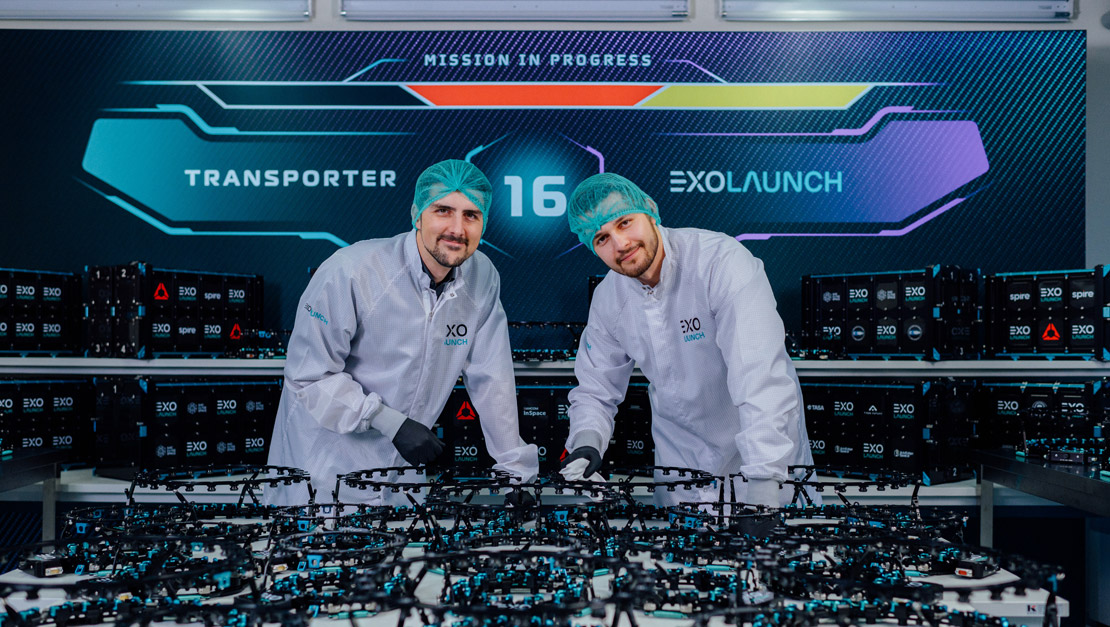
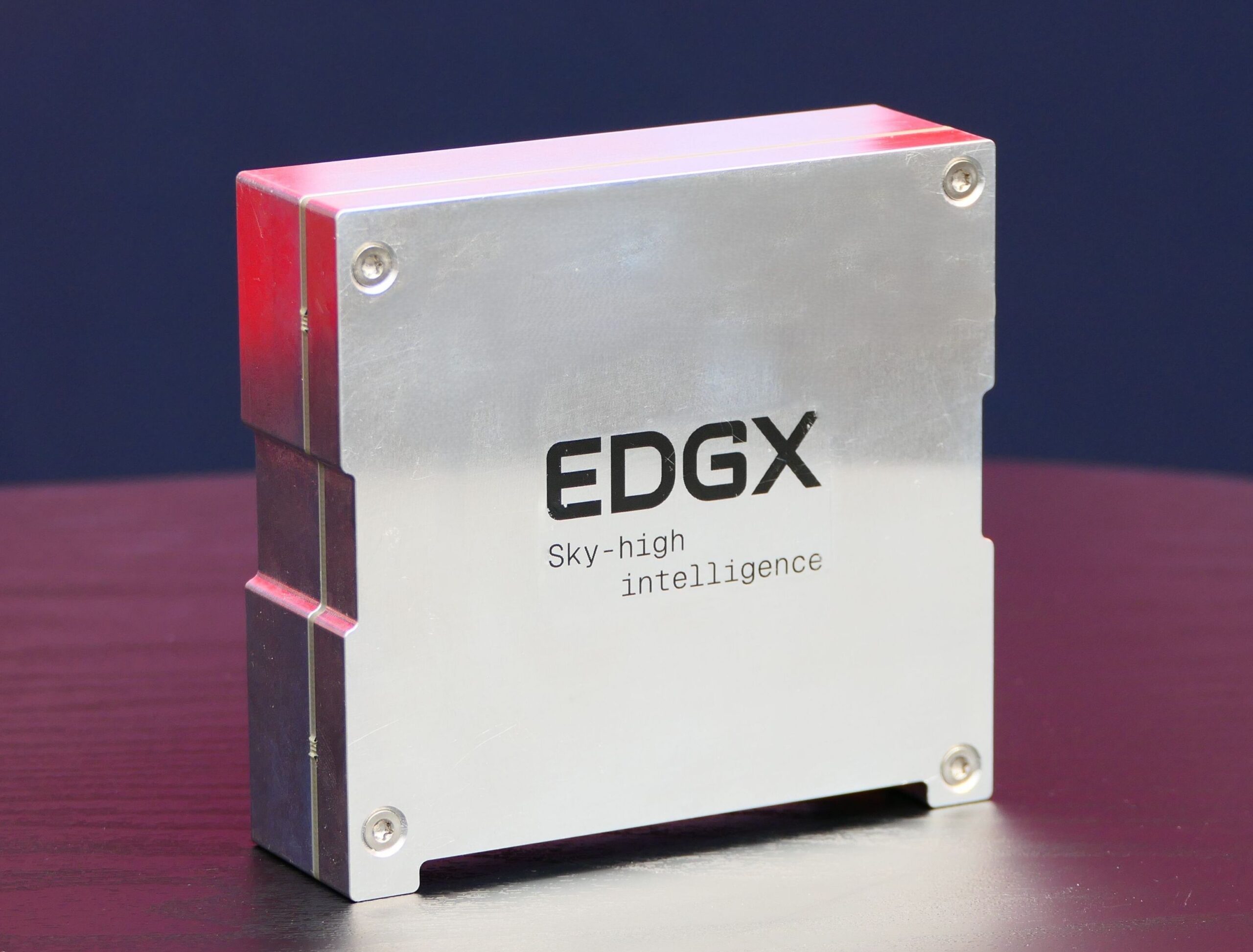
According to our company’s website, we continue to be partnered with EDGX.
However, it has become increasingly clear over the past year or so that their first product Sterna, a high-performance AI DPU powered by NVIDIA Jetson Orin NX, enabling real-time onboard data processing in orbit, will not inherently contain Akida, as we had initially hoped for.
Rather, it appears that Akida is slated to be offered by EDGX as an optional expansion card one day, although even those plans seem to have been somewhat postponed.
Let me try to summarise what we know so far about our partnership with EDGX. Please feel free to add any further information you may find important or correct any mistakes.
We first found out about the collaboration between EDGX and BrainChip in October 2023:
🚀 Exciting News 🚀 EDGX emerging from the shadows to join the SpaceTech Revolution! 🛰️ Thrilled to announce the official launch of EDGX, a brand-new spacetech company pioneering the future of onboard AI technology in space. 🛰️ At EDGX, we envision a world where intelligent space systems play a...

www.linkedin.com
BrainChip and EDGX collaborate to create breakthrough data processing solutions for space, advancing neuromorphic AI and efficient on-orbit intelligence.

brainchip.com
One of the co-authors of the above conference paper is David Steenari, who is an On-Board Payload Data Processing Engineer with ESA.
In February 2024, EDGX announced they had started to collaborate with ESA on a project called “Onboard Neuromorphic Acceleration”: “The project aims to define an onboard neuromorphic, brain-inspired Data Processing Unit (DPU) tailored for satellite communication constellations in Low Earth Orbit (LEO).”
We can't imagine a better way to have kicked off 2024 than by announcing EDGX's first collaboration with the European Space Agency - ESA. Our project, titled 🧠 Onboard Neuromorphic Acceleration 🧠, partially funded by the ESA ARTES programme, marks a milestone in our quest to redefine satellite...
www.linkedin.com
Here is the project’s archived link on the ESA website - the webpage was last updated in October 2024, but appears to have since been put on ice:
STATUS|ONGOING
STATUS DATE|08/10/2024

connectivity.esa.int
In September 2024, EDGX’s CTO Wouter Benoot and AI Engineer Sebbe Van der Smissen attended the inaugural SPAICE conference, organised by ESA, where Wouter Benoot presented a poster titled
Jetson meets Akida in Space - Heterogenous Onboard Computing.
🌍 𝐖𝐡𝐞𝐫𝐞 𝐝𝐨 𝐀𝐈 𝐞𝐱𝐩𝐞𝐫𝐭𝐬 𝐢𝐧 𝐭𝐡𝐞 𝐚𝐞𝐫𝐨𝐬𝐩𝐚𝐜𝐞 𝐢𝐧𝐝𝐮𝐬𝐭𝐫𝐲 𝐜𝐨𝐦𝐞 𝐭𝐨𝐠𝐞𝐭𝐡𝐞𝐫 𝐭𝐨 𝐞𝐱𝐜𝐡𝐚𝐧𝐠𝐞 𝐧𝐞𝐰 𝐢𝐝𝐞𝐚𝐬? Last week, I had the incredible opportunity to attend SPAICE, the inaugural conference focused on AI in and for Space, organised by European Space Agency - ESA. Held at ECSAT, the ESA campus in Harwell, UK...
www.linkedin.com
(

No one should be surprised if EDGX were also to come up with an offering of an optional neuromorphic expansion card based on SpiNNaker 2 one day.)
As of late November 2024, EDGX were still promoting their DPU (which they referred to as EDGX-1 at the time) with the words: “Discover our high-performance edge processor, powered by neuromorphic computing” and “This innovative data processing unit is a modular combination of multiple processing technologies, including cutting-edge neuromorphic processing delivering low-power high performance AI solutions.”
https://thestockexchange.com.au/threads/brn-discussion-ongoing.1/post-441796
Then, at some point over the following five months, something must have changed the plans EDGX initially had in mind for their debut DPU.
We can infer this from the fact that all of a sudden, EDGX no longer deemed a neuromorphic processor to be essential for their first product offering, focussing solely on the NVIDIA Jetson Orin NX from then onwards.
In early May 2025,
@Fullmoonfever spotted the EDGX DPU being offered with an
optional Akida module through the satsearch.co website:
https://thestockexchange.com.au/threads/brn-discussion-ongoing.1/post-460685
Two weeks later I shared a LinkedIn post by SatSearch COO Narayan Prasad who welcomed EDGX as a “trusted supplier” and promoted the EDGX DPU that could be sourced through his company’s website.
He also mentioned “Features a neuromorphic add-on (BrainChip Akida) for ultra-low-power event-based processing”.
https://thestockexchange.com.au/threads/brn-discussion-ongoing.1/post-462411
By early August 2025, EDGX had (re)named their first product Sterna, and the word “neuromorphic” was no longer anywhere to be found on their redesigned website:
https://thestockexchange.com.au/threads/brn-discussion-ongoing.1/post-471893
I commented at the time:
“The EDGX team will be presenting their NVIDIA Jetson Orin-based DPU designed for LEO (Low Earth Orbit) missions, which they have now officially named
Sterna, at SmallSat (Small Satellite Conference) in Salt Lake City from 10-13 August.
The EDGX DPU aka Sterna is being offered with an optional neuromorphic BrainChip Akida add-on (cf. https://satsearch.co/products/edgx-dpu), although strangely this option appears not to be mentioned anywhere on the revamped EDGX website so far.”
On 4 September 2025, I shared an article about EDGX and also the following observation:
https://thestockexchange.com.au/threads/brn-discussion-ongoing.1/post-473897
Neither is there any mention of “neuromorphic” on the EDGX Sterna data sheet:
It therefore seems pretty obvious to me that Akida is not part and parcel of Sterna. Happy to be proven wrong, though!
Sterna was initially scheduled to be launched into LEO on two different payloads onboard a SpaceX Falcon 9 at the end of February (cf.
https://thestockexchange.com.au/threads/brn-discussion-ongoing.1/post-471893), but the launch got postponed - Transporter-16’s lift-off now appears to be planned for 29 March 2026:
It’s about to happen. EDGX is heading to space. Literally. In the coming weeks, the EDGX Sterna computing system, powered by NVIDIA, will launch aboard the SpaceX Transporter-16 mission from Vandenberg Space Force Base. Sterna will fly on two hosted payload missions on the same launch, marking...
www.linkedin.com
Dedicated rideshare flight to a sun-synchronous orbit with dozens of small microsatellites and nanosatellites for commercial and government customers.

www.spacelaunchschedule.com
My guess is EDGX may have been working with Berlin-headquartered company Exolaunch on this?
Global launch integrator continues its accelerating launch cadence and addresses growing launch demand, set to deploy 26 microsats and 31 CubeSats for 25 international customers on the upcoming rideshare mission

www.exolaunch.com
Earlier this year, I read a number of interesting articles on EDGX and their plans to commercialise Sterna, “the AI computer that redefines computing in space” (
https://www.edgx.space/).
Operating out of Ghent, Nick Destrycker and Wouter Benoot are using EDGX to build a new standard: extra computing power in space in the form of ‘edge computers’ for satellites. Because, actually, Belgium has quite a strong space industry.
www.linkedin.com
EDGX, a new Belgian AI space startup, is working to commercialize EDGX Sterna, a next-generation edge AI computer for satellites.

www.satellitetoday.com
However, the only time the term “neuromorphic” got any mention at all was in the 26 February 2026 press release by Starion Technologies (“System engineering for space, defence and critical infrastructure” -
https://stariongroup.eu), which will test Sterna onboard the Belgium-funded European RF Spectrum Monitoring Service (ESMS) SmallSat that is potentially due for launch in 2027:
“For this mission, EDGX will also evaluate a low-power neuromorphic module as an expansion card to the system, exploring further optimisations in energy management within the overall system architecture.”
Starion Technologies BV will test a very low power AI processor from EDGX on board the European RF Spectrum Monitoring Service (ESMS) SmallSat.

www.stariongroup.eu
(my bold)
Starion incorporates new AI technology into RF spectrum monitoring SmallSat
3 minutes
Date
26 February 2026
Category
5G/6G,
AI,
Communications,
News,
Space
- Starion Technologies BV has been awarded additional funding to test a very low power artificial intelligence (AI) processor onboard the European RF Spectrum Monitoring Service (ESMS) SmallSat.
- The new onboard data processing unit, STERNA from EDGX, harnesses NVIDIA GPU technology to process vast volumes of data in orbit, vastly reducing latency, minimising downlink costs, and enabling faster, mission-critical decision-making.
Starion Technologies BV and the ESMS consortium have been awarded additional funding from the Belgium Science Policy Office (Belspo) to test a new onboard computing technology on the Belgium-funded ESMS SmallSat, which is potentially due for launch in 2027. Funding from Belspo is being provided through the European Space Agency’s Advanced Research in Telecommunications Systems (ARTES) 4.0 programme.
The ESMS SmallSat will provide an innovative monitoring service to support regulated use of the RF spectrum, delivering data to the relevant authorities and authorised users to enable them to identify illegal or unauthorised activities on land, at sea or in the air.
The new AI technology has been developed by EDGX, a Belgian company preparing a low Earth orbit (LEO) SmallSat mission to demonstrate its advanced onboard data processing unit. At the core of the system is EDGX’s GPU-based computing platform, designed to deliver high-performance AI processing directly in orbit while operating within the strict power constraints of SmallSats.
Conventional onboard processing solutions often struggle to combine performance with power efficiency. EDGX’s platform addresses this challenge by enabling intelligent data filtering and processing in space, significantly reducing the need for downlink capactiy and improving mission responsiveness.
For this mission, EDGX will also evaluate a low-power neuromorphic module as an expansion card to the system, exploring further optimisations in energy management within the overall system architecture.
Alastair Pidgeon, Vice-President Business Development and Technology at Starion, said: “We are very happy to trial this new technology on the ESMS mission. EDGX’s new technology has the potential to be transformative for satellite missions. Some satellites can collect up to 40 terabytes of data, far more than can be downloaded. So instead of transmitting raw data, the new AI processor can extract snippets of information and download that instead.
“To support this, the ESMS team is exploring how they can further compress and optimise the downloadable data. One of the roles of ESMS is to locate where any signal interference originates, and the AI processor could help us obtain this data more quickly from the satellite.”
Because ESMS is already in development, the consortium is collaborating with EDGX to test the AI processor on the ground through experimental campaigns prior to the launch. These tests will continue over the coming months to refine the technology and evaluate its performance. The processor also incorporates some conventional processing capability, which may provide additional benefits to the satellite.
EDGX plans to fly-test the AI processor, which is roughly the size of a pack of playing cards, on a launcher early this year, mainly to verify its resilience in space. ESMS will be the first operational mission to use this technology.
Given the work that EDGX has already done with Akida over the past few years, the fact that the startup from Belgium remains listed as a partner on the BrainChip website* as well as the temporary listing of Akida as an optional “neuromorphic processing unit card” on satsearch.co, we can reasonably assume said neuromorphic processor will be Akida. However, further patience is required, as the article reveals that the planned ESMS mission is “potentially due for launch in
2027”.
*not to mention the continuation of LinkedIn likes of BRN posts by EDGX team members resp. vice versa by Alf Kuchenbuch
Last but not least: Note that EDGX hired Manoj Bhat as an Embedded AI Engineer in January.
Not only did he specialise in neuromorphic computing during his Master degree in Embedded Systems at Uni Freiburg (Sept 2022 - Sept 2025), he also has hands-on experience with Akida as a member of the student team that won first place at the 2024 Munich Neuromorphic Hackathon, where they “tackled the challenge of pose estimations for spacecrafts using event-based data and BrainChip neuromorphic hardware”, as his teammate Roua Brini posted on LinkedIn at the time
(
https://thestockexchange.com.au/threads/brn-discussion-ongoing.1/post-442253).
🌟 Exciting News from Last Week! 🌟 I had the incredible opportunity to attend a Neuromorphic Workshop conducted by fortiss and neuroTUM , and it was an unforgettable experience. As part of a team with three amazing collaborators,s,Jakub Skupi n Jost Reels n Roua Bri we took on the challenge...
www.linkedin.com
While I have no idea whether or not his experience with neuromorphic computing was possibly one of the reasons he got the position as an Embedded AI Engineer with EDGX, it is still good to know another Akida-experienced researcher is now working for them…



 .
.