Good question. I suppose you would need to ask François Piednoël directly whether what he means is possibly that there is an Akida-inherent problem, which would also concern the IP. (The BRN shareholder on LinkedIn was asking “Why isn’t Mercedes using Akida technology, for example?”, referring to Akida technology in general, not only to physical chips such as AKD1000 or AKD1500).
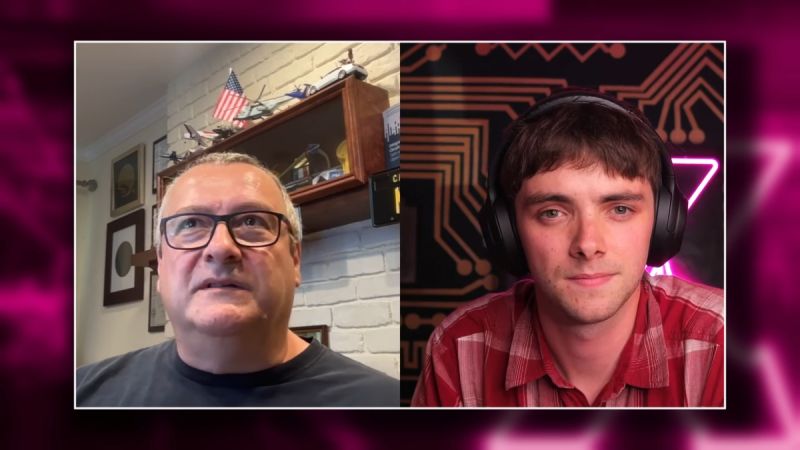
Apart from that, since Athos Silicon has so far not signed any IP deal with us, we can’t be in the first mSoC silicon codenamed Polaris anyway that he was referring to in this recent video:
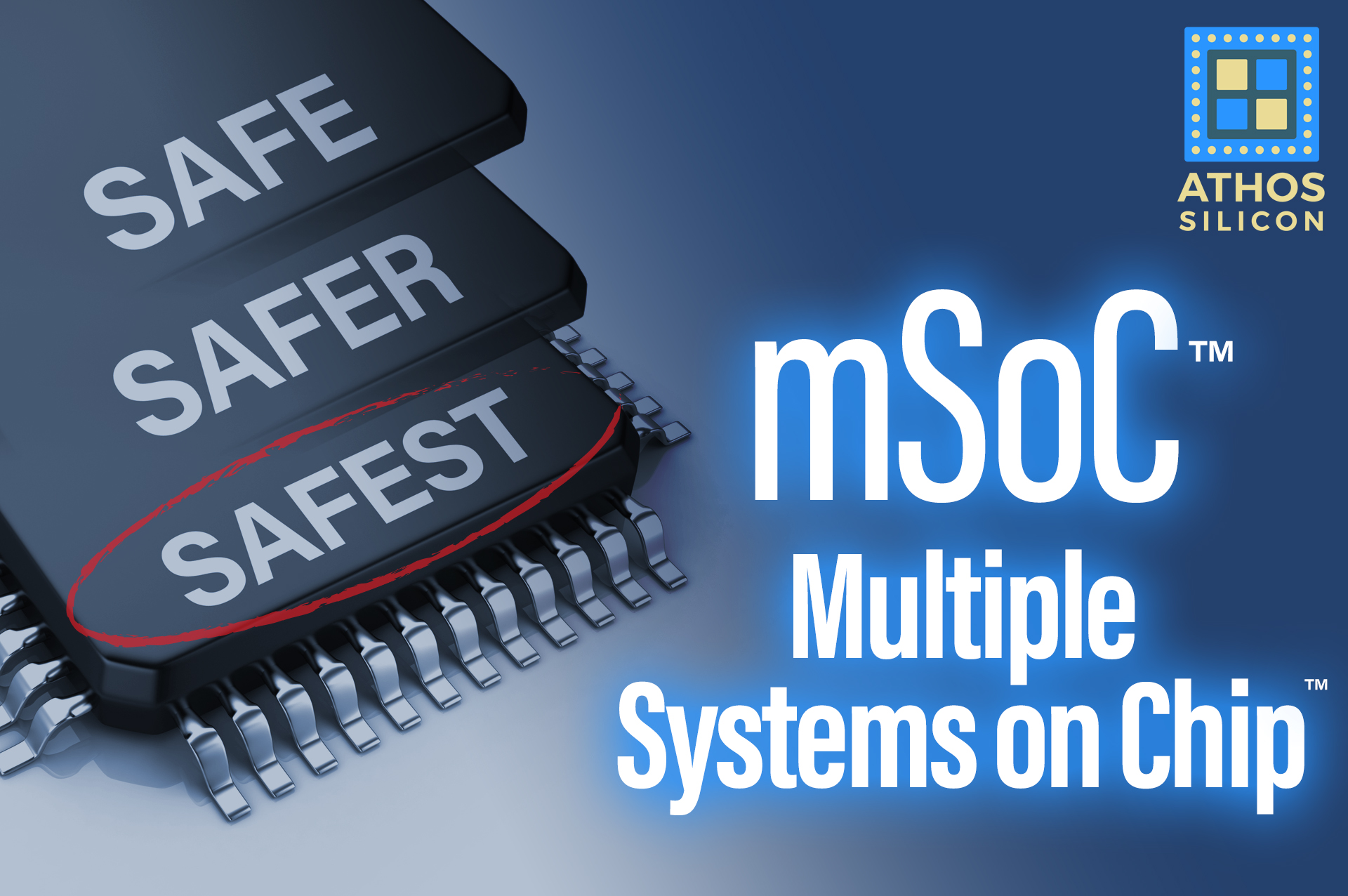
IpXchange spotlights Athos Silicon's mSoC™ as a safety-first unified control fabric that combines integrated redundancy, real-time voting, and energy-efficient execution to advance certified autonomy across vehicles, robotics, and mission-critical systems

www.athossilicon.com
View attachment 92176
Athos Silicon’s Multiple System-on-Chip (mSoC) delivers functionally safe chiplet-based compute for autonomous driving and robotics.

ipxchange.tech
Athos Silicon: Multiple System-on-Chip for Safe Autonomy
By Luke Forster
Published
1 October 2025
Written by
Luke Forster
Building functional safety into compute for autonomy
Athos Silicon, a spin-out from Mercedes-Benz, is addressing one of the most pressing challenges in autonomous systems: how to eliminate the
single point of failure in compute architectures. Unlike traditional monolithic processors that can collapse if a single component fails, Athos Silicon’s
Multiple System-on-Chip (mSoC) integrates redundancy directly into silicon.
The result is a functionally safe
Processor platform designed to meet
ISO 26262 and other standards required for safety-critical applications.
Why safety-first design is essential
Conventional computing platforms – with a CPU, GPU, and NPU working together – were never built for
Automotive safety. If a processor crashes or a transient error occurs, the entire system may fail. In a consumer PC this means a reboot; in a self-driving vehicle or industrial robot, it could mean disaster.
Athos Silicon has rethought this architecture from the ground up. By focusing on
functional safety as a primary design constraint, its mSoC avoids the patchwork redundancy of external systems and instead bakes resilience into the hardware itself.
The mSoC architecture explained
Athos Silicon’s
mSoC integrates multiple chiplets into one package, each containing CPUs, controllers, and memory. Instead of a single supervisor chip that itself could fail, the mSoC operates through a
voting mechanism — what Athos calls a “silicon democracy.”
Each chiplet executes tasks in parallel, and their outputs are compared in real time. If one diverges from the others, it is overruled and reset. This ensures continuous operation without interruption and prevents cascading system failures.
By embedding this redundancy, Athos Silicon enables
High Reliability computing suitable for Level 3 and Level 4 autonomy while maintaining predictable performance.
Power efficiency for EVs and robotics
Safety is not the only benefit. In electric vehicles, compute power directly affects range. Athos Silicon highlights that every 100 watts of compute load can reduce EV range by as much as 15 miles. By designing a chiplet system optimised for Low
Power efficiency, the mSoC reduces unnecessary energy consumption and makes autonomy more practical for battery-powered platforms.
From Mercedes-Benz R&D to startup scale
The technology behind Athos Silicon was incubated within Mercedes-Benz before the company was spun out to bring the platform to the wider market.
Its first silicon, codenamed
Polaris, is designed to deliver Level 3 and Level 4 autonomous capability in a footprint comparable to current Level 2 hardware.
Working with chiplet-packaging partners, Athos Silicon has accelerated validation and plans to deliver silicon to early customers soon. With no competitors currently offering integrated voting redundancy in a chiplet-based compute platform, Athos Silicon is carving out a unique position in the
AI ecosystem.
Applications beyond cars
While autonomous driving is the most visible use case, Athos Silicon’s architecture also applies to
Robotics, avionics, and even
Medical devices where safety and reliability are paramount. Any system requiring certifiable, functionally safe compute stands to benefit.
By combining chiplet redundancy, real-time voting, and safety-first design,
Athos Silicon’s Multiple System-on-Chip may prove to be the missing hardware foundation for truly certifiable autonomy.
This is what the Polaris mSoC will roughly look like sizewise (watch from around 10:50 min):
View attachment 92177
According to François Piednoël, “Project mSoC” as such started in 2020 (still under Mercedes Benz North America R&D).
Not sure what exact date the interview was recorded, but given that Athos Silicon as a Mercedes-Benz spin-off has been around since April 2025, and in the video it is being said the company is about four months old, it must have been recorded sometime between late July and early September.
So when François Piednoël says “In fact, there is silicon coming back shortly. By the end of the summer we’ll have the chiplets in hands” (from 9:06 min), this means they would have received them by now, if everything went according to plan. (“We think we are in good shape for a startup - getting your silicon after, you know, five six months (…) With no visible competition, by the way.”)
He also says, they invented the IP.


 From Neuroscience to Applied Artificial Intelligence
 About the speaker
 Tuesday 28th of October 2025
 Per21, Université de Fribourg - Universität Freiburg Pérolles Campus, Room E140.
 Key Consequences
 Strategic Outlook




 from the horse’s mouth…
 dataset loader (dataloader_tf.py) – reads 76 channel zip files, merges, resamples, labels, and windows